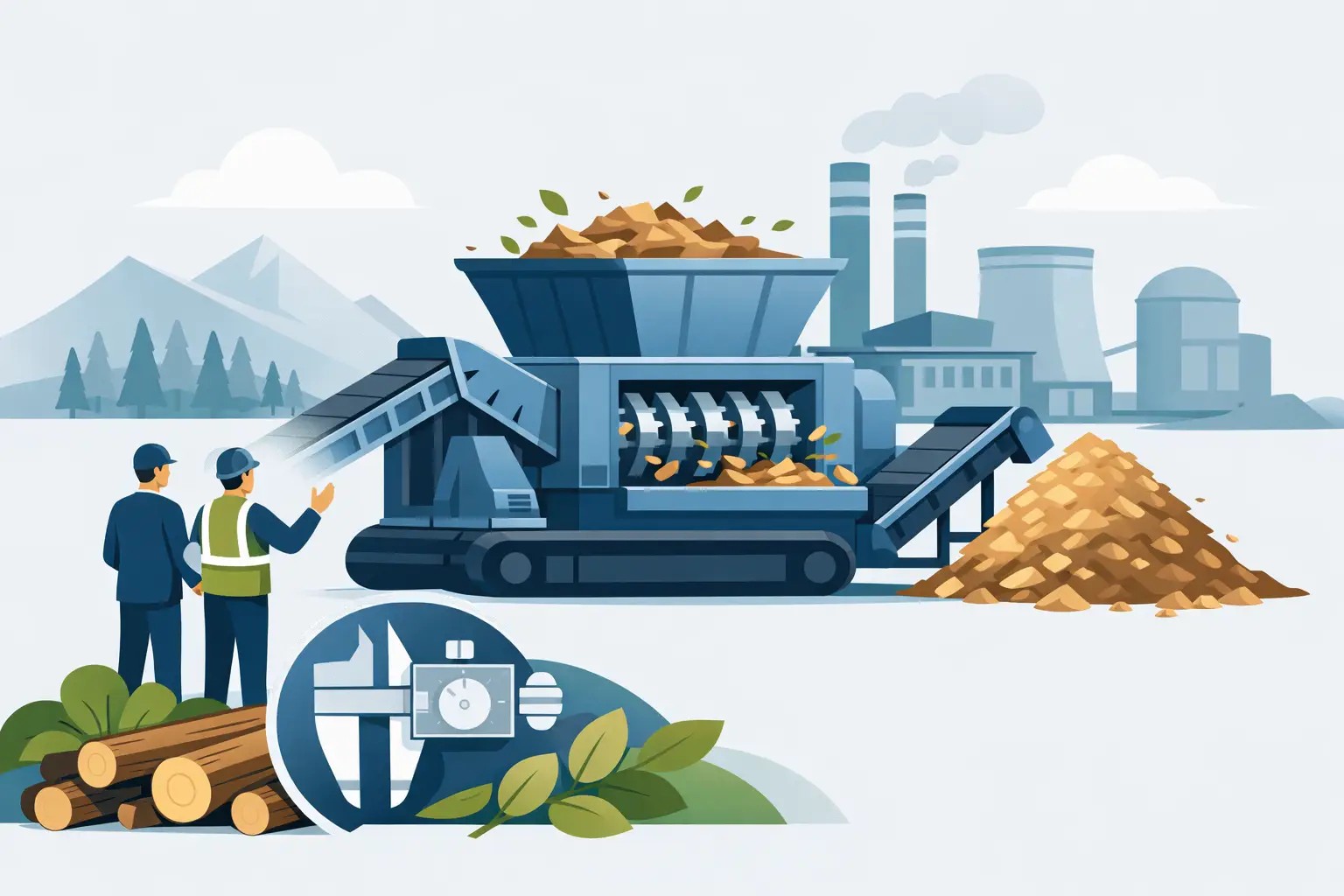
Choosing a wood grinder, wood crusher is a significant decision for any biomass business operation. Whether you run a wood plant, a biomass power station, or a large farm, the right wood crusher can decide profit or loss.
But with so many options on the market, how do you choose? Hope this ariticle could give you little help.
1. Know Your Raw Material
Before contacting any supplier, answer these three questions:
| Questions | Why It Matters |
| What material are you processing? | Wood logs, branches, straw, corn stalks, and palm fiber differ in hardness and moisture. |
| What is the maximum size of your input material? | This sets the feed opening size you need. A small opening cannot take large logs. |
| What is the moisture content? | Wet material above 30% may need a different rotor and screen than dry material. |
Pro tip: Always ask the supplier to test your actual material before you commit. A reputable manufacturer will welcome this opportunity.
2. Define Your Desired Output Size
The final product size determines what type of machine you need:
| Output Size | Equipment Type | Typical Application |
| 50-100mm | Coarse Crusher, Horizontal Wood Crusher JP7000, Large Wood Crusher JP1300, JP1600 | large-diameter timber, pallets, formwork, and weeds, whole log, tree |
| 30–50 mm (1–2 inches) 50-100mm | Wood Chipper, Disc Wood Chipper JP1100, Drum Wood Chipper JP2188 | uniform chips, for Papermill, Silicone Plant.. |
| 1–10 mm (0.04–0.4 inches) | Water Drop Hammer Mill | Pellet production, mushroom cultivation |
| <1 mm (powder) | Untra Fine Mill | Wood Powder, Feed, Food Flour |
Be clear about your target particle size. A machine that produces 30mm chips cannot magically produce 1mm powder without additional equipment.
3. Match Capacity to Your Production Needs
Capacity is usually measured in tons per hour (t/h). Here is a practical guideline:
| Operation Scale | Recommended Capacity | Machine Size |
| Small farm /Workshop | 0.5–2 t/h | Small diesel or electric grinder |
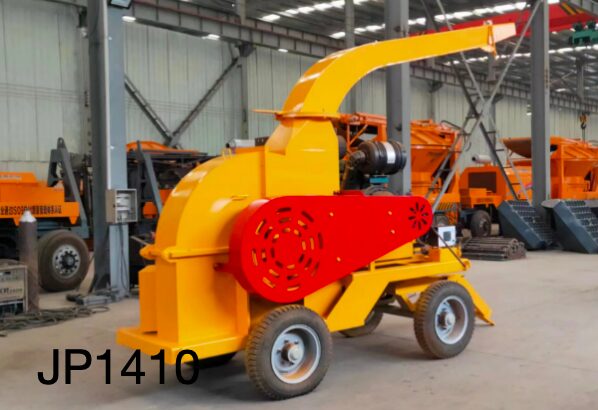
| Medium processing plant | 2–5 t/h | Medium-duty industrial brush chipper JP6145, JP6180 |
| Large biomass plant | 5–15 t/h | Heavy-duty wood crusher JP1300 |
| Industrial scale | 15+ t/h | Large horizontal grinder, shredder JP7000, JP1600, JP5515 |
Important: Never buy a machine that exactly matches your peak demand. Always add a 20-30% safety margin. A machine running at 80% capacity will last much longer than one running at 100%.
4. Consider the Power Source
Wood grinders typically use either electric motors or diesel engines.
Power Source Advantages Disadvantages Best For Electric Motor Lower running cost, quieter, zero emissions. Needs stable power, higher setup cost. Fixed sites with reliable grid power. Diesel Engine Portable, works anywhere, not tied to the grid. Higher fuel cost, louder, needs maintenance. Remote sites and mobile work.
If your area has unstable power, a diesel unit may be the best choice.
5. Check the Key Components
A wood grinder is only as good as its components. Ask about these parts:
- Blades (Knives) : What material are they made of? High-speed tool steel (HSS) or alloy steel? How long do they typically last? Is it possible to sharpen them again?
- Screen (Mesh) : Is it easy to change? Different screen sizes give different output particle sizes.
- Engine: Are they from a reputable brand? JP crusher uses Weichai or Cummins etc.
- Rotor: Is it dynamically balanced? A poorly balanced rotor creates vibration and reduces bearing lifespan.
- Feed system: Manual feed, hydraulic feed, or chain plate feed? For large volumes, hydraulic or chain plate feed is more efficient.
6. How to Tell If You Are Dealing with a Real Factory
This is critical. Many sellers claim to be manufacturers but are actually traders. Here is how to verify:
| Verification Method | What to Do |
| Request a video tour | Ask to see the production line, warehouse, and office in real time. |
| Check business license | Verify the scope includes “manufacturing,” not just “trading.” |
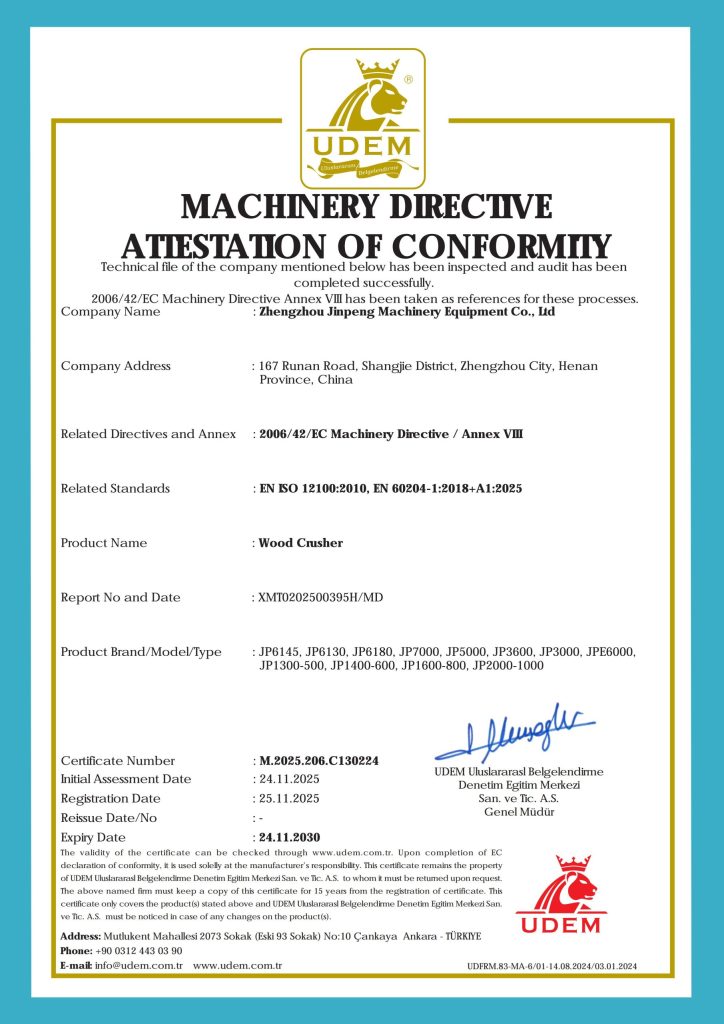
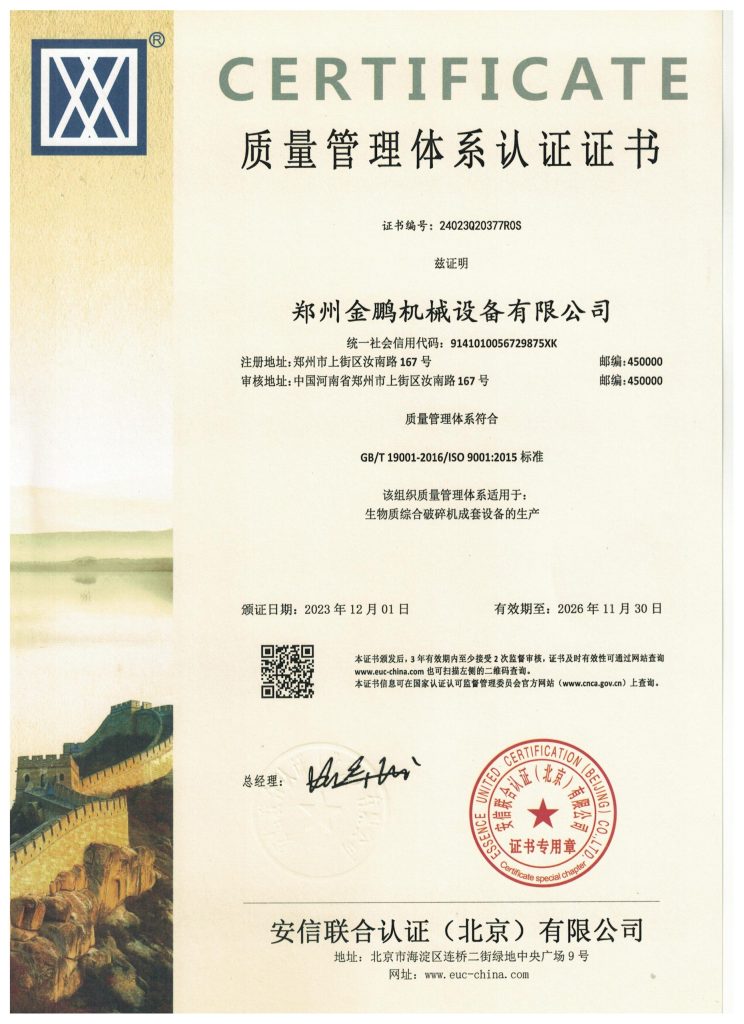
| Look for certifications | ISO 9001 is the minimum standard for a real factory. |
| Ask for customer visits | A real factory will have customers who have visited their facility. |
| Check the price | If the price is far below the market average, be suspicious. |
A real factory will not hesitate to show you around. A trader will make excuses.
At JP Machinery, we manufacture our grinders in our own facility in Zhengzhou, China. We welcome video tours and customer visits. Contact us to discuss your application, and we will help you find the right solution – no hard selling, just honest advice. CE,ISO9001, ISO14001, ISO45001