A debarking bottleneck can limit the value of an entire wood-processing line. When bark enters a chipper with logs, it increases ash in biomass fuel, reduces chip consistency, accelerates wear in downstream equipment, and can weaken the quality of pulp or engineered wood feedstock. Wood debarkers give industrial plants a controlled way to remove that unwanted outer layer before size reduction begins.
For biomass producers, sawmills, wood-chip exporters, pulp operations, and green-waste recyclers, the objective is not simply to make logs look clean. The objective is to prepare a more consistent raw material for chipping, grinding, screening, drying, and final use. The right debarking system can reduce manual handling, protect high-value downstream machinery, and turn variable log supply into a more reliable production input.
Why Bark Removal Changes Plant Economics
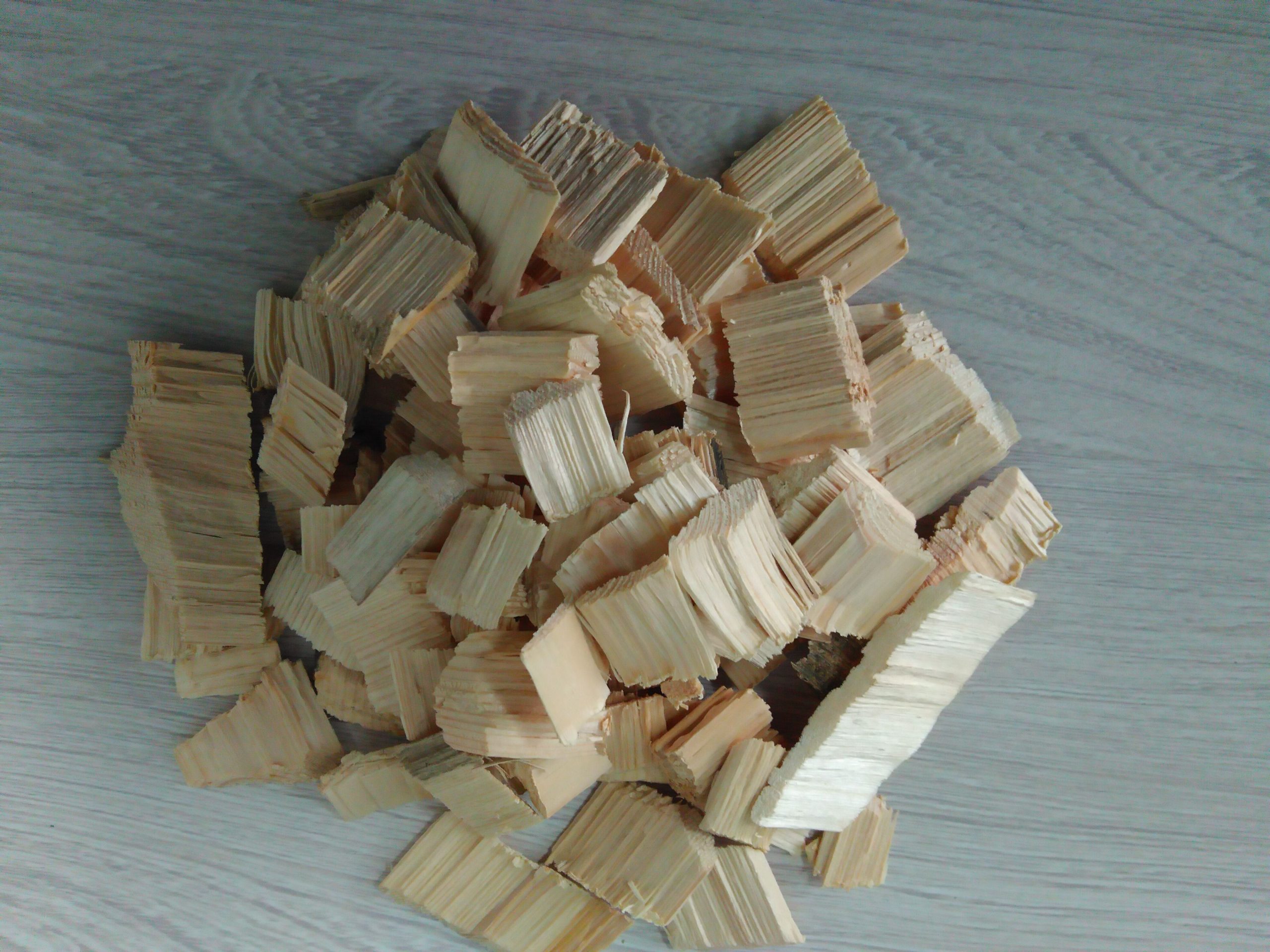
Bark has a different composition from clean wood. It often carries more dirt, grit, moisture, and mineral contaminants, particularly when logs have been stored on the ground or moved repeatedly through a yard. In biomass applications, those contaminants can raise ash content and affect combustion performance. For pellet, briquette, and boiler-fuel producers, cleaner wood chips can support a more predictable fuel specification.
In wood-chip manufacturing, bark can also create a mixed product that does not meet a buyer’s quality requirement. Pulp mills, board plants, and other fiber users may accept a defined bark percentage, but that tolerance varies by process and product grade. Removing bark before chipping allows operators to manage that percentage rather than leaving it to chance.
The benefits extend to maintenance. Soil and embedded stones carried in bark are abrasive. Once they reach chippers, grinders, conveyors, screens, and dryers, they can increase wear on knives, hammers, liners, and bearings. A debarker cannot eliminate every contaminant entering a plant, but it provides an early cleaning stage where contamination is easier to isolate and manage.
How Industrial Wood Debarkers Work
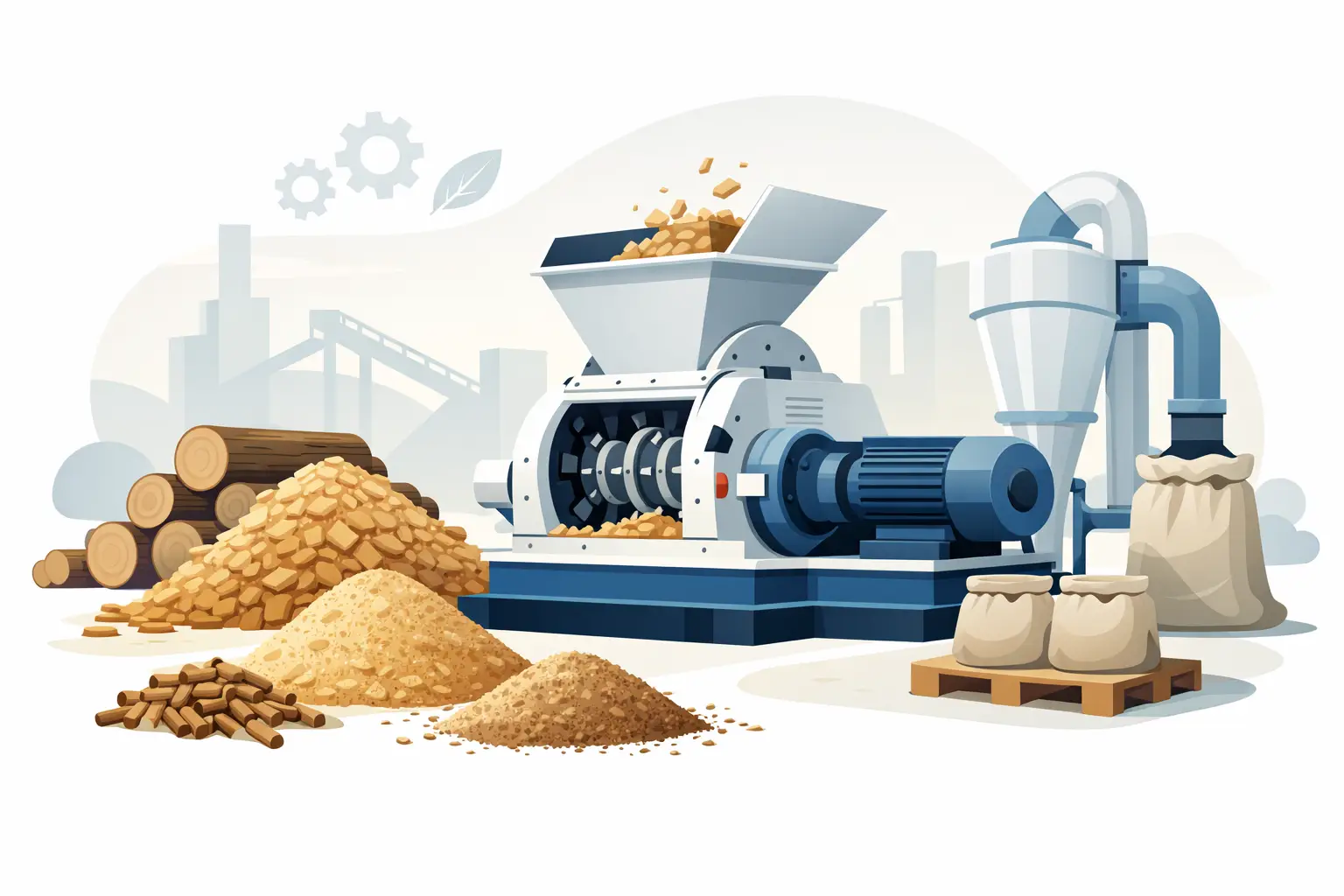
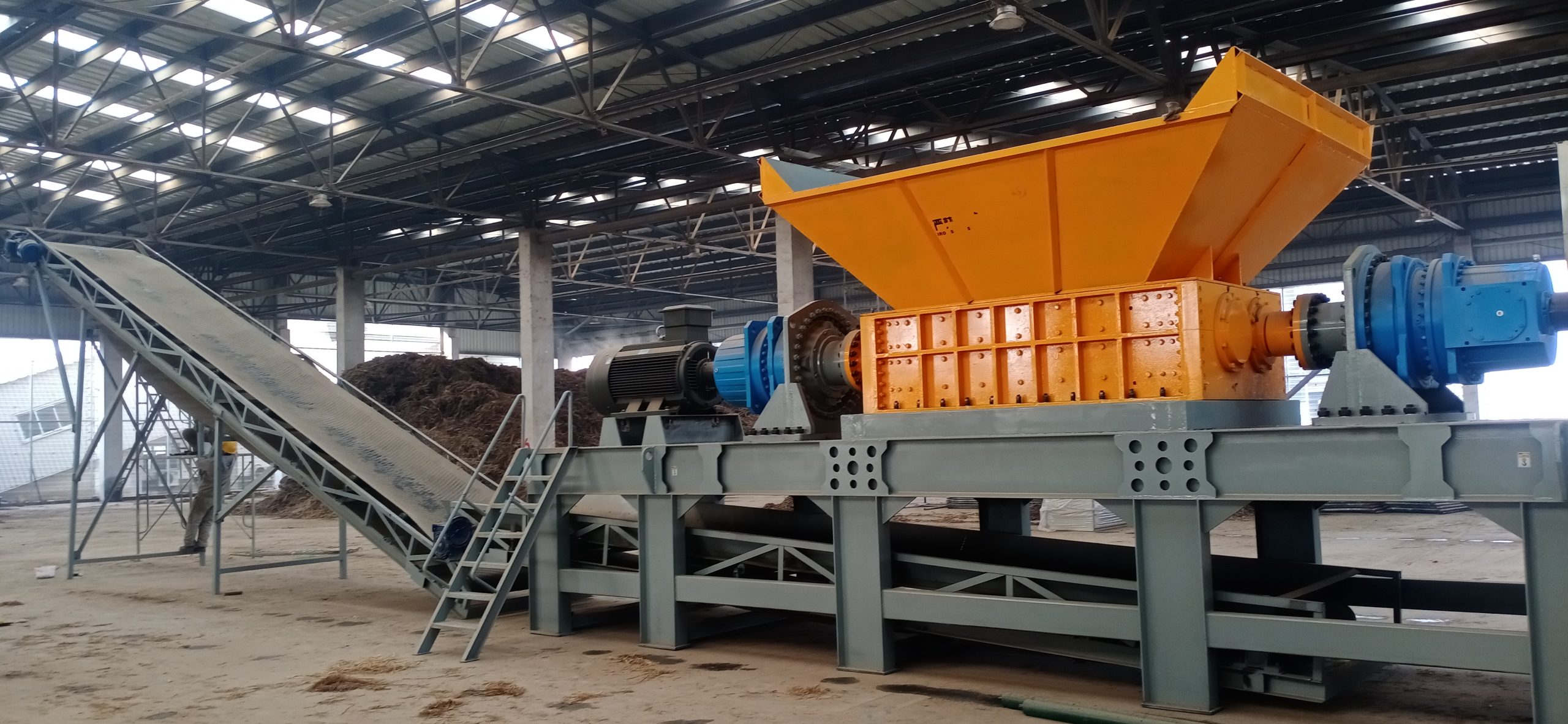
Most industrial debarking systems process whole logs before they enter a disc chipper, drum chipper, or other primary size-reduction machine. Logs are conveyed into the debarker, where controlled rotation and mechanical contact loosen and strip the bark. The separated bark falls through openings or is discharged to a separate conveyor for collection, while cleaned logs continue to the next production stage.
The operating principle depends on machine design. Rotary drum systems use log-to-log contact and internal lifting action as logs tumble through the drum. Ring-type designs guide logs through a rotating ring equipped with debarking tools. Each approach can be effective, but selection should follow the actual feedstock, throughput target, available footprint, and required bark-removal rate.
A high-capacity line also needs more than the debarker itself. Infeed conveyors, log sorting, metal removal where needed, discharge conveyors, bark collection, and controls must work as one system. Poor infeed control can cause log bridging, uneven residence time, or inconsistent debarking even when the machine is properly sized.
Selecting Wood Debarkers for Real Feedstock Conditions
A machine rated for a certain capacity on straight, dry, uniform logs may perform differently with wet hardwood, crooked stems, mixed diameters, frozen material, or reclaimed yard wood. Procurement decisions should therefore start with a feedstock study, not only a capacity number.
Four operating factors deserve close attention:
- Log diameter and length: The debarker inlet, working chamber, and discharge arrangement must accommodate the smallest and largest logs expected in normal production.
- Species and bark adhesion: Pine, eucalyptus, poplar, hardwood, and mixed forest residue do not release bark in the same way. Seasonal moisture and frozen conditions can further change performance.
- Required cleanliness: A biomass boiler may tolerate more residual bark than a pulp chip line or a premium wood-chip supply contract.
- Line capacity and operating hours: The system must match upstream log handling and downstream chipping capacity without becoming the limiting stage.
The best choice is often a balance rather than a maximum-cleanliness specification. More aggressive debarking may improve wood cleanliness, but it can increase wood loss, power demand, or mechanical wear. A plant processing fuel chips may prioritize throughput and acceptable ash levels. A plant producing fiber for a controlled industrial process may place greater value on bark-removal efficiency and chip purity.
Debarking Before Chipping or Grinding
The location of the debarker in the process flow has a direct effect on product quality. For clean log-based feedstock, the standard arrangement is log receiving, sizing or sorting, debarking, chipping, screening, and then storage or further processing. This sequence keeps most bark and dirt away from the chipper and creates a cleaner chip stream from the start.
For mixed green waste, construction wood, or irregular wood residue, full log debarking may not be practical. These materials may be better handled by a horizontal grinder, shredder, trommel screen, magnetic separation equipment, and air classification or other cleaning stages. A debarker is designed for log-like material, not as a universal contamination-removal machine.
Some operations choose to process bark separately. Bark can be screened and used as boiler fuel, landscaping material, mulch feedstock, or a component in composting applications, depending on local markets and contamination levels. Separating it at the front of the line preserves that option while keeping cleaner wood available for higher-value use.
Engineering a Complete Debarking Line
Standalone machinery can solve a limited production problem, but industrial projects benefit from system-level engineering. The debarker must receive logs at a consistent rate and discharge them without creating surges at the chipper. Conveyor speed, transfer points, buffer capacity, and automation logic all affect the line’s daily output.
Controls should allow operators to match debarker speed and residence time to feedstock conditions. When the material changes from dry softwood to wet hardwood, for example, a fixed operating setting may no longer deliver the same result. Variable-speed drives and coordinated controls give plants more flexibility to maintain a stable feed rate.
Safety and service access are equally important. Debarking equipment handles heavy, moving logs under demanding conditions. Guarding, emergency stops, access platforms, inspection doors, and planned maintenance points should be considered during project design, not added as an afterthought. A machine that is difficult to inspect or clean will eventually create avoidable downtime.
For export projects, buyers should also confirm electrical standards, motor specifications, spare-parts planning, shipping dimensions, and site installation requirements early in the quotation process. These details affect lead time, commissioning, and the ability to keep critical production equipment operating after startup.
What to Ask Before Requesting a Quote
A useful debarker quotation is built on operating data. Provide the expected wood species, log diameter range, moisture condition, maximum log length, desired hourly capacity, target residual-bark level, and downstream equipment details. Photos or video of the actual raw material can be especially valuable when logs are irregular, dirty, or mixed by species.
Ask the supplier how the proposed configuration manages bark discharge, variable log sizes, difficult seasonal material, and maintenance wear. It is also reasonable to request a process layout showing infeed, debarking, bark removal, and connection to the chipper or grinder. Capacity claims have more value when they are tied to a defined material condition and complete line arrangement.
Zhengzhou Jinpeng Machinery Equipment Co., Ltd. supports industrial wood-processing projects with equipment selection and customized line design for debarking, chipping, grinding, screening, and biomass preparation. The goal is to match each machine to the production requirement rather than forcing a standard configuration onto a variable feedstock.
A well-specified debarker does more than remove bark. It gives the rest of the plant cleaner material, more predictable operating conditions, and a stronger foundation for producing chips, fiber, or biomass fuel that buyers can trust.