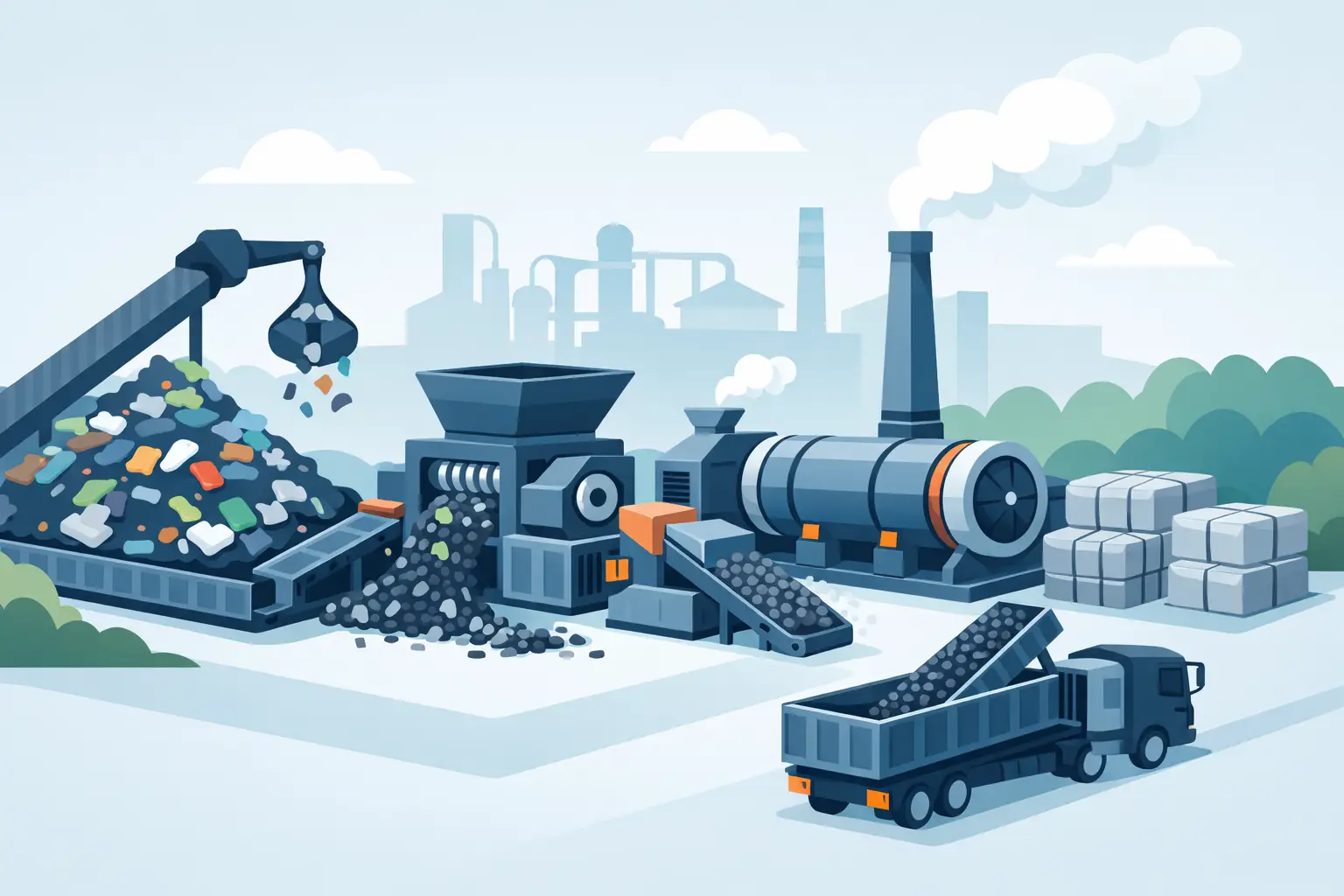
A plastic recycling plant rarely loses money because it lacks a machine. It loses money when material arrives in the wrong form for the next machine, contamination reaches the rotor, or output size varies enough to slow washing, extrusion, or pelletizing. The best machines for plastic recycling are therefore selected as a processing system, not as isolated equipment. Feedstock condition, target throughput, contamination level, and required particle size must determine the equipment configuration.
For industrial operators handling post-industrial scrap, municipal rigid plastics, film, pipe, purgings, and mixed bulky waste, the priority is controlled size reduction with dependable uptime. A properly specified shredder, crusher, screen, and drying section converts inconsistent incoming plastic into a stable feedstock for downstream recovery.
Best Machines for Plastic Recycling by Processing Stage
Primary shredders for bulky and difficult feedstock
Primary shredding is the starting point for large, dense, or irregular plastic waste. Single-shaft shredders are typically the preferred choice for rigid plastics such as HDPE containers, PP crates, pallets, plastic drums, injection molding runners, and thick-walled profiles. A hydraulic ram feeds material toward a rotating cutter rotor, allowing the machine to process variable shapes while producing a controlled discharge through a screen.
This design gives operators a practical advantage when consistent output size matters. Rotor knife geometry, screen opening, ram force, and rotor speed can be matched to the feedstock. For a plant feeding a wash line or granulator, a moderate shred size reduces downstream power demand without creating unnecessary fines.
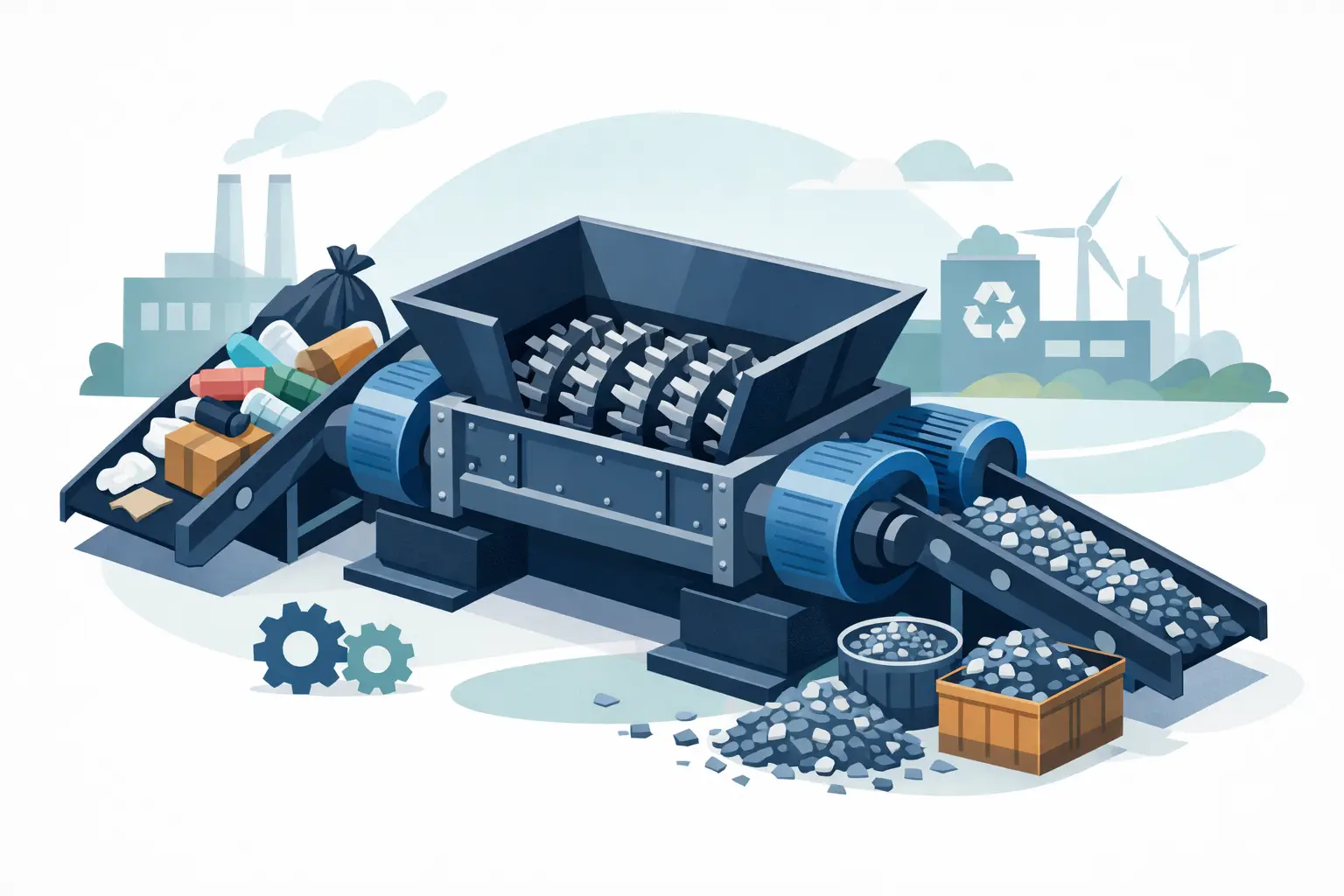
Dual-shaft shredders are better suited to high-volume pre-shredding of bulky, mixed, or heavily contaminated material. Their low-speed, high-torque shafts tear and shear material with high resistance to bridging. They are effective for baled plastics, mixed household waste fractions, plastic furniture, agricultural film bundles, and plastic-containing industrial waste. Output is generally less uniform than that from a screened single-shaft shredder, so a secondary crusher or granulator is often required when a precise particle size is needed.
The trade-off is straightforward: dual-shaft units prioritize aggressive intake and primary volume reduction, while single-shaft shredders provide more control over the final shred size. A plant that needs both functions may use the two machines in sequence.
Crushers and granulators for uniform regrind
After primary size reduction, a plastic crusher or granulator produces the smaller, more consistent flakes required by washing, separation, compounding, and pelletizing operations. This stage is particularly important for rigid PP, HDPE, PET preforms, PVC profiles, ABS scrap, and clean post-industrial production rejects.
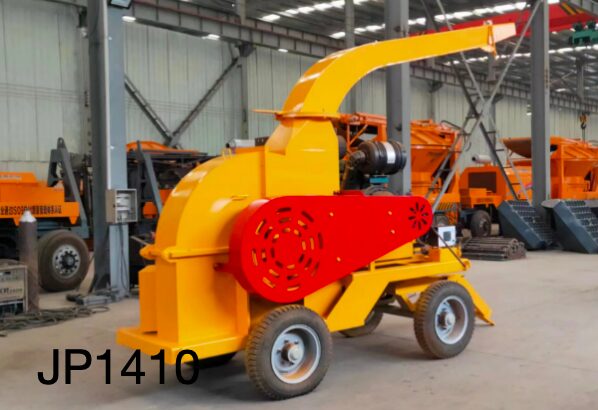
A crusher operates at higher rotor speed than a primary shredder and relies on fixed and rotating knives to cut material repeatedly until it passes through a screen. Screen size is a production decision, not a minor specification. A smaller screen produces finer particles but can increase energy consumption, knife wear, and the risk of heat buildup. A larger screen increases throughput but may leave oversized pieces that reduce washing efficiency or create feeding problems in an extruder.
For clean, homogeneous production scrap, a crusher may be the first and only size-reduction machine required. For mixed rigid waste, it is usually the secondary machine after shredding. The correct approach depends on wall thickness, material toughness, incoming size, and the output tolerance of the downstream process.
Screens that protect product consistency
Screening is often underestimated in plastic recycling lines. Yet it is one of the most direct ways to prevent oversize particles from reaching equipment that was designed for controlled feed. Trommel screens and other industrial screening systems can separate oversize fractions after shredding, return them for reprocessing, and maintain a more stable flow to crushing or washing.
Screening is also useful before size reduction when incoming material contains fines, soil, loose labels, or mixed debris. Removing this fraction early can reduce wear on knives and improve the quality of recovered plastic. The screen type must fit the material behavior. Film, light flakes, wet material, and sticky contamination require different screening strategies than dry rigid regrind.
Drying equipment for washed plastic flakes
Washed plastic is not ready for sale or pelletizing until moisture is reduced to the level required by the next operation. Excess water adds transport weight, lowers processing stability, and can lead to defects in extrusion. Mechanical dewatering normally removes bulk water first, while thermal drying provides further moisture reduction where the application demands it.
Rotary dryers can be integrated into industrial processing lines when material characteristics and target moisture justify thermal drying. Temperature control, residence time, airflow, and material movement must be engineered carefully. Light plastic flakes can behave very differently from wood chips or mineral aggregates, and a drying system must avoid material loss, uneven heating, and unnecessary energy use.
Drying requirements vary sharply by polymer and end market. Material intended for basic regrind may tolerate a higher residual moisture level than feedstock destined for high-quality pellet production. Plant owners should specify the required moisture target before selecting dryer capacity.
How to Select Plastic Recycling Machinery
The right machine is defined by the material entering the plant and the material leaving it. Procurement teams should begin with a representative feedstock assessment rather than a nameplate capacity comparison. A machine rated for high throughput on clean PP crates may produce a very different result on dirty agricultural film, reinforced plastic, or mixed municipal rigid waste.
First, define the feedstock in operational terms: polymer mix, bulk density, wall thickness, dimensions, contamination, moisture, and expected daily volume. A pallet, a woven bag, a PVC pipe, and a film bale are all plastic, but they impose very different loads on cutting chambers, conveyors, and screens.
Second, establish the required output. If the next stage is washing, the goal may be manageable flakes with low oversize content. If the material is sold as shredded RDF feedstock, throughput and contaminant tolerance may matter more than fine sizing. If the final product is pelletized recycled resin, particle consistency and moisture control become much more critical.
Third, evaluate the machine for maintenance access and wear management. Knife material, cutter layout, rotor construction, bearing protection, screen replacement, and hydraulic system serviceability affect lifetime operating cost. A lower purchase price can quickly lose its advantage when knife changes take too long or unplanned downtime interrupts production.
Automation should support the process rather than add complexity for its own sake. Load-based ram control, reverse functions, overload protection, conveyor interlocks, and centralized controls help maintain steady operation when feedstock quality changes. For larger plants, integrated controls also make it easier to balance the line so that a high-capacity shredder does not overwhelm the crusher or dryer downstream.
Proven Equipment Configurations for Common Plastic Streams
Rigid post-industrial plastic often follows a direct route from crusher to screening and, where needed, downstream washing or drying. Clean sprues, runners, and offcuts may require only controlled crushing, which keeps capital cost and floor space lower.
Bulky household rigid plastics and commercial scrap usually need more preparation. A dual-shaft shredder can open and reduce irregular material, followed by a single-shaft shredder or crusher for controlled sizing. Screening returns oversize pieces to the reduction stage and limits variation in the finished flake fraction.
Plastic film and agricultural plastics require special attention because low bulk density can restrict feeding and contamination may be high. Pre-shredding improves handling, but the line must also account for sand, organic residue, labels, and moisture. Overly aggressive cutting can create fines that are harder to separate and recover, so rotor and screen selection should be tested against actual material samples.
Pipe, profiles, and thick-walled plastic demand torque and cutting geometry that can withstand high impact loads. Long pieces may require infeed arrangements that prevent bridging, while reinforced or contaminated material may require more frequent knife inspection. In these applications, industrial-duty construction and a serviceable cutting chamber matter more than headline speed.
Build the Line Around Stable Material Flow
A recycling line succeeds when every stage accepts material at the condition delivered by the previous stage. Conveying rate, discharge size, screening capacity, and drying load should be balanced as one system. An oversized primary shredder paired with an undersized crusher creates bottlenecks. A dryer selected without a realistic moisture profile wastes energy. A screen installed only after production problems appear often becomes an expensive correction.
Zhengzhou Jinpeng Machinery Equipment Co., Ltd. designs industrial size-reduction, screening, and drying solutions around feedstock behavior and plant output requirements, including customized configurations for demanding recycling projects. For buyers evaluating a new plastic recycling line, the most productive next step is to document representative material samples, hourly throughput targets, and required output specifications before requesting a technical proposal. Those details turn a machine quotation into an engineered processing solution.