A shredder that is too small becomes the bottleneck that limits every downstream machine. A shredder that is oversized can inflate capital cost, energy use, and maintenance expense without improving plant output. For buyers asking how to size biomass shredder capacity, the correct answer starts with the complete material flow, not the nameplate capacity printed on a machine specification sheet.
Biomass feedstock varies widely in density, moisture, shape, contamination level, and required final size. Green waste, forestry residue, pallet scrap, bark, agricultural stalks, bamboo, and wood offcuts do not behave the same way in a cutting chamber. A properly sized industrial shredder must match the actual feedstock and operating target while protecting downstream chippers, grinders, screens, dryers, pellet mills, and fuel-handling equipment.
Start With the Required Plant Throughput
The first sizing figure is not hourly production alone. It is the hourly production required during real operating hours. If a plant must process 80 tons per day but operates only two 8-hour shifts, the required average throughput is 5 tons per hour. However, a shredder should not be selected at exactly 5 tons per hour.
Planned stops, feed interruptions, screen cleaning, blade inspection, and uneven inbound material reduce practical operating time. In most industrial biomass applications, allowing 20% to 35% capacity margin is a sound engineering approach. In this example, a machine rated for approximately 6.5 to 7 tons per hour under the actual feed conditions gives the plant room to maintain daily output without running continuously at its limit.
Nameplate capacity requires careful review. A supplier may state throughput based on dry, uniform wood with controlled feeding. Wet branches, mixed demolition wood, stringy green waste, and irregular oversized pieces can reduce effective capacity substantially. Request capacity data tied to your material type, moisture level, maximum feed size, and target discharge size.
Use Bulk Density, Not Only Weight
Biomass systems often encounter a major difference between weight-based and volume-based capacity. Low-density brush, leaves, and green branches may weigh little but consume a large amount of hopper and conveyor volume. Dense hardwood blocks or compacted wood scrap may produce the opposite condition.
A shredder, infeed conveyor, hopper, and discharge conveyor must be sized for both tons per hour and cubic yards per hour. If the infeed system cannot present material evenly to the rotor or shafts, the machine will alternate between starved operation and overload conditions. This reduces throughput and accelerates wear.
Define the Feedstock Before Selecting the Machine
The feedstock determines the shredding principle, cutting configuration, drive power, and wear protection required. Plant owners should document the material profile before requesting a quotation. Include the largest piece dimensions, average dimensions, moisture content, bulk density, contaminants, and expected percentage of each material type.
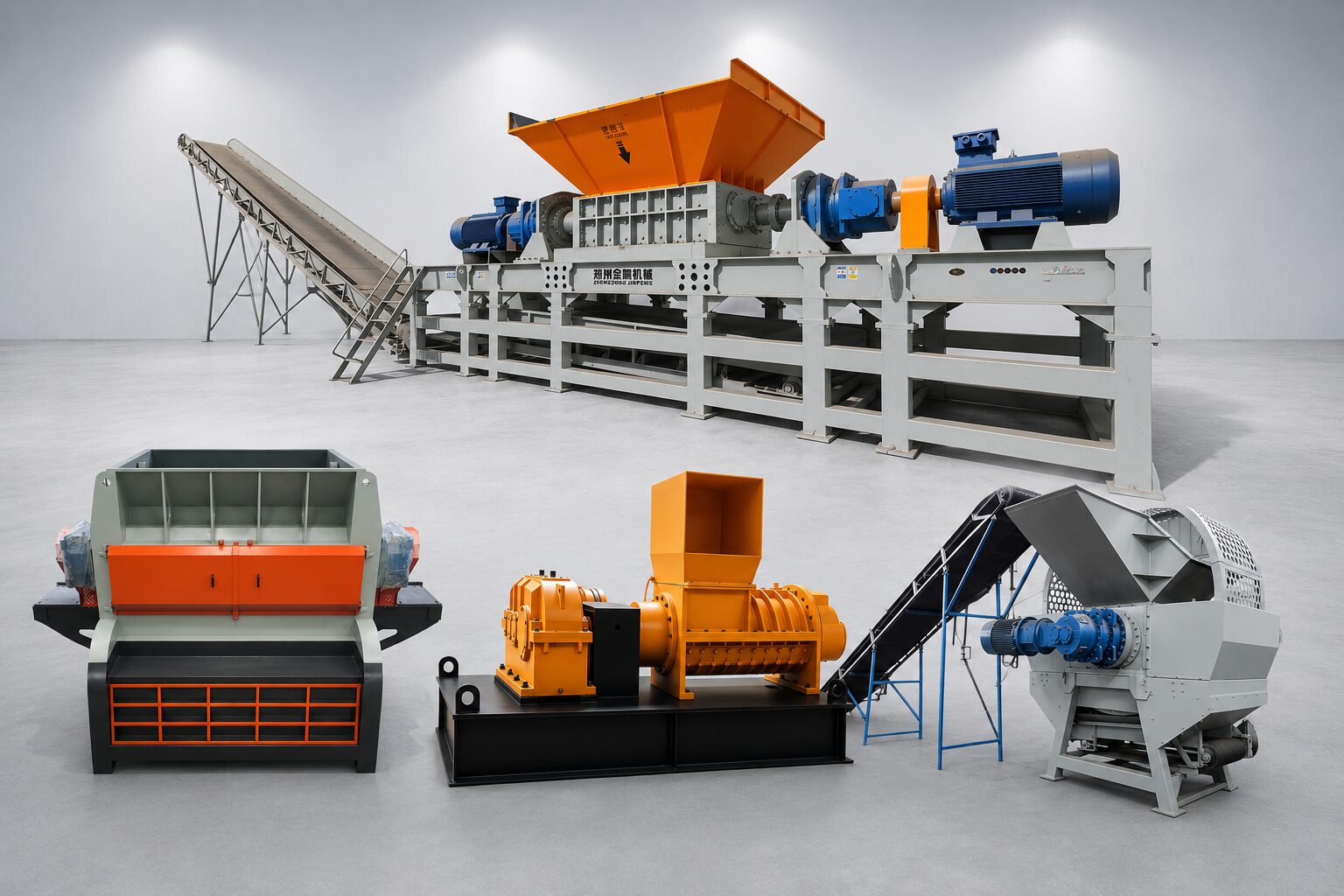
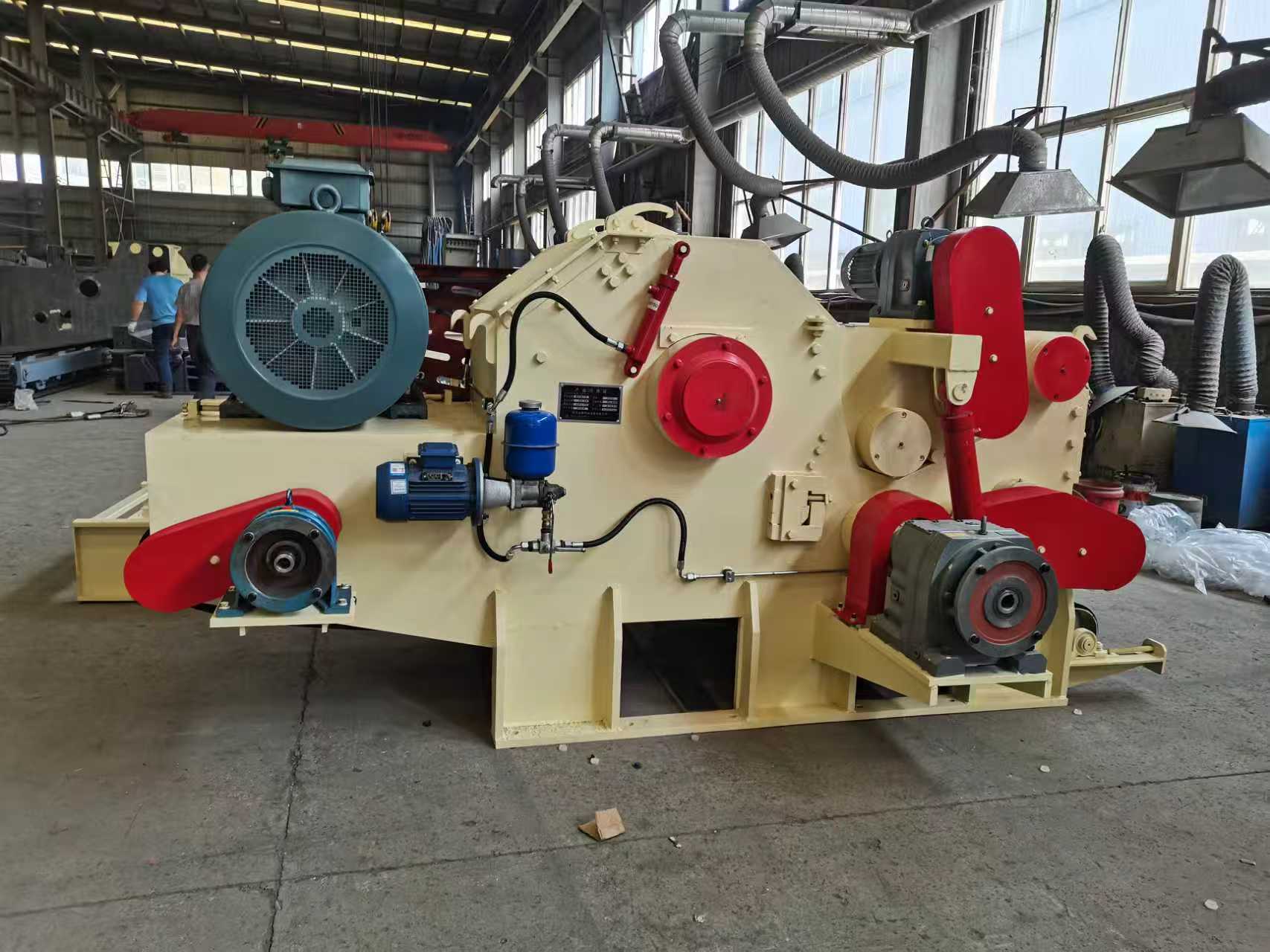
For relatively clean wood waste, such as pallets, slabs, offcuts, and untreated lumber, a single-shaft shredder can provide controlled sizing before secondary grinding. Its hydraulic pusher feeds material into a rotor, producing a more consistent discharge than many dual-shaft designs. This makes it suitable where uniform chip or particle size improves downstream screening, drying, or pelletizing performance.
For bulky, mixed, or difficult material, a dual-shaft shredder is often the stronger primary reduction choice. It can tear, shear, and break down irregular feedstock such as green waste, roots, brush, packaging-contaminated wood, and mixed biomass. Its output is generally coarser and less uniform, so it is commonly followed by a horizontal grinder, fine wood grinder mill, or screening stage.
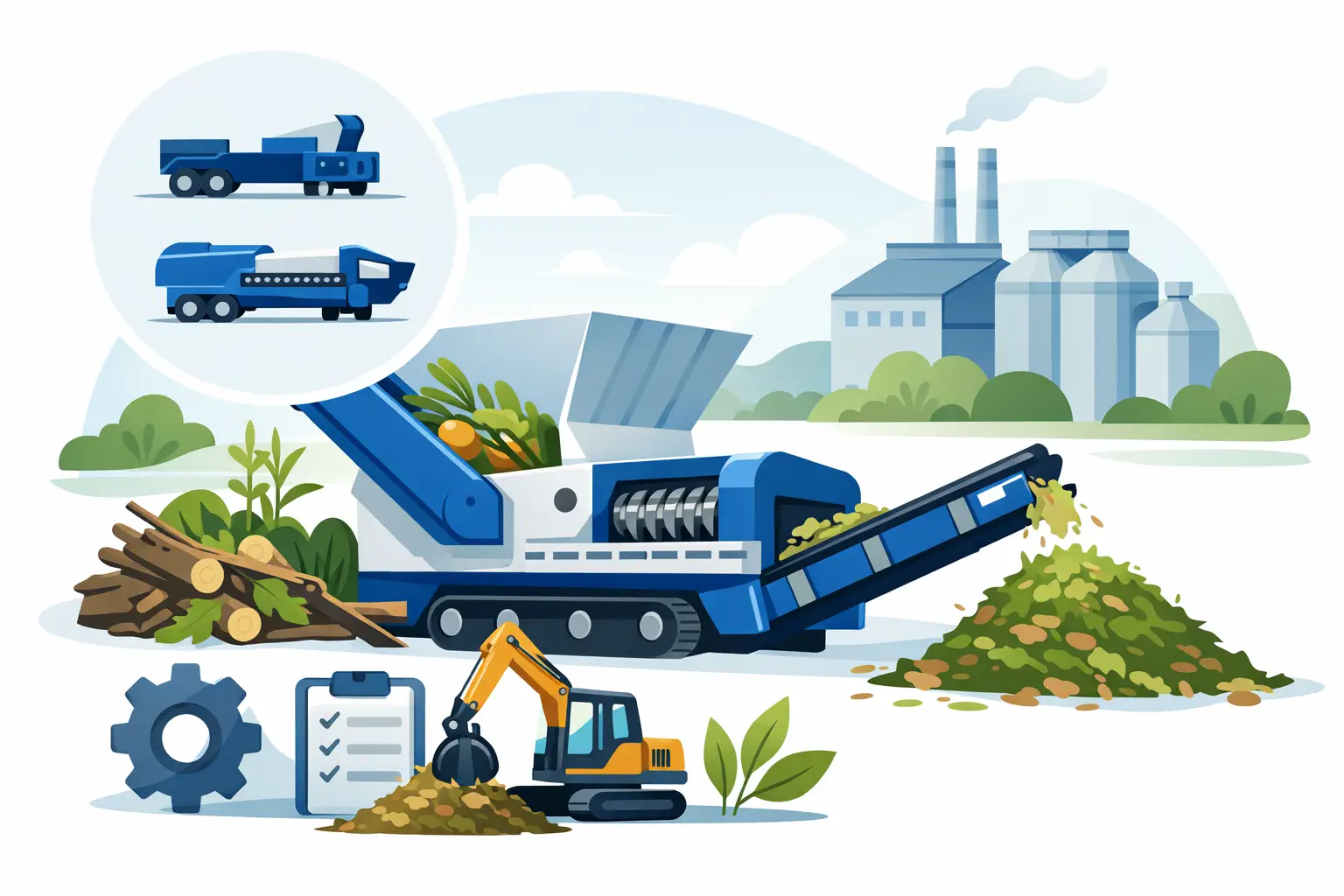
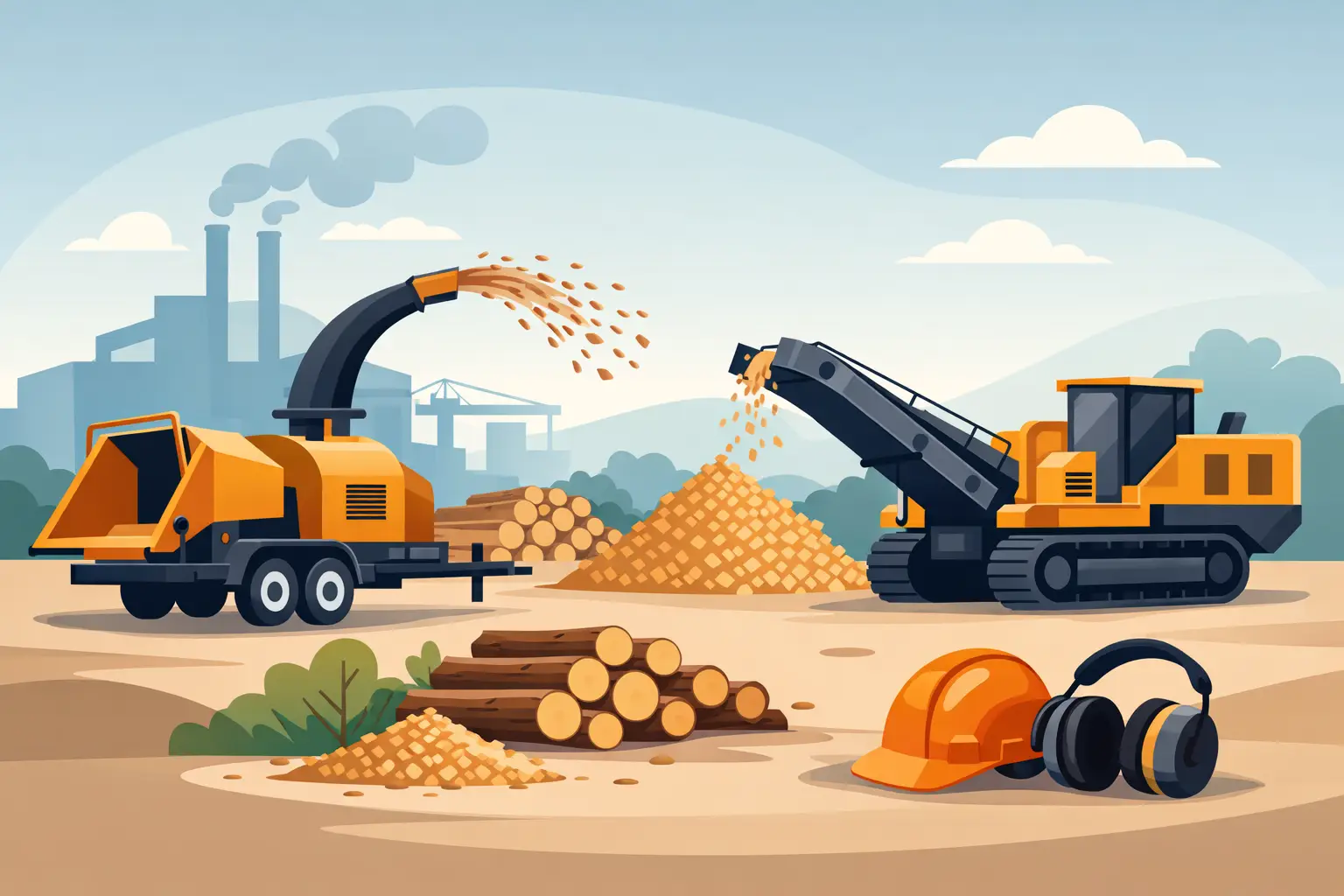
If logs, branches, and forestry residue are the primary feed, a drum chipper or disc chipper may be more efficient than a shredder as the first machine. Chippers are designed to produce wood chips from relatively clean, directional wood feed. Shredders are more appropriate when feedstock is heterogeneous, oversized, contaminated, or difficult to control.
How to Size a Biomass Shredder by Reduction Ratio
Do not size a biomass shredder based only on the maximum feed opening. The required reduction ratio matters just as much. Reduction ratio compares incoming material size with the desired discharge size. Larger reductions require more cutting work, more residence time in the machine, and usually more installed power.
For example, reducing 24-inch wood offcuts to 4-inch pieces is a different duty from reducing the same feed to 1-inch particles. The first may be handled effectively by a primary shredder. The second normally requires a staged process: primary shredding, screening, then secondary grinding. Trying to force a primary shredder to perform fine grinding can lower throughput, increase blade wear, and create excessive power demand.
Specify the final product in operational terms. State whether the output will become boiler fuel, biomass chips, compost feedstock, RDF/SRF blend material, mulch, or pellet feed. Boiler systems may accept a wider particle distribution than pellet plants. Pelletizing lines typically require tighter control, followed by drying and fine grinding. A screen should be included whenever oversize recirculation or consistent product sizing is necessary.
Match Rotor, Cutter, and Drive Design to Material
Shredder capacity is the result of cutting geometry and torque, not motor horsepower alone. Higher horsepower can help, but it cannot compensate for an unsuitable rotor, cutter profile, shaft speed, or feed system.
Single-shaft machines should be evaluated by rotor diameter, rotor length, knife configuration, screen size, hydraulic pusher force, and gearbox design. A larger rotor creates greater cutting engagement and inertia, while a longer rotor supports wider material flow. Reversible square knives can lower maintenance cost because multiple cutting edges are available before replacement is required.
Dual-shaft machines should be assessed by shaft diameter, cutter thickness, hook profile, shaft speed, center distance, and drive torque. Thick cutters and high-torque low-speed shafts are especially valuable for tough, contaminated, or irregular feedstock. Slow-speed shredding also reduces dust and lowers the risk of sparks compared with high-speed impact reduction, although fire prevention still requires disciplined plant design and operating procedures.
For both machine types, avoid selecting power solely from a standard model table. Wet wood, fibrous agricultural residue, and materials containing soil, nails, wire, or occasional metal require higher torque and more durable cutter materials. A plant processing clean dry pallet stock can often use a different configuration from a green waste recycling facility, even when the target tons per hour are similar.
Size the Complete Processing Line
A biomass shredder cannot achieve stable production if the surrounding equipment is undersized. The infeed conveyor must manage peak material volume. The discharge conveyor must remove material faster than the shredder produces it. Magnetic separation, screening, dust collection, storage, and downstream grinding all need compatible capacity.
As a practical rule, downstream conveyors and transfer points should have enough margin to prevent buildup during momentary output peaks. Screens should be evaluated by open area, material moisture, particle shape, and blinding risk, not just nominal tons per hour. Wet fibrous biomass can clog screen openings and send too much material into recirculation, which then overloads the shredder or secondary grinder.
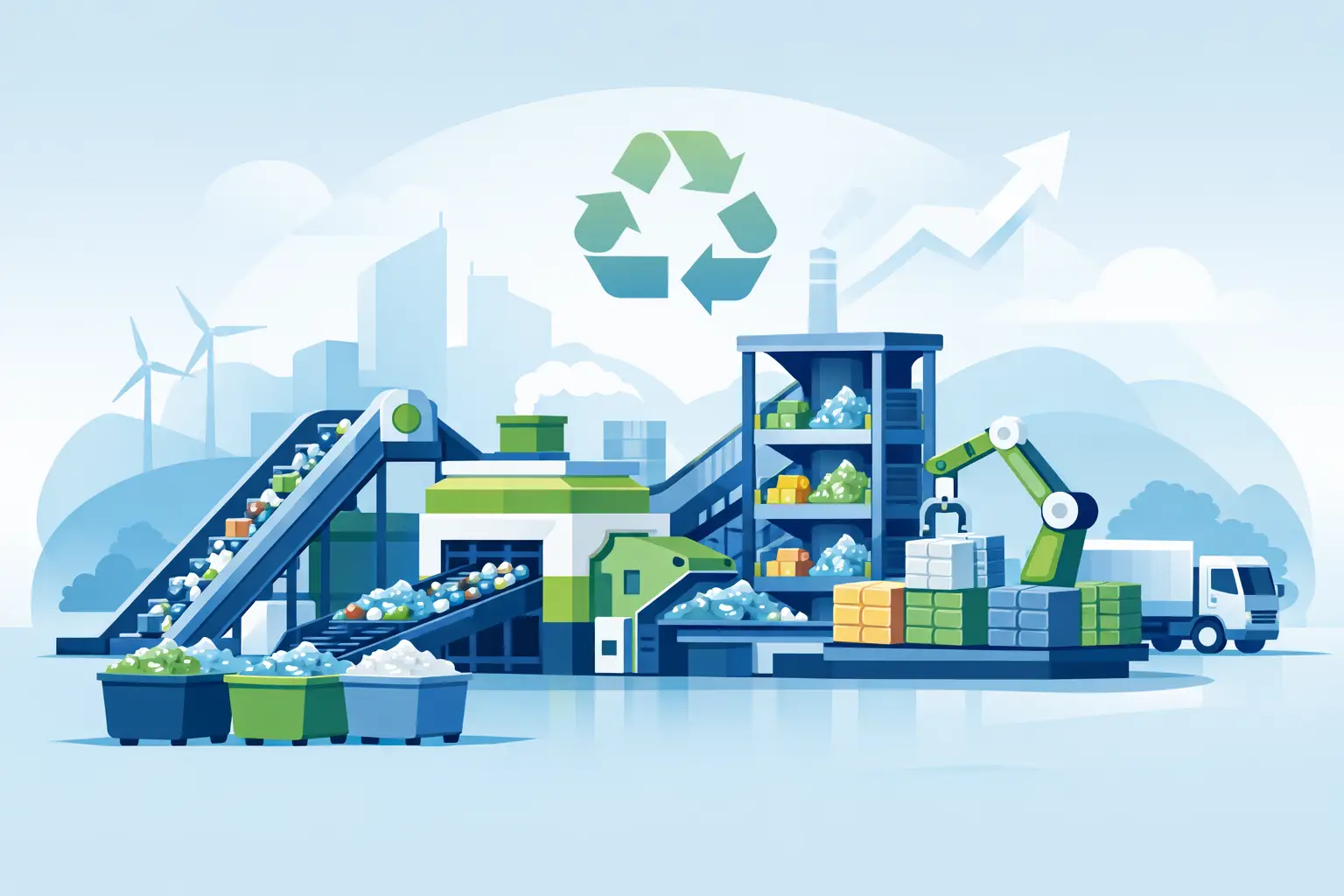
For integrated biomass fuel lines, the process sequence may include receiving, debarking or metal removal, primary shredding or chipping, screening, secondary grinding, drying, and final storage. The best machine size is therefore determined by the narrowest acceptable point in that sequence. A high-capacity shredder feeding an undersized dryer does not create more saleable fuel. It only creates inventory, handling cost, and possible moisture-related quality issues.
Plan for Peak Conditions and Maintenance Access
Industrial equipment must be sized for the difficult day, not only the ideal sample material. Consider seasonal moisture changes, storm debris, varying supplier quality, and occasional oversize pieces. If feedstock is highly variable, choose a machine with sufficient torque reserve, overload protection, and a control system that can reverse automatically when jams occur.
Maintenance requirements also affect usable capacity. Blade changes, screen replacement, rotor inspection, and bearing service should be possible without excessive downtime. A slightly larger machine with accessible wear parts can deliver more annual production than a lower-cost unit that is difficult to service. Ask for estimated knife life based on your material, the expected replacement procedure, and recommended spare parts for the first year of operation.
The right biomass shredder is not simply the largest machine within budget. It is the machine configured around your feedstock, operating schedule, target product, and downstream process limits. Provide representative material data and production objectives to an experienced equipment manufacturer, then size the system around sustained output rather than optimistic peak ratings. That approach protects uptime, controls cost per ton, and gives your plant a dependable path to higher-value biomass products.