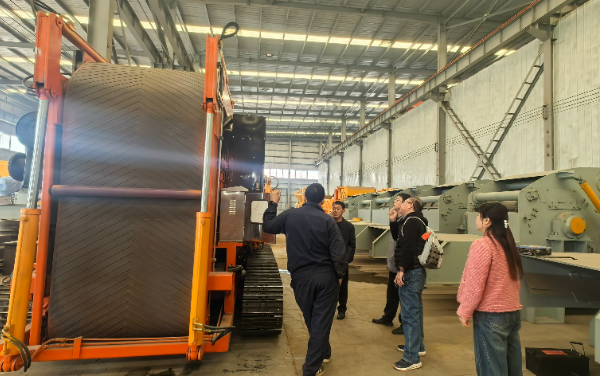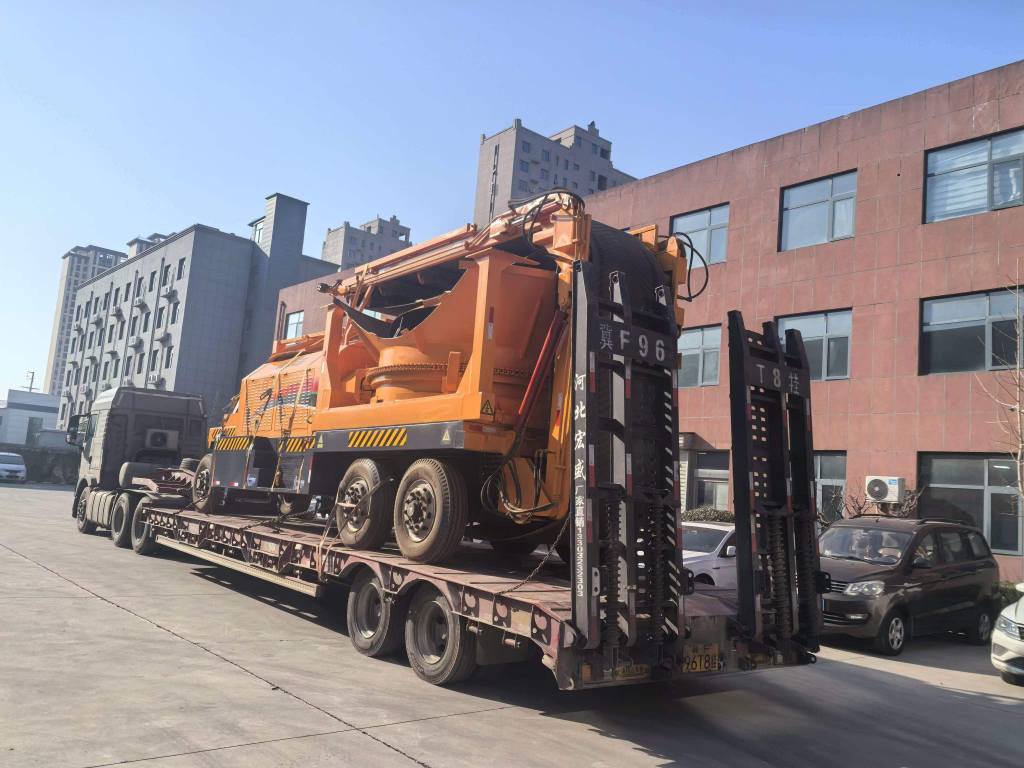
When a biomass line struggles, the problem often starts before drying, screening, or pelletizing. Oversized feedstock, uneven chips, and unstable infeed rates create bottlenecks that ripple across the entire plant. A drum chipper for biomass is not just a front-end machine. It is a capacity control point, a product quality tool, and in many operations, the difference between stable output and constant interruption.
For industrial buyers, the decision is rarely about whether chipping is required. The real question is which drum chipper configuration matches the feedstock, target capacity, downstream equipment, and operating conditions. That is where many projects go off track. A machine that performs well on clean roundwood may underperform on slab wood, branches, veneer waste, or mixed biomass. The right choice depends on application detail, not brochure language.
Why a drum chipper for biomass is widely used
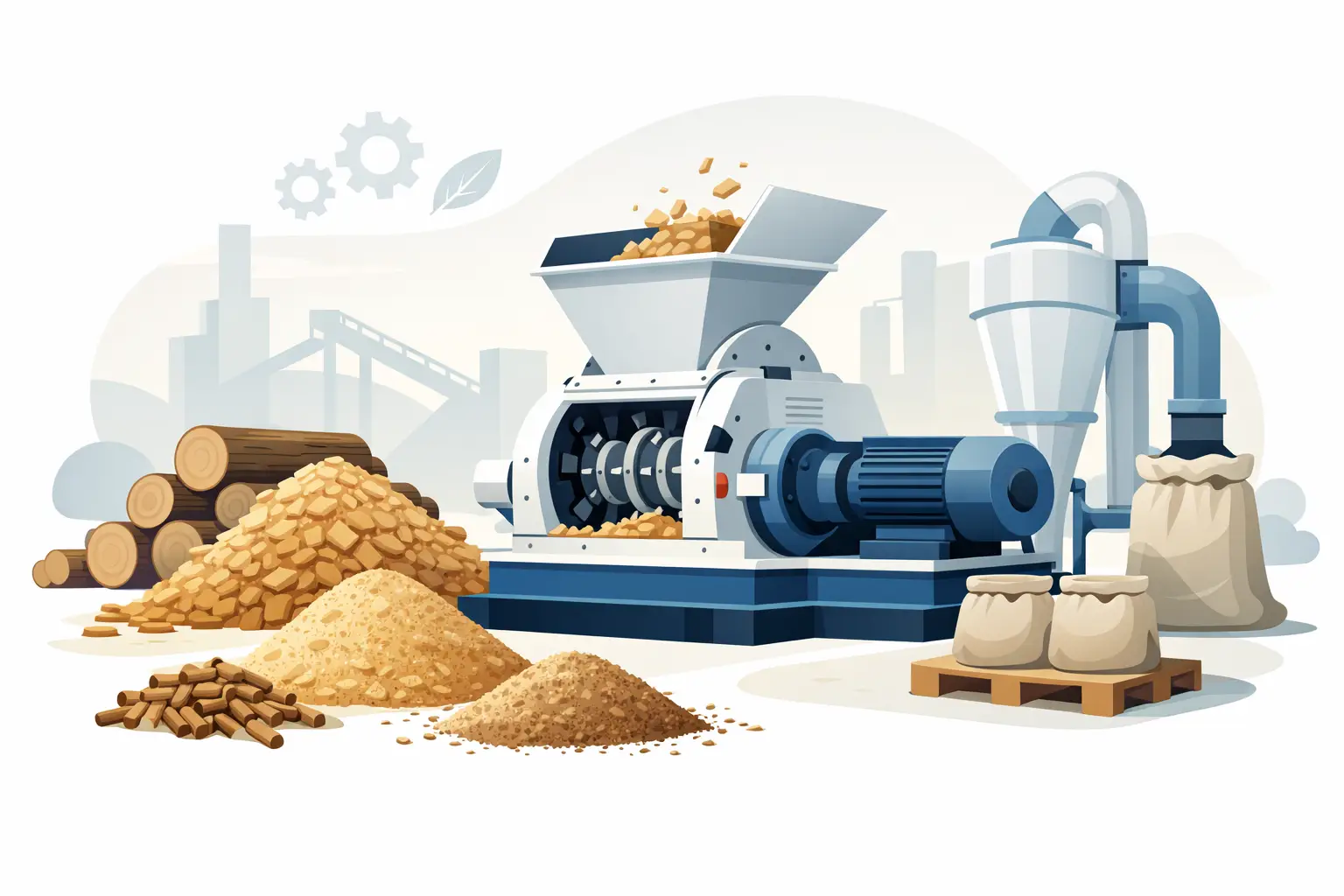
Drum chippers are common in biomass fuel preparation because they balance throughput, feed tolerance, and chip consistency. Compared with smaller or lighter-duty chipping equipment, a drum-based design is better suited to continuous industrial loading and heavier feedstock volumes. For biomass plants processing wood residues, forestry material, pallet waste, or green waste fractions, that matters.
The drum mechanism pulls material into the cutting zone with strong feeding action. This makes it effective for irregular feedstock that may not enter a disc chipper as easily. In practical terms, a drum chipper can help reduce manual feed intervention, smooth out loading fluctuations, and improve line stability. That said, feedstock condition still matters. Wet, stringy, contaminated, or highly variable material may require upstream sorting, debarking, or pre-shredding.
Chip quality is another reason buyers choose this format. Downstream dryers, hammer mills, pellet mills, and combustion systems all benefit from controlled particle size. Uniform chips flow better, dry more evenly, and place less stress on later-stage equipment. If the operation is selling chips to panelboard, pulp, or fuel customers, size consistency also affects product acceptance.
Feedstock defines the machine
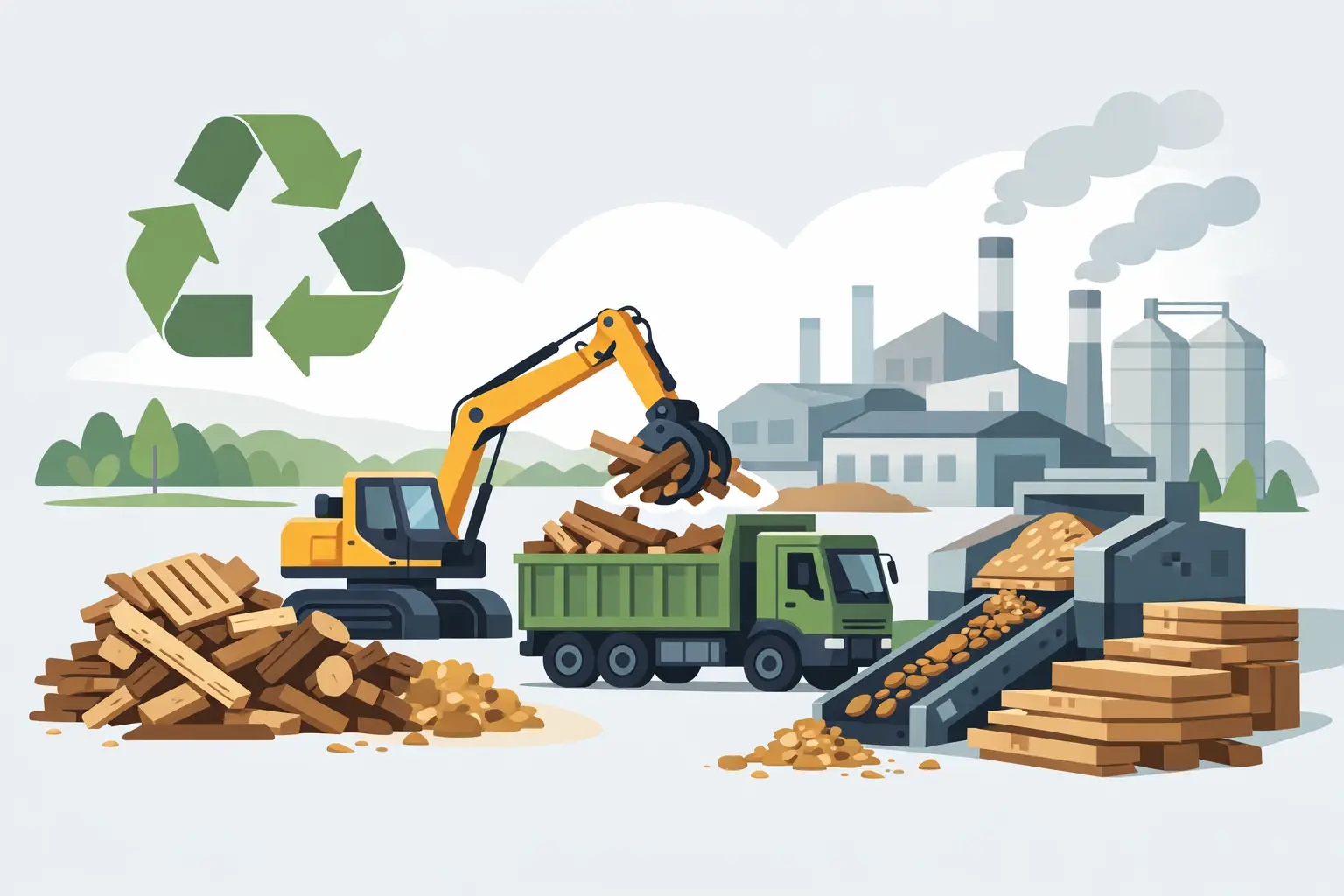
The first step in selecting a drum chipper for biomass is defining the real feedstock mix, not the ideal one. Many plants state they process wood waste, but that description is too broad to support equipment selection. Softwood logs, hardwood offcuts, sawmill slabs, bamboo, orchard waste, construction wood, and storm debris do not behave the same way inside a chipper.
Diameter range is only part of the picture. Length, moisture, density, bark content, contamination risk, and stringiness all influence machine sizing and rotor design. Green branches with leaves and forks can bridge at the infeed. Pallet wood may contain nails or tramp metal. Sawmill residues may be cleaner but more variable in geometry. If the incoming material changes by season or supplier, the chipper has to absorb that variation without frequent jams or excessive wear.
This is why experienced buyers evaluate the full process envelope. They ask what percentage of the feed is clean wood, what oversize pieces appear in peak loads, and whether foreign material is fully controlled. They also look at how the chipper will be loaded – conveyor-fed, grapple-fed, or wheel-loader-fed – because surges in loading can affect both output and wear life.
Capacity is more than tons per hour
High throughput is a valid target, but capacity claims need context. Biomass chipping output is influenced by feedstock type, moisture content, screen specification if used downstream, knife condition, and operator consistency. A line rated for high tons per hour on uniform logs may produce substantially less on bulky mixed residues.
That is why serious project planning looks at system capacity, not just chipper capacity. If the conveyor cannot maintain a steady feed, if metal removal is inadequate, or if the dryer can only accept a narrower particle range, the highest theoretical chipper output has limited value. A balanced line is usually more profitable than a chipper that outpaces everything around it.
In larger facilities, redundancy may also be worth considering. One heavy-duty chipper with no backup can create a single point of failure. In some operations, especially where feedstock contracts or fuel delivery schedules are strict, uptime planning matters as much as nameplate output.
What to check in drum chipper design
A durable industrial chipper starts with the rotor and housing. The drum must maintain cutting stability under heavy feed conditions, and the frame needs enough structural strength to resist vibration and long-term fatigue. Thin construction may reduce initial cost, but it often increases maintenance frequency and affects service life.
Knife arrangement, knife material, and knife access deserve close attention. Fast replacement is valuable, but so is predictable wear behavior. Some operations process cleaner wood and can prioritize long production runs between knife changes. Others handle abrasive or dirtier material and need easier maintenance access because wear intervals will be shorter. There is no universal best option. The right setup depends on operating reality.
The feeding system is equally important. Hydraulic feed rollers, powered conveyors, and pressure control all influence how consistently material enters the cutting chamber. Poor feed control leads to uneven chip size, higher shock loading, and unnecessary power spikes. Buyers should also review bearing selection, lubrication methods, drive configuration, and safety systems. These details do not always stand out in sales literature, but they strongly affect uptime.
Matching chip size to downstream goals
Not every biomass project needs the same chip specification. Fuel for industrial boilers may accept a broader size range than feedstock prepared for pellet production. If the material is headed to a fine grinding stage, the chipper should still produce a shape and size that the grinder can process efficiently without excessive energy use.
This is where application engineering matters. An oversized chip creates drying inconsistency and can increase recirculation. An overly fine product can raise dust, reduce handling quality, and shift load to other parts of the system. The ideal output is the one that supports the next machine and the final product requirement at the lowest total operating cost.
For buyers planning an integrated biomass line, the chipper should be specified together with screening, drying, grinding, and conveying equipment. Zhengzhou Jinpeng Machinery Equipment Co., Ltd. typically approaches these projects as connected systems rather than isolated machines, because front-end size reduction directly affects downstream efficiency and maintenance.
Operating cost is where the real comparison happens
Purchase price is visible. Lifecycle cost is usually where the investment is won or lost. A lower-cost chipper can become the more expensive option if it consumes knives quickly, requires frequent unplanned shutdowns, or produces inconsistent chips that reduce downstream efficiency.
Energy use should be reviewed in relation to output quality and feedstock type. More power is not automatically a disadvantage if it supports stable high-throughput production on difficult material. The better question is how efficiently that power is converted into usable, specification-compliant chips.
Wear parts planning also matters. Buyers should ask how often knives are changed, how quickly they can be serviced, what other wear components need regular replacement, and whether spare parts support is reliable for export markets. In remote or high-volume operations, parts availability can be as important as machine performance.
Where customization adds value
Standard machines are suitable for many applications, but biomass projects often benefit from customization. Infeed opening size, discharge arrangement, motor configuration, control logic, support structure, and metal removal integration may all need adjustment based on site layout and material profile.
This is especially true in plants handling mixed or difficult feedstock. A chipper integrated with debarking, pre-shredding, magnetic separation, trommel screening, or drying can deliver better overall efficiency than a standalone machine selected without line-level planning. For B2B buyers, the best supplier is often not the one offering the longest equipment list, but the one that can match machine design to plant objectives.
When a drum chipper is the wrong choice
A drum chipper is highly effective, but not universal. If the material stream contains excessive metal, heavy contamination, or highly heterogeneous waste, pre-shredding may be necessary before chipping. If the operation processes very fine trimming waste or requires aggressive secondary reduction, another size-reduction stage may deserve priority.
That is not a weakness of the machine. It is simply a process reality. The best industrial solutions come from choosing equipment based on material behavior and end-use requirements, not forcing every feedstock through the same machine category.
A well-specified drum chipper for biomass should make the rest of the line easier to run. If it reduces labor, stabilizes throughput, and delivers chips that your downstream equipment can process without constant correction, it is doing exactly what capital equipment should do – turning raw material variability into predictable production.