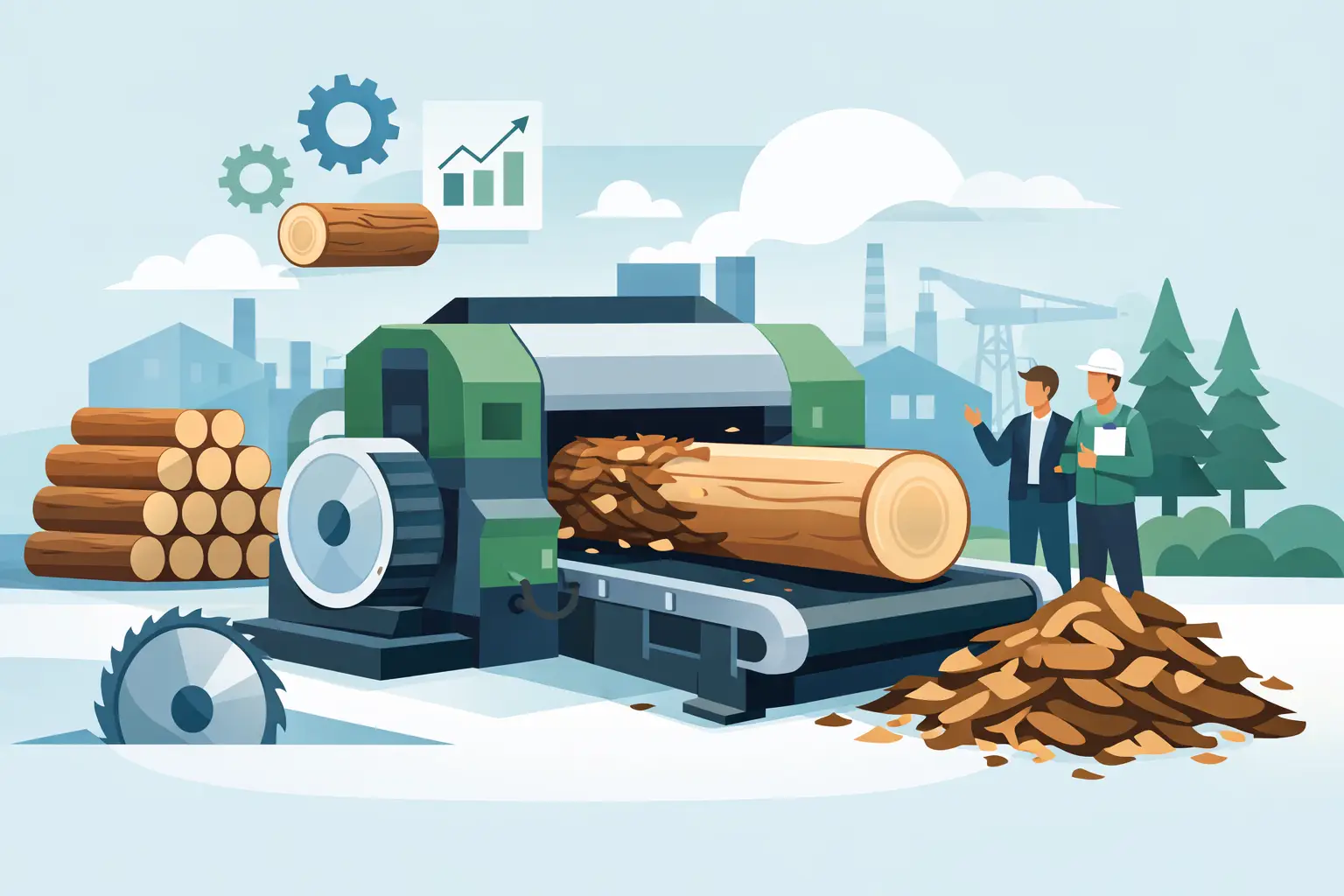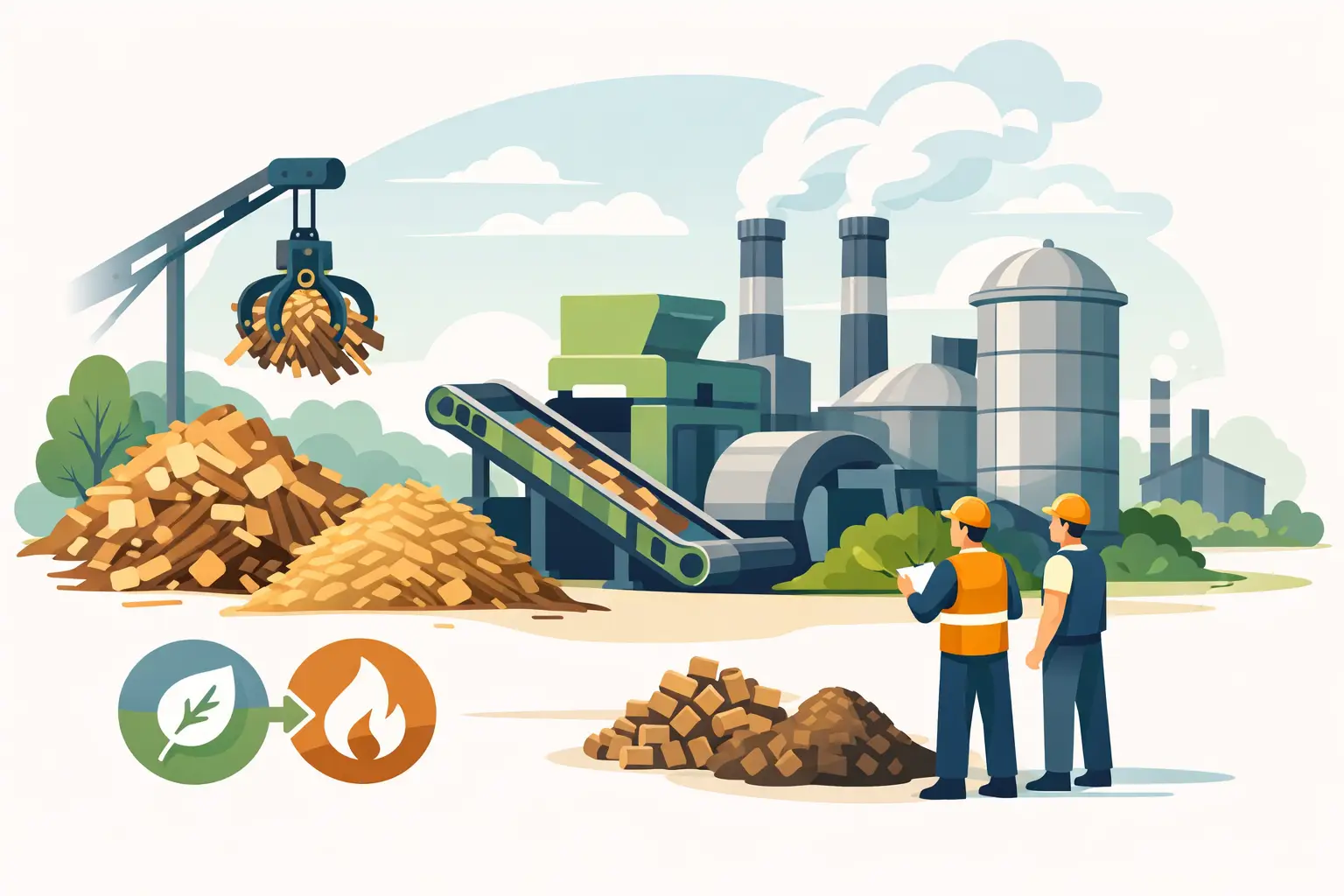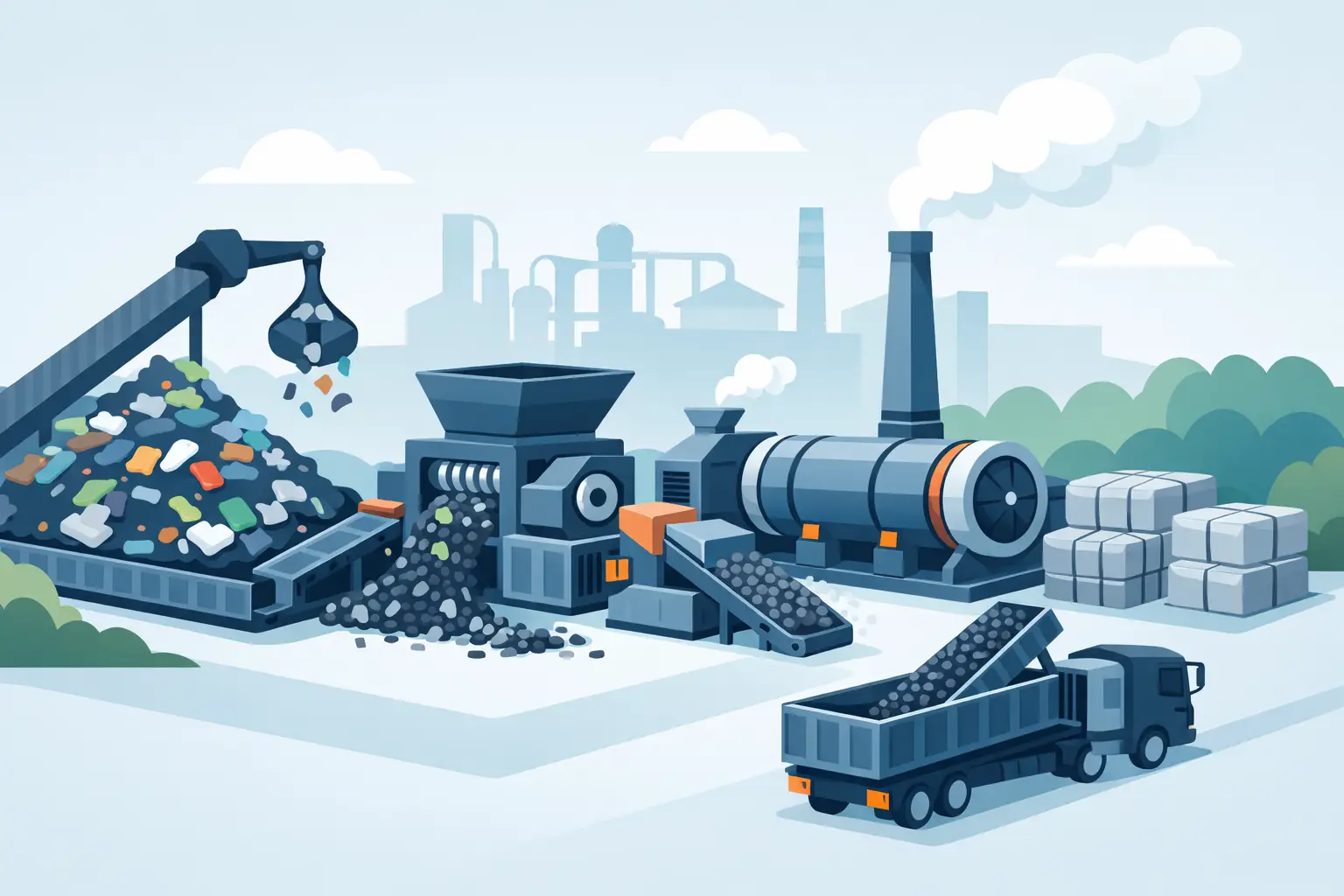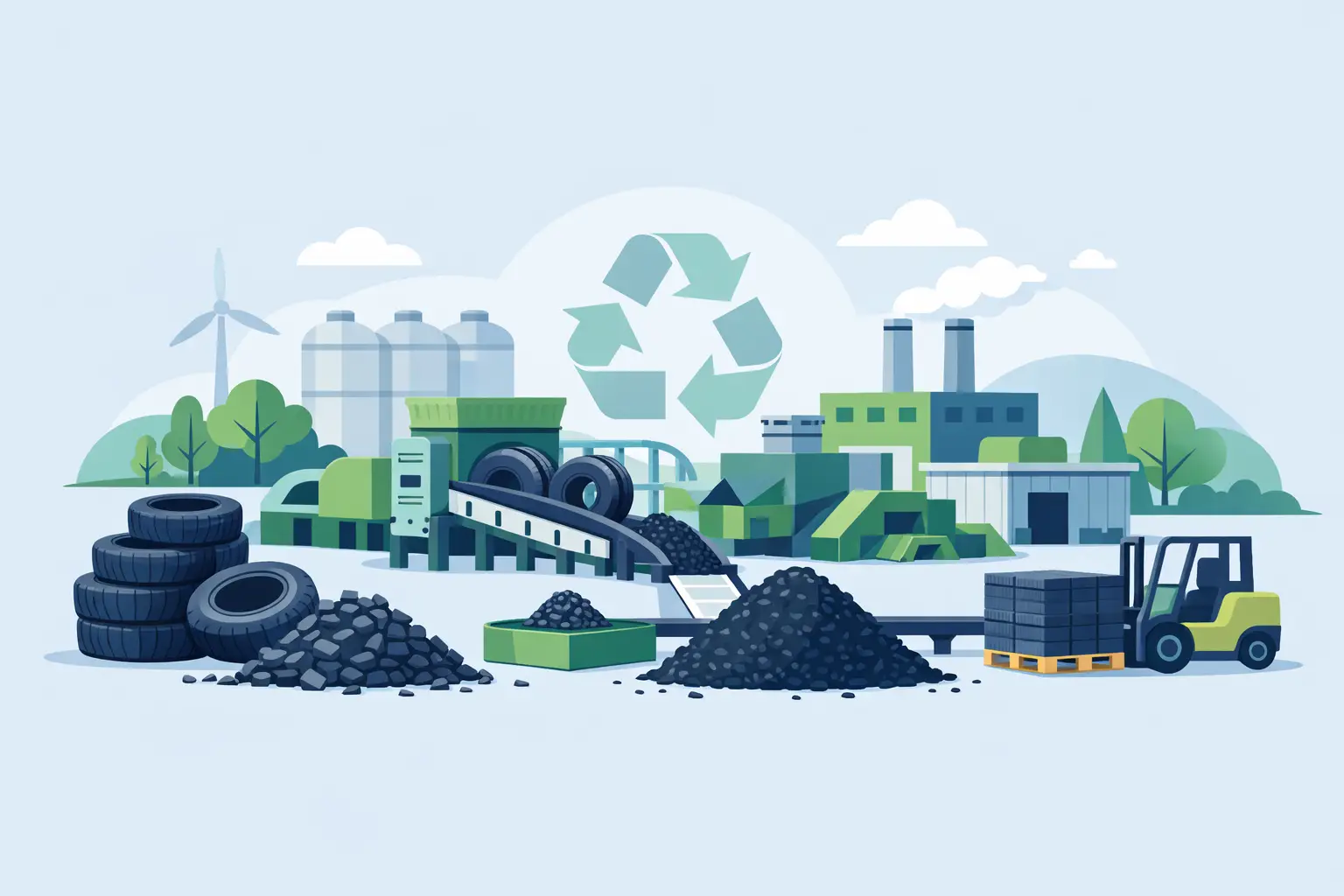
A truckload of scrap tires looks like a disposal problem. In a well-designed plant, it is a feedstock stream with recoverable rubber, steel, and fiber value. That is the real answer to how to process waste tires – not as a single machine purchase, but as a controlled reduction and separation system built around feed size, target output, and throughput.
For plant owners, project engineers, and procurement teams, the challenge is rarely whether tires can be recycled. The challenge is how to process them efficiently under real operating conditions, with mixed passenger tires, truck tires, off-the-road material, beads, sidewalls, dirt contamination, and fluctuating inbound volume. A tire line that performs on paper but struggles with wear, wrapping, or inconsistent discharge will quickly become an expensive bottleneck.
How to process waste tires in an industrial line
At industrial scale, tire processing follows a clear logic. The tires are fed into primary size reduction, moved through secondary shredding or crushing, then passed through separation and classification stages to recover usable material streams. Depending on the end market, the final output may be tire-derived fuel, wire-free rubber chips, rubber granules, or fine rubber powder.
The correct process path depends on what you intend to sell. If the goal is tire-derived fuel for cement kilns or industrial boilers, the line can stop at a coarser chip size once steel removal meets buyer requirements. If the goal is crumb rubber for molded products, modified asphalt, mats, or reclaimed rubber applications, the plant needs tighter size control and more complete liberation of steel and fiber.
That distinction matters because it affects everything downstream – machine selection, motor power, screen aperture, magnetic separation strength, dust control, and maintenance planning.
Start with the feedstock, not the machine list
Waste tires are not a uniform raw material. Passenger car tires process differently from truck tires, and both differ significantly from OTR tires or solid rubber tires. Steel content, wall thickness, elasticity, and contamination load all change the required cutting force and wear profile.
This is why experienced buyers begin with a feedstock audit. You need to know the tire mix, moisture and dirt level, expected hourly input, and whether oversized tires will be pre-cut or handled directly. A line sized for clean passenger tires may underperform badly when truck casings dominate the feed. Likewise, a system built for high-capacity rough shredding may not deliver the liberated, consistent material needed for fine rubber applications.
A practical tire recycling project begins with four technical questions: what comes in, what goes out, how many tons per hour must be processed, and how pure each recovered stream needs to be. Once those are defined, the equipment layout becomes much more straightforward.
Primary shredding is where capacity is won or lost
The first reduction stage sets the tone for the entire plant. Whole tires are bulky, elastic, and difficult to grip. Primary shredders must generate enough torque to tear and cut the tire body while handling steel bead areas without frequent stalling.
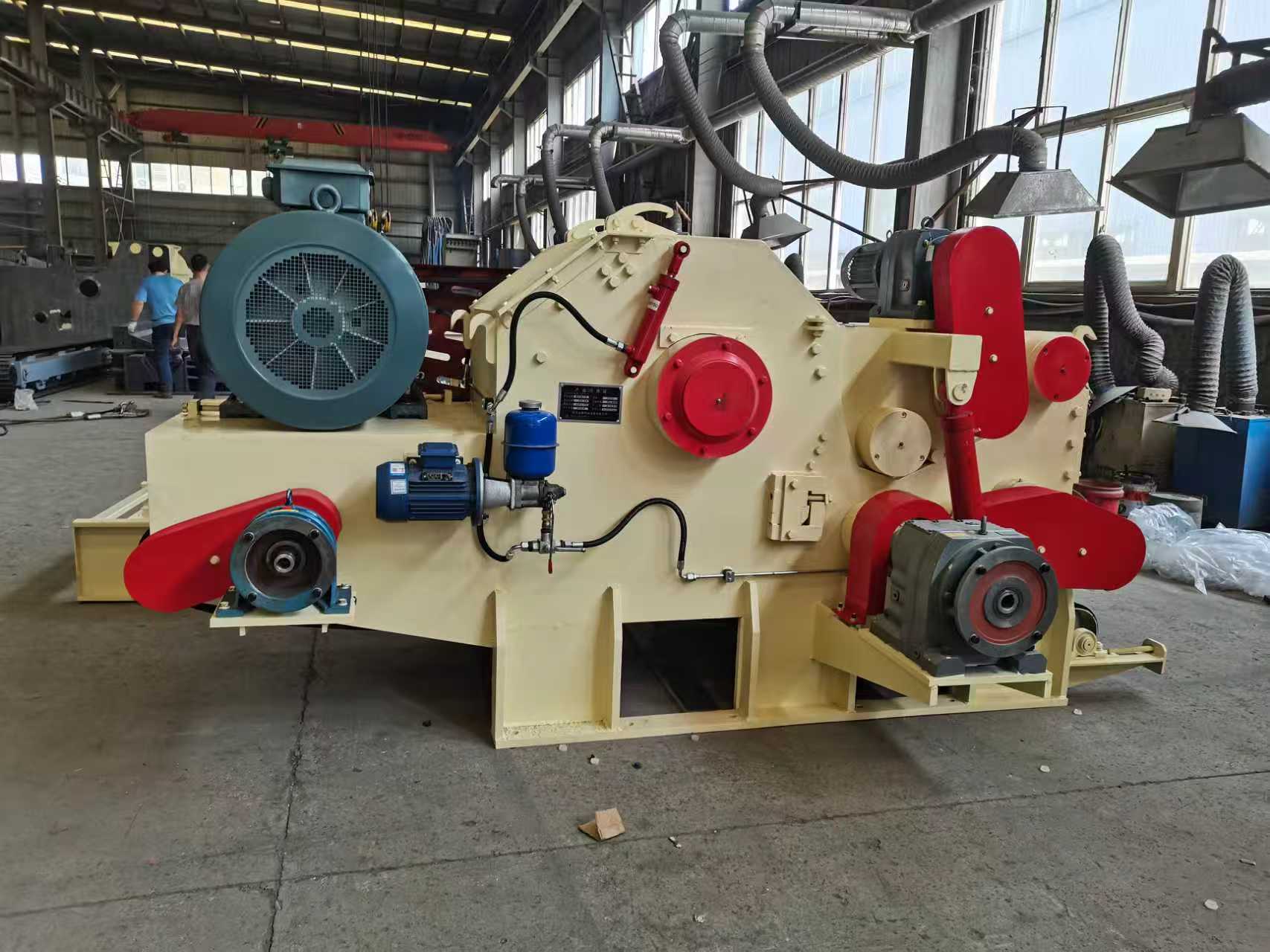
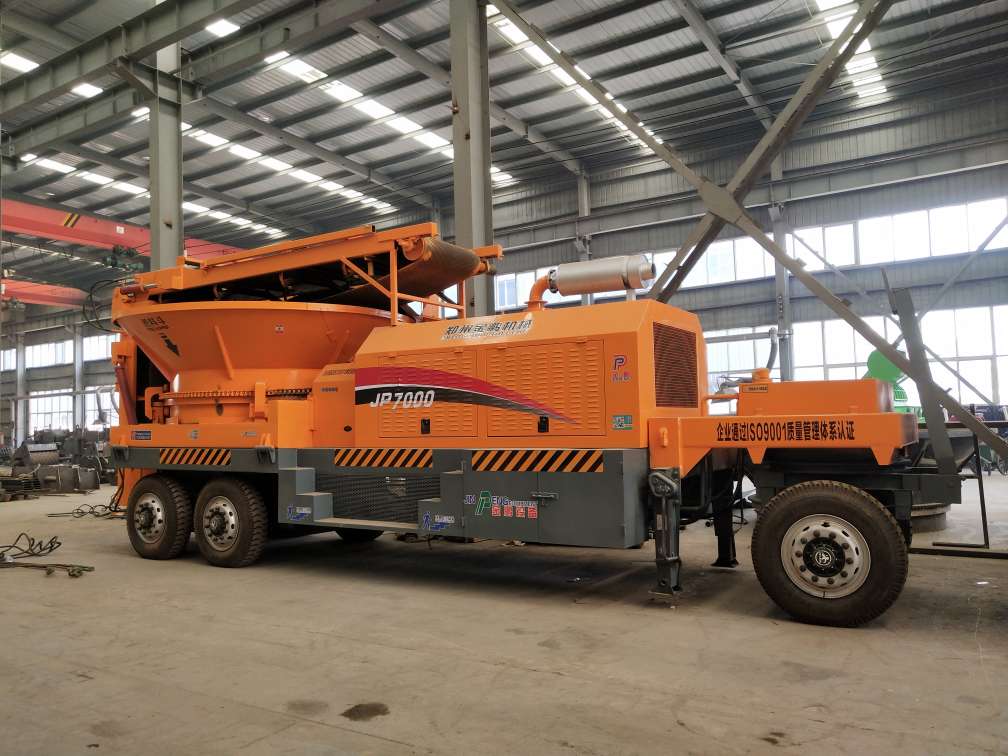
For many operations, a dual-shaft tire shredder is the preferred starting point because it delivers aggressive intake, strong tearing action, and stable performance on mixed tire feed. This stage typically reduces whole tires into rough strips or chips suitable for controlled downstream processing. The goal here is not final sizing. The goal is reliable volume reduction that prepares material for more efficient secondary cutting and separation.
Machine geometry matters. Cutter design, shaft speed, chamber width, and drive configuration all affect throughput and wear life. A plant focused only on nameplate capacity can miss the more important factor – sustained capacity under actual feed conditions. That is where industrial-duty construction, replaceable wear components, and a properly matched drive system make the difference.
Secondary reduction and granulation create marketable output
After primary shredding, the material usually moves to a secondary shredder, cracker mill, or rubber crushing stage, depending on target size. This stage is where rough tire pieces become controlled chips or granules.
If the target product is 20-50 mm tire chips, the plant may use a secondary shredder with screen control to produce a cleaner, more uniform output. If the target is smaller granulate, further grinding and classification are required. Fine sizing increases product value, but it also raises equipment demands and energy consumption. That trade-off should be evaluated early.
Some buyers overbuild for fine powder when their local market only supports coarse chip pricing. Others stop too early and leave margin on the table because they cannot meet downstream customer specifications. The right answer depends on your offtake market, utility cost, and maintenance capability.
Steel and fiber separation determine product quality
Reducing tire size is only part of the job. A commercially viable line must also separate steel and fiber effectively. Poor separation lowers rubber value, increases customer complaints, and can create handling problems in downstream applications.
Magnetic separation is typically integrated after shredding and again after finer reduction stages. As tire fragments become smaller and more liberated, steel can be extracted more completely. In high-quality lines, multiple magnetic passes are used because one stage is rarely enough for clean recovery.
Fiber removal is more application-dependent. For coarse fuel chips, some residual fiber may be acceptable. For rubber granules and fine rubber powder, air separation and screening become more important. The cleaner the rubber fraction, the broader the number of markets available to the processor.
This is where line integration matters more than standalone machine performance. A strong shredder with weak separation still produces a weak commercial result.
Screening keeps the line efficient
Screening is often underestimated in tire recycling projects. In practice, it does two jobs at once. It controls final product size and it protects downstream equipment by returning oversized material for recirculation.
Trommel screens, vibratory systems, and specialty screening equipment can all play a role depending on the material size and moisture conditions. For tire and rubber processing, screening performance affects uniformity, throughput balance, and recirculating load. If the screen blinds or struggles with sticky material, the entire line can lose efficiency.
A properly engineered screening stage stabilizes output. It helps operators hit specification without overgrinding acceptable material, which saves power and reduces wear.
Dust, heat, and wear are real operating variables
Any serious discussion of how to process waste tires should address plant conditions, not just reduction stages. Tire processing generates dust, heat, vibration, and abrasion. Fine rubber systems in particular need attention to airflow, collection points, and housekeeping.
Wear management is equally important. Tire feed contains steel, and steel accelerates wear in cutters, liners, and conveying components. Plants that focus only on purchase price often pay more later through downtime and spare part consumption. Industrial buyers are usually better served by equipment designed for serviceability – accessible chambers, replaceable knives, standardized components, and maintenance layouts that reduce labor hours.
There is also a throughput-versus-fineness trade-off. Higher purity and smaller particle size generally require more stages, more recirculation, and tighter process control. That can improve product value, but only if the market supports it.
What a complete tire processing system should include
A complete waste tire solution is typically more than a shredder and a magnet. Most industrial plants require a coordinated system that may include tire feeding, primary shredding, discharge conveying, overband magnetic separation, secondary reduction, screening, fiber separation, dust collection, and electrical control integration.
For larger projects, customization is often necessary. Tire dimensions, local labor conditions, power standards, export requirements, and final product specifications all influence system design. This is why many buyers prefer working with a manufacturer that can supply both core machinery and integrated line planning rather than piecing together equipment from multiple sources.
Zhengzhou Jinpeng Machinery Equipment Co., Ltd. focuses on that system-level approach, especially where buyers need high-capacity reduction, stable output sizing, and application-specific configuration for waste tire and rubber projects.
Choosing the right process line for your plant
When evaluating suppliers, buyers should look beyond general claims and ask direct technical questions. What tire types has the line processed? What is the actual hourly throughput by feed category? How is steel removed at each stage? What is the expected output size range and purity? Which components are wear-critical, and how quickly can they be replaced?
Good suppliers answer those questions with process logic, equipment matching, and realistic operating assumptions. They also acknowledge where performance depends on feed consistency and end-product targets. That level of transparency usually signals stronger engineering support.
Waste tires do not become profitable material by accident. They become profitable when the line is built to match the feedstock, the output market, and the operating reality of the plant. If you are planning a new project or upgrading an existing system, the best next step is to define your target product first and build the process around it. That is where efficient tire recycling starts, and where better returns are usually found.