If you are evaluating a tire shredder machine for sale, the wrong decision usually shows up fast – slow throughput, knife wear that climbs too quickly, oversized discharge, or a machine that handles clean passenger tires well but struggles with truck tires and mixed feed. For industrial buyers, the question is not simply which machine is available. The real question is which configuration will keep a recycling line productive under continuous load.
Tire shredding is a demanding application. Whole tires are bulky, elastic, and reinforced with steel. Input conditions vary by region and supply channel, and the downstream product requirements can be very different from one project to the next. A plant producing tire-derived fuel does not need the same output profile as a line preparing crumb rubber feedstock. That is why a serious buying decision starts with process fit, not brochure claims.
How to evaluate a tire shredder machine for sale
A tire shredder should be judged by the material it will process, the output it must achieve, and the operating conditions it will face every day. Throughput matters, but throughput without stable output size and manageable wear cost is not an efficient investment.
For most industrial projects, the first distinction is whether you need primary shredding only or a complete processing line. Primary shredders reduce whole tires into rough strips or chips for volume reduction and easier handling. If the project requires cleaner, smaller, and more consistent material, the shredder must be matched with downstream conveying, magnetic separation, screening, granulation, or pulverizing equipment. Buyers often underestimate this point and end up with a strong standalone machine feeding a weak overall system.
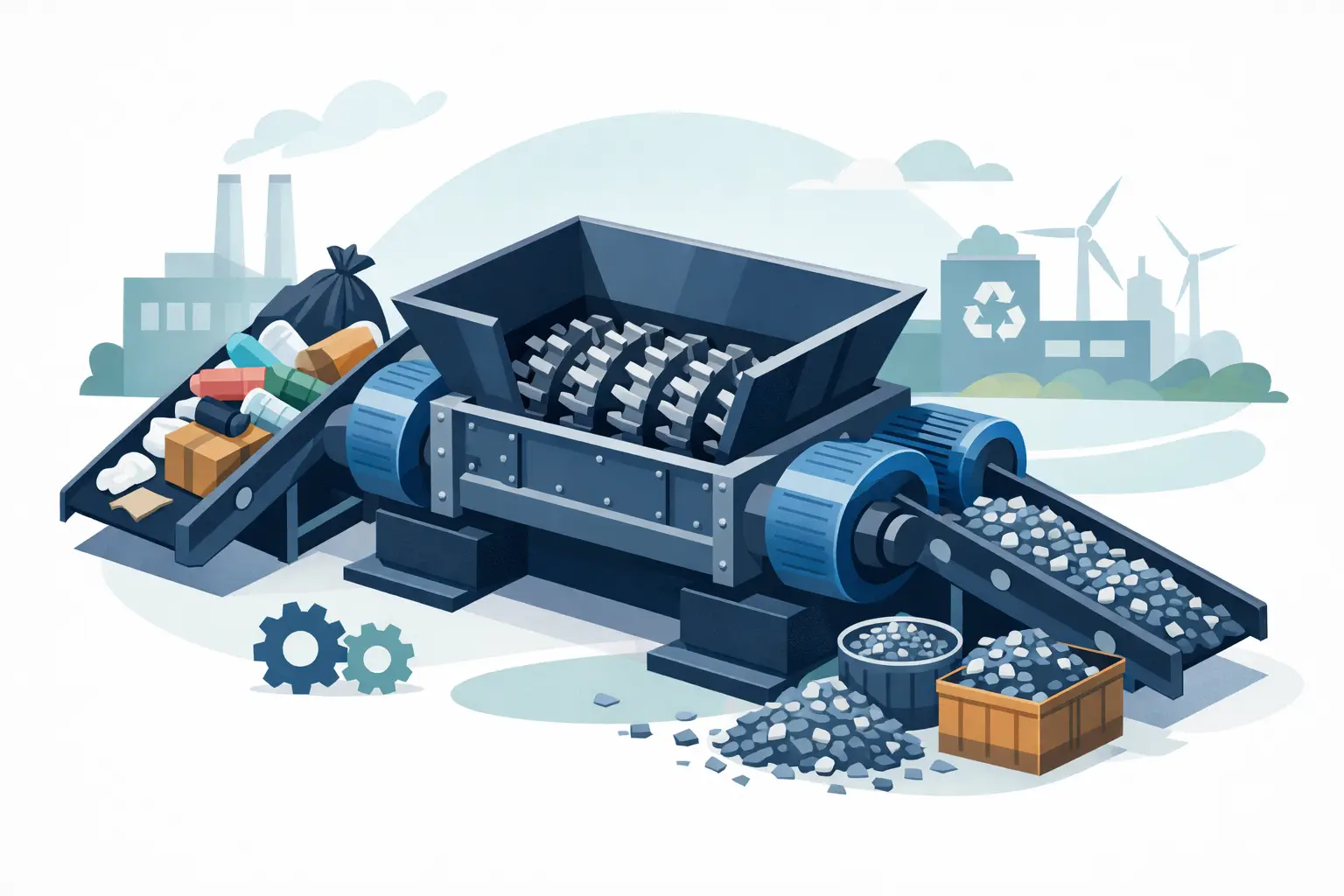
A well-matched machine starts with rotor design, knife arrangement, drive power, and chamber geometry. Dual-shaft tire shredders are widely selected for primary reduction because they offer strong tearing force, stable feeding, and good tolerance for difficult tire carcasses. Single-shaft designs can also play an important role in secondary size reduction where tighter control of output is needed. The best choice depends on whether your priority is aggressive initial breakage, controlled final sizing, or both in sequence.
What really affects tire shredding performance
The most common purchasing mistake is focusing on motor power alone. Power is necessary, but it is not a complete performance indicator. A shredder with high installed power but poor cutter geometry or weak torque delivery under load may not perform as expected in real production.
Feedstock type and tire size
Passenger tires, truck tires, OTR tires, and mixed tire bales do not behave the same way in the chamber. Truck tires with heavier sidewalls and more steel content require more aggressive cutting action and stronger drivetrain support. If your feed includes mixed sizes, the shredder should be specified for the largest and toughest fraction, not the average tire.
This is also where hopper design and feeding method matter. A machine that accepts whole tires efficiently reduces labor and minimizes pre-cutting requirements. If operators have to repeatedly reposition material to maintain feeding, actual hourly output will fall below the rated capacity.
Output size requirement
Output specification should drive machine selection from the beginning. If your discharge target is coarse chips for transport or RDF preparation, a primary shredder may be sufficient. If you need smaller, more uniform rubber pieces for steel liberation and further granulation, the line will need tighter size control and likely multiple reduction stages.
Smaller target size usually means lower single-pass throughput and higher wear cost. That trade-off is normal. The right machine is not the one promising the finest size at the highest speed. It is the one delivering the required specification with acceptable operating cost over time.
Knife material and wear management
Tire processing is hard on cutting components. Knife material, heat treatment, hardness balance, and reusability all affect long-term cost. A machine that looks economical at purchase can become expensive if cutters dull quickly or replacement intervals are too short.
Industrial buyers should ask practical questions. How are knives mounted? Can cutters be rotated and reused? How long is the typical service cycle under truck tire duty? How accessible are wear parts during maintenance? Downtime during cutter replacement has a direct production cost, especially in plants operating on fixed shipment schedules.
Drive system and overload protection
A tire shredder must handle shock loads without frequent stoppage. Gearbox strength, shaft integrity, bearing selection, and overload protection are not secondary details. They determine whether the machine survives difficult feed and irregular loading.
Hydraulic or automatic reversal functions are especially valuable in tire applications because they help release material jams and protect the cutting system. This does not eliminate maintenance, but it improves continuity and reduces operator intervention.
Standalone shredder or complete tire recycling line
For many buyers, the better investment is not a single tire shredder machine for sale but a complete processing solution built around the target product. That could include a primary shredder, conveyor systems, overband magnetic separators, trommel or vibratory screening, granulators, fiber separation, and fine grinding stages.
This approach matters because every component changes the real output of the line. A high-capacity shredder feeding undersized conveyors or weak magnetic separation creates bottlenecks and contamination issues downstream. On the other hand, a line engineered as one system improves material flow, product consistency, and labor efficiency.
This is where a manufacturer with broader size-reduction and screening capability has an advantage. Zhengzhou Jinpeng Machinery Equipment Co., Ltd. supports integrated equipment selection across shredding, crushing, screening, and recycling applications, which is often more valuable than choosing a single machine in isolation.
Questions serious buyers should ask before requesting a quote
When reviewing a tire shredder machine for sale, buyers should give suppliers more than a simple capacity target. A useful inquiry includes tire type, tire size range, moisture and contamination conditions, desired output size, planned operating hours, local power standard, and the required downstream product. That information allows proper machine sizing instead of generic quoting.
You should also ask whether the quoted capacity is based on passenger tires, truck tires, or mixed feed. Capacity numbers can look similar on paper while reflecting very different test conditions. The same is true for output size. A supplier should be able to explain whether the stated discharge is a typical range, a screened fraction, or a nominal shred size before secondary processing.
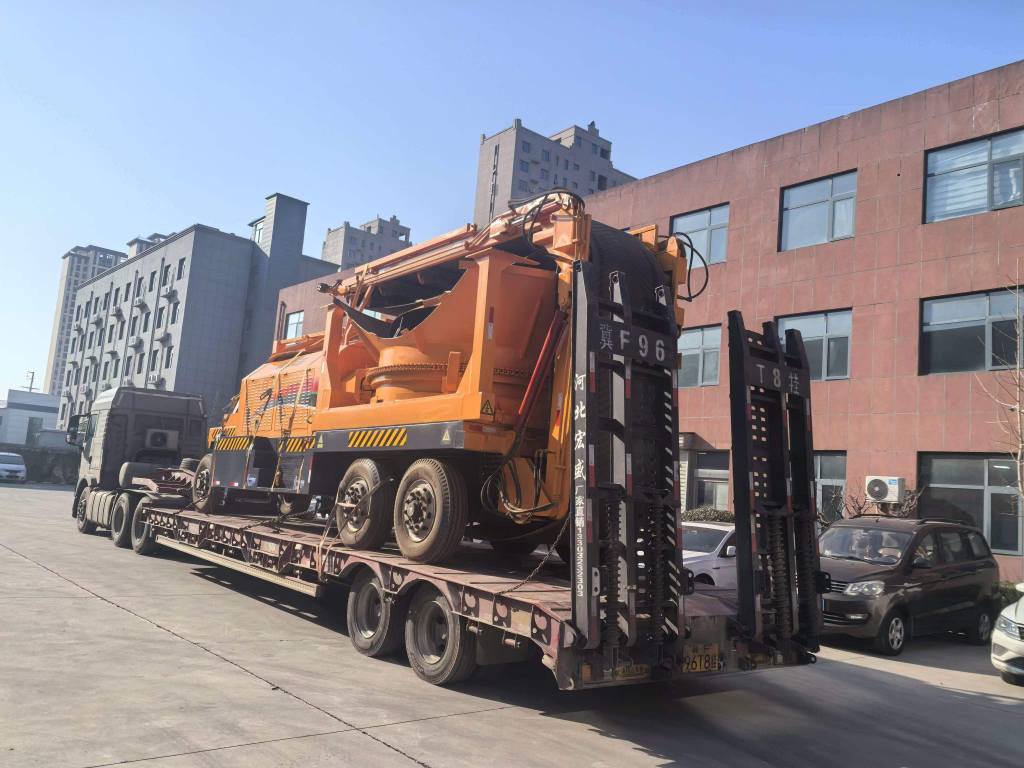
For export buyers, electrical configuration, spare parts planning, installation support, and delivery terms also deserve attention early in the process. A machine that arrives quickly but lacks the right voltage specification or startup support can delay commissioning far more than a longer but properly planned shipment.
Signs of a machine built for industrial duty
Industrial tire shredding is not a light application, so machine construction should reflect that reality. Look for a heavy welded frame, properly supported shafts, industrial gearbox configuration, dependable electrical controls, and maintenance access designed for repeated service intervals. These features are less visible than motor size in a sales sheet, but they often separate a production machine from a machine that performs well only in short demonstrations.
Noise level, dust control interface, and discharge handling should also be considered if the shredder will operate inside a larger plant. Buyers focused only on cutting force sometimes ignore plant integration issues until installation. In practice, feeding method, discharge elevation, conveyor matching, and service clearance around the machine all affect usable plant capacity.
Buying for today versus buying for expansion
A final point is scale. Some buyers size equipment for current feed volume only, then find themselves constrained within a year as tire supply contracts expand. Others overbuy and carry unnecessary capital cost on underused equipment. The right answer depends on your growth plan, labor cost, storage pressure, and downstream market.
If expansion is likely, ask whether the shredder can be integrated later into a larger line with additional separation and size-reduction stages. A modular path is often more practical than replacing the core machine too soon. If the project is stable and product specification is fixed, a more tightly optimized system may offer better cost efficiency from the start.
A good tire shredder purchase is not about finding the lowest-priced machine on the market. It is about selecting equipment that keeps processing predictable when feedstock is inconsistent, wear is unavoidable, and output requirements must still be met. If you approach the decision from the full process backward – material in, product out, uptime in between – you are far more likely to invest in a shredder that performs like production equipment, not just sales equipment.