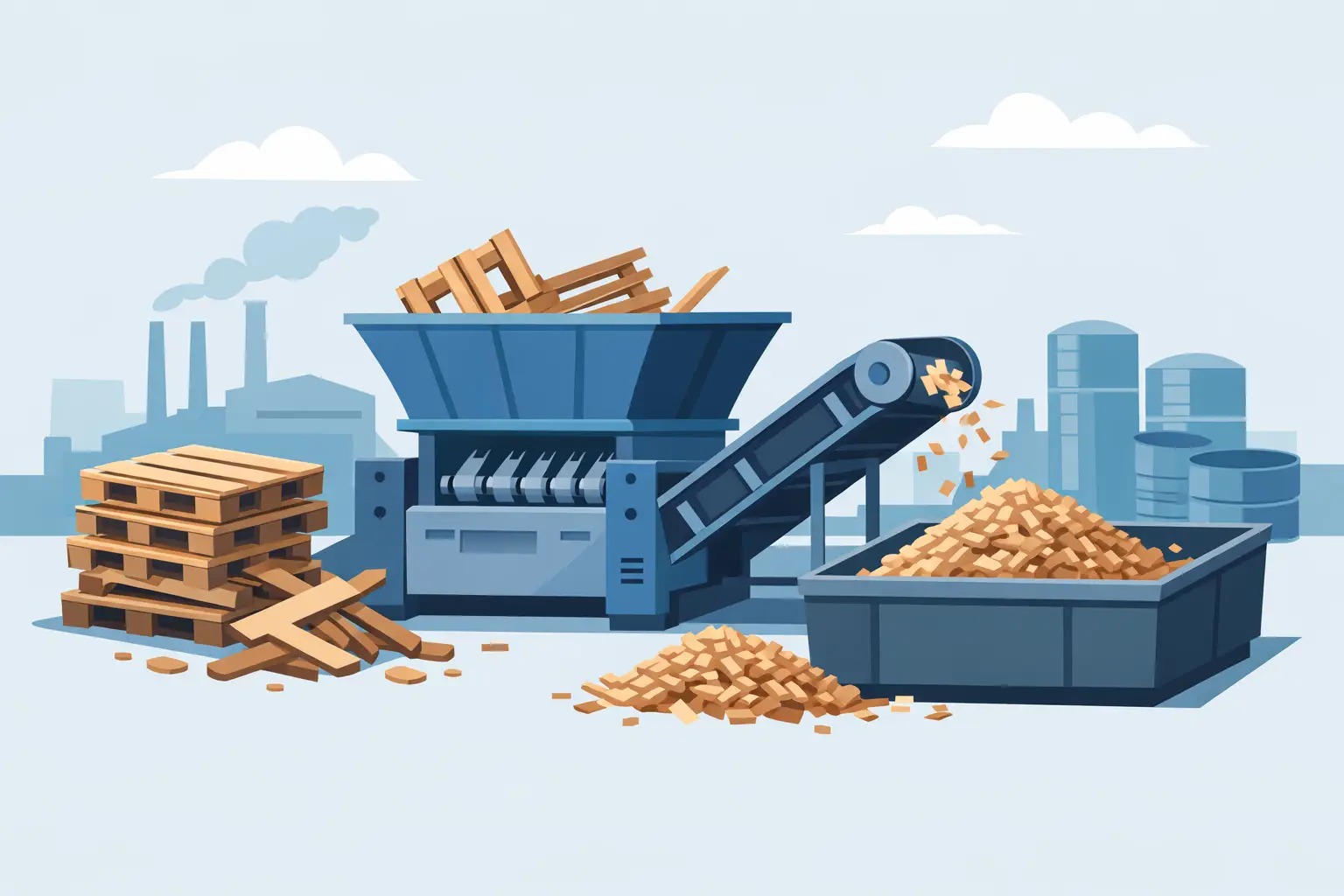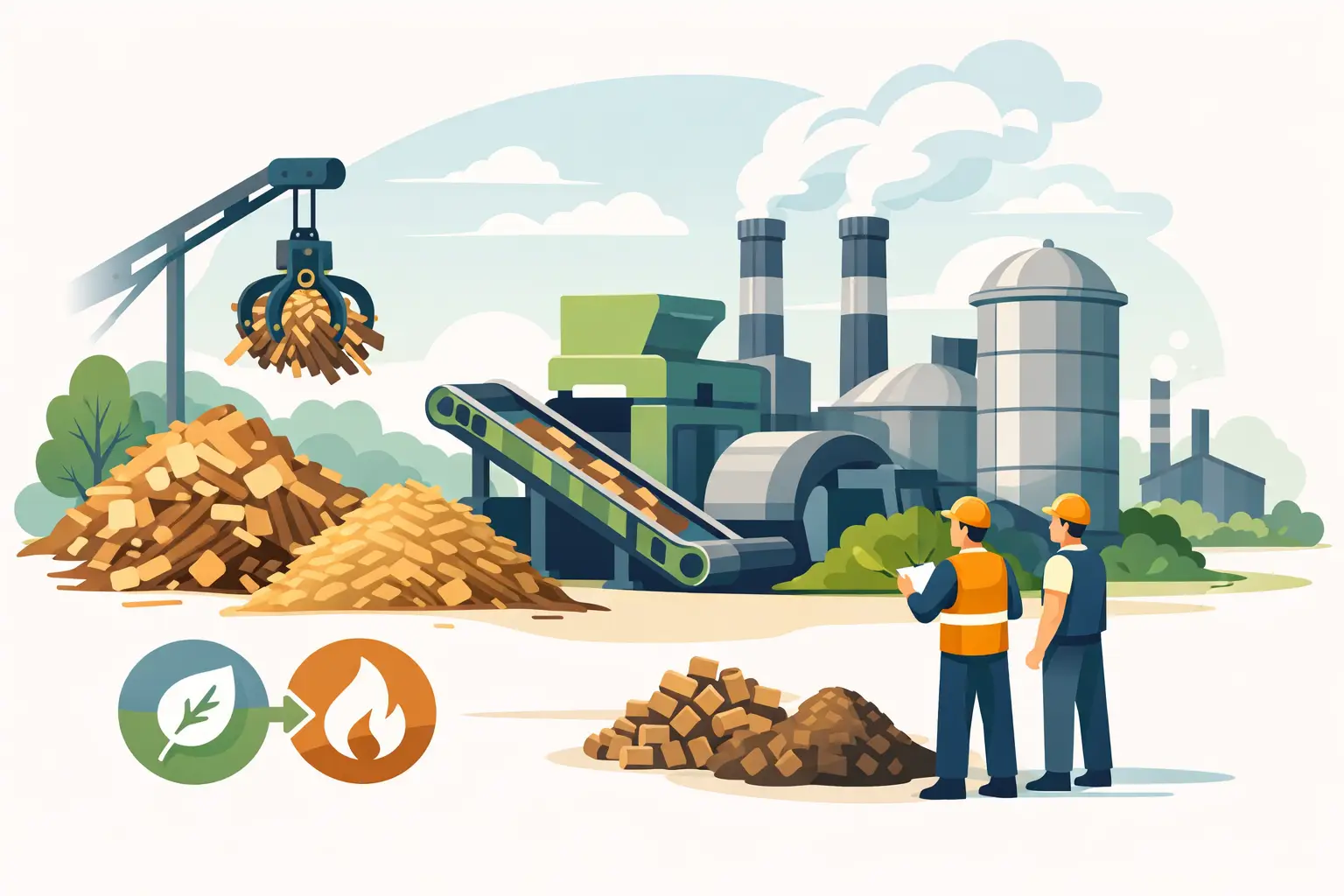
A biomass plant rarely fails because it lacks raw material. It fails when oversized wood, wet green waste, abrasive contamination, or inconsistent particle size reaches the fuel line faster than the equipment can control it. Biomass fuel preparation equipment is the processing backbone that turns irregular incoming material into a stable, transportable, and usable fuel feedstock.
For plant owners and project engineers, the objective is not simply to reduce material size. The objective is to deliver a defined fuel specification at the required hourly capacity, with acceptable moisture, low contamination, and minimal unplanned downtime. That requires a processing line designed around the actual feedstock, not a generic machine list.
What Biomass Fuel Preparation Equipment Must Accomplish
Industrial biomass fuel can be produced from forest residues, logs, branches, sawmill offcuts, pallets, construction wood, agricultural residues, energy crops, and green waste. These materials vary widely in density, moisture content, particle geometry, bark content, and contamination risk. A line built for clean mill residue will not necessarily perform well on mixed demolition wood or wet municipal green waste.
Effective biomass fuel preparation equipment performs four connected jobs: receiving and conditioning the material, reducing it to a controlled size, removing unwanted fractions, and managing moisture for the intended fuel application. The order changes depending on the source material and final product. For example, clean logs may be debarked before chipping, while bulky green waste may first pass through a slow-speed shredder before grinding and screening.
Output requirements should be defined before selecting machinery. Boiler fuel, biomass power generation, pellet feedstock, briquette raw material, and RDF or SRF blending all require different particle-size distributions and moisture targets. A plant that only specifies a high ton-per-hour figure may purchase equipment that moves volume but creates too much oversize, fines, or recirculation.
Build the Line Around Feedstock Behavior
The most reliable processing systems begin with a practical material assessment. Operators should identify the largest piece dimensions, average and peak moisture, expected contaminants, seasonal variation, and the percentage of bark, soil, metal, plastic, or stone. These details determine the cutting principle, rotor configuration, screen selection, and wear-protection requirements.
Primary size reduction for logs and woody residues
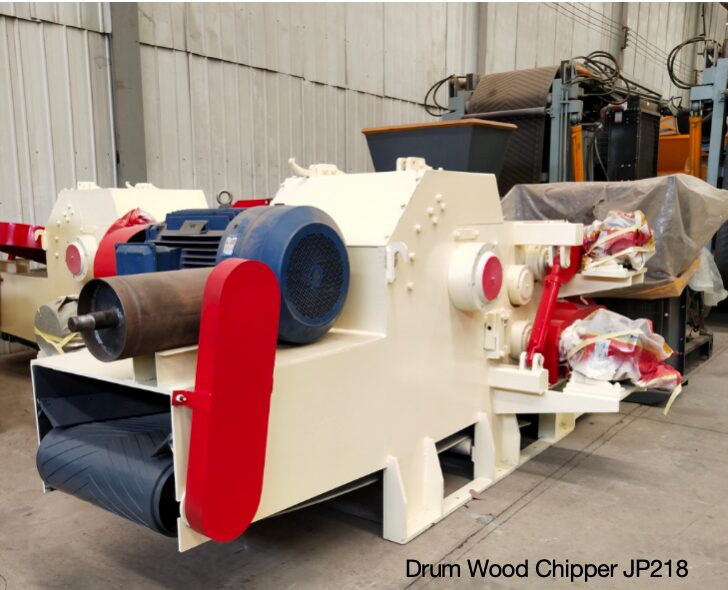
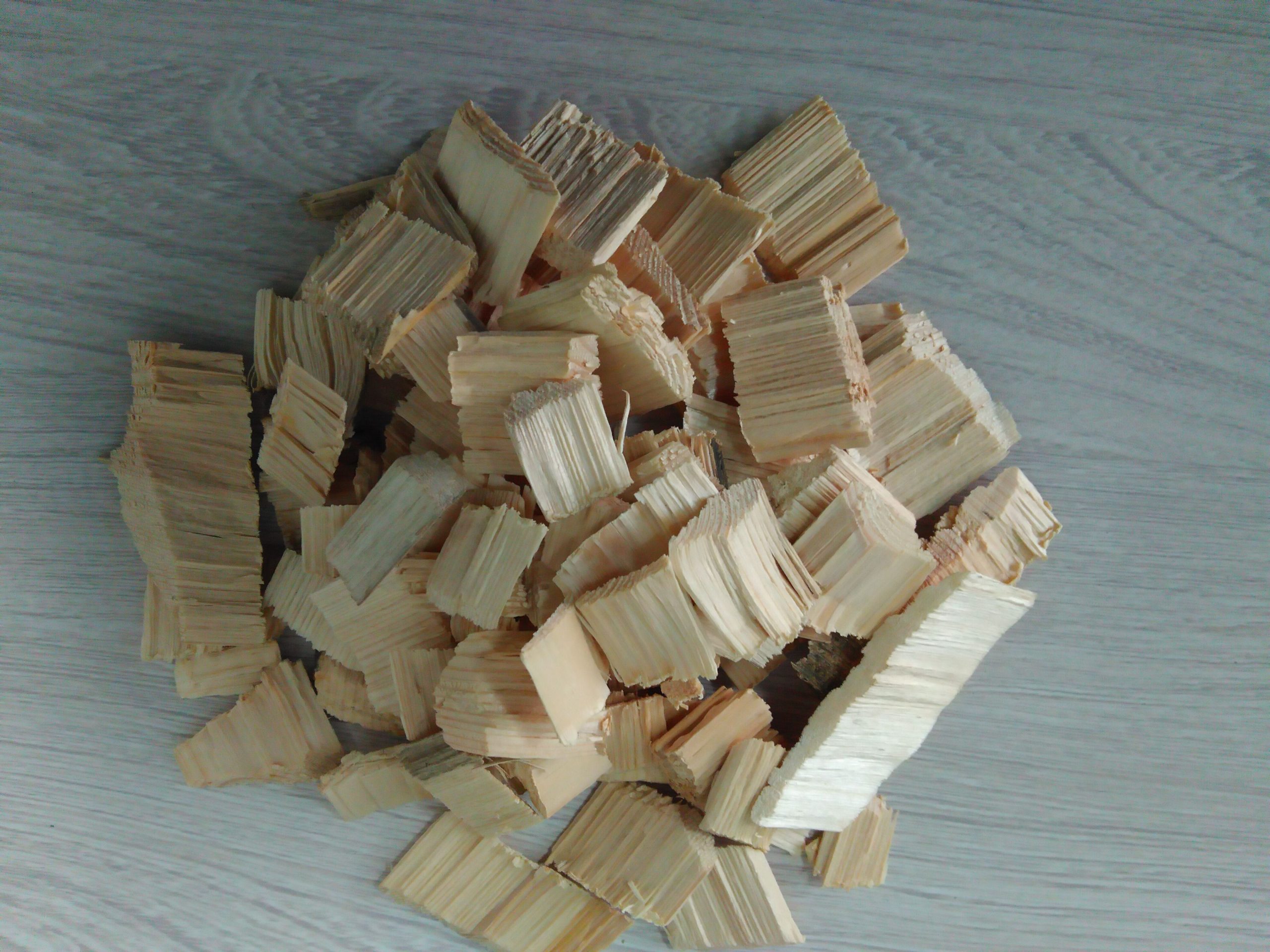
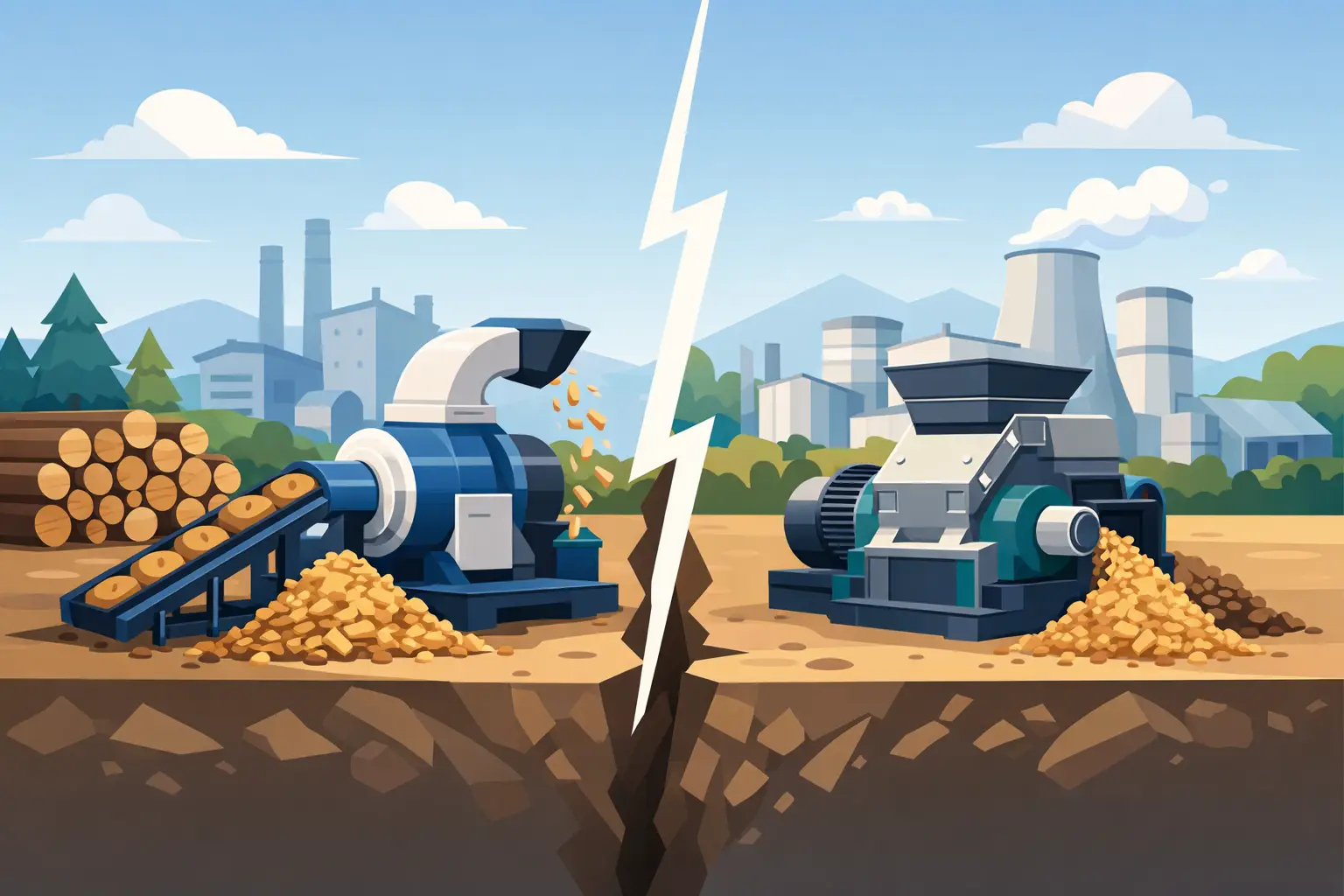
Disc chippers and drum chippers are typically used when the incoming material is logs, branches, slabs, and relatively clean woody residues. A disc chipper is often selected for controlled wood chip production where chip geometry matters. A drum chipper can provide high continuous throughput for larger or more variable feedstock, particularly in centralized biomass yards and wood-processing plants.
Debarking should be considered when bark content affects fuel ash levels, downstream pellet quality, or chip value. The right approach depends on the final market. Removing bark adds equipment and handling steps, but it can improve product consistency where clean wood chips are required.
For bulky, tangled, or highly variable materials, a horizontal grinder or heavy-duty shredder may be a better first stage than a chipper. Green waste, root balls, mixed wood waste, and irregular offcuts can bridge at infeed points or produce unstable loading in equipment designed mainly for straight wood. A properly configured primary machine controls this risk before material enters the finer stages.
Secondary grinding for controlled fuel size
After primary reduction, secondary grinding brings the material closer to final fuel specification. Fine wood grinder mills are commonly used to reduce chips and coarse shredded material into a more uniform fraction for pellets, briquettes, or smaller boiler systems. Screen size, rotor speed, hammer or cutter design, and material moisture all influence final output.
Finer is not automatically better. Excessive fines can increase dust generation, reduce handling efficiency, and consume unnecessary power. For grate-fired boilers and many biomass heating systems, a controlled chip fraction with limited fines may be more valuable than aggressively ground material. For pellet production, however, a smaller and more uniform particle size is usually necessary before drying and densification.
Screening protects quality and downstream equipment
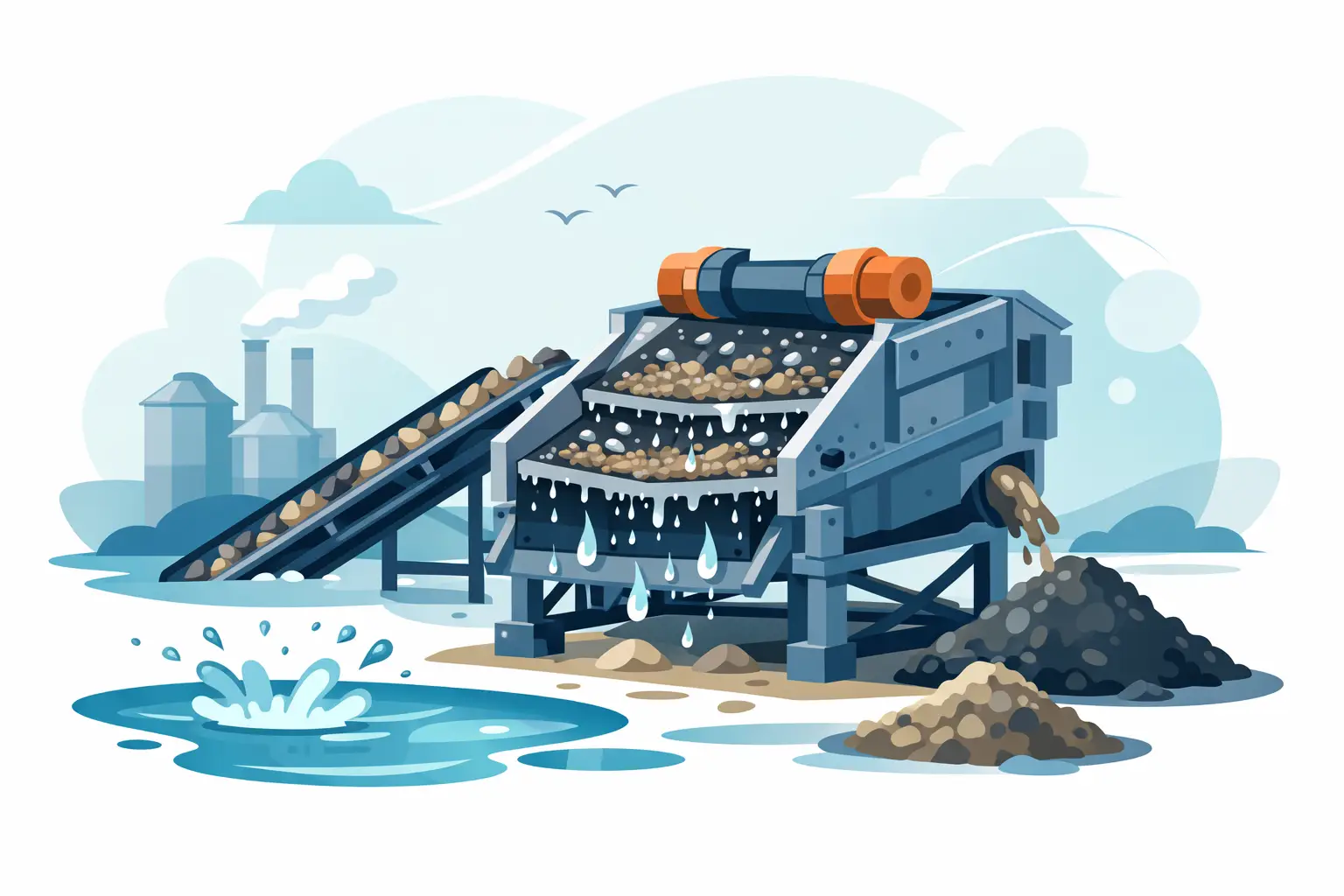
Screening separates acceptable fuel from oversize, fines, and unwanted contaminants. Trommel screens are effective for sorting material by size in many wood waste and green waste applications. Flip-flow screening machines are especially useful when material is wet, sticky, or difficult to classify, because the flexible screening surface helps reduce blinding.
A screen should not be treated as a final add-on. It establishes the quality control point for the line. Oversized pieces can return to the grinder or chipper, while acceptable product moves forward to storage, drying, or fuel delivery. This closed-loop arrangement prevents random large pieces from reaching conveyors, boilers, pellet mills, or other sensitive downstream equipment.
Moisture Is a Production Variable, Not a Storage Problem
Fresh wood and green biomass often arrive with moisture levels too high for efficient combustion or densification. Wet fuel increases transport cost, reduces usable energy per ton, and can create unstable boiler operation. In pellet and briquette production, moisture outside the required range can also affect density, durability, and press performance.
Rotary dryers are used when natural seasoning cannot achieve the target moisture within the available footprint or production schedule. Dryer sizing requires more than a nominal throughput calculation. The design must account for incoming moisture, desired discharge moisture, particle size, bulk density, heat source, ambient conditions, and production hours.
Drying should occur after material has been reduced to a reasonably consistent size. Large chunks dry unevenly and require more residence time, while excessively fine material can increase carryover and dust-control demands. This is one reason the size-reduction and drying sections must be engineered as a connected process rather than purchased independently.
Contamination Control Determines Fuel Value
Biomass streams sourced from clean forestry or sawmill operations have different contamination profiles than recovered wood or municipal green waste. Nails, bolts, stones, soil, plastic film, and non-combustible debris can damage cutters, accelerate wear, increase ash content, and create unacceptable fuel quality.
Where recovered material is processed, contamination control should be planned at receiving, before primary reduction, and after size reduction. Manual picking may be appropriate for occasional large contaminants, but industrial-scale operations generally require mechanical separation steps matched to the material stream. The exact arrangement depends on whether the goal is clean biomass fuel, lower-grade boiler fuel, or a blended RDF/SRF product.
The trade-off is straightforward: each separation stage adds capital cost and maintenance, but inadequate control can cost far more through worn components, boiler issues, rejected loads, and production interruptions. Feedstock contracts should also establish contamination limits. Equipment can manage real-world variability, but it cannot economically correct every poor incoming load.
Capacity Must Be Measured Across the Entire System
A common procurement error is selecting a 20-ton-per-hour chipper, a 20-ton-per-hour grinder, and a 20-ton-per-hour screen without considering how material changes after each stage. Tons per hour can decrease after moisture removal, increase in bulk volume after shredding, or vary sharply according to species and feedstock density.
The true line capacity is set by its bottleneck under actual operating conditions. Infeed conveyors, discharge conveyors, magnetic separation, screening, recirculation loops, dryer residence time, and finished-product storage all affect the result. A machine with high rated capacity provides little benefit if the next conveyor cannot handle surge flow or if oversize recirculation overwhelms the grinder.
A capable supplier should define capacity using the customer’s feedstock and final specification, then size equipment with an operating margin for peak loads and routine maintenance. Zhengzhou Jinpeng Machinery Equipment Co., Ltd. supports this approach with standalone machinery and integrated systems for wood, biomass, waste, and recycling applications.
Selecting an Equipment Partner for Long-Term Operation
Price matters, but the lowest purchase price is rarely the lowest operating cost. Buyers should evaluate machine construction, rotor and cutting-component access, wear-part availability, bearing protection, drive configuration, safety systems, automation level, and the supplier’s ability to support export documentation and installation planning.
Customization is particularly valuable when feedstock is difficult or site constraints are tight. Infeed openings, rotor arrangements, screens, conveyor layouts, discharge elevations, dust-control interfaces, and electrical controls may all need adjustment. Standard equipment can be efficient for standard material, but a tailored line often delivers better uptime when handling variable industrial feedstock.
The right biomass preparation line gives operations teams control over what enters the fuel system every hour of the day. Start with representative material samples, define the fuel specification, and ask suppliers to show how each machine protects capacity, product quality, and maintenance access. That is the practical foundation for a biomass project that can keep producing when feedstock conditions change.