A wood grinder vs hammer mill decision affects far more than final particle size. It determines how reliably a plant handles incoming material, how much energy is consumed per ton, how often wear parts are replaced, and whether downstream pelletizing, drying, screening, or fuel production can run at design capacity. For biomass processors and wood recycling operators, selecting the wrong reduction stage can create a costly bottleneck that no amount of labor can solve.
The two machines can both reduce wood, but they are designed for different material conditions and different stages of an industrial processing line. A wood grinder is generally built to accept larger, more irregular, and often contaminated feedstock. A hammer mill is normally used after primary reduction, when material must be converted into a controlled fine fraction. The right answer depends on the incoming feedstock, required output, throughput target, and downstream equipment.
Wood Grinder vs Hammer Mill: The Core Difference
A wood grinder performs coarse-to-medium size reduction through cutting, tearing, and crushing action. Depending on the machine design, it may use a high-speed rotor, replaceable cutting tools, screens, and a hydraulic feed system to process logs, branches, slabs, bark, pallets, offcuts, and green waste. Industrial horizontal grinders and fine wood grinder mills are selected according to feed size, contamination level, and required discharge dimensions.
A hammer mill uses a high-speed rotating rotor fitted with swinging hammers. As material enters the grinding chamber, repeated impact breaks it down until particles are small enough to pass through a screen. This method is highly effective for converting pre-chipped wood, sawdust, straw, agricultural residue, and other relatively uniform materials into fine biomass suitable for pellet fuel, briquette feed, or other controlled applications.
The practical distinction is simple: a grinder is usually the first serious reduction machine for bulky wood waste, while a hammer mill is a finishing machine for producing finer, more consistent material. Attempting to send whole branches or pallet sections directly into a hammer mill can cause unstable feeding, excessive hammer wear, high power draw, and avoidable downtime.
Start With Feedstock, Not Machine Preference
The incoming material should drive equipment selection. A biomass plant receiving clean, consistently sized wood chips may only need a hammer mill before pelletizing. A recycling facility handling mixed demolition wood, furniture waste, bark, pallets, and oversize rejects will usually require a more aggressive primary machine before any fine milling stage.
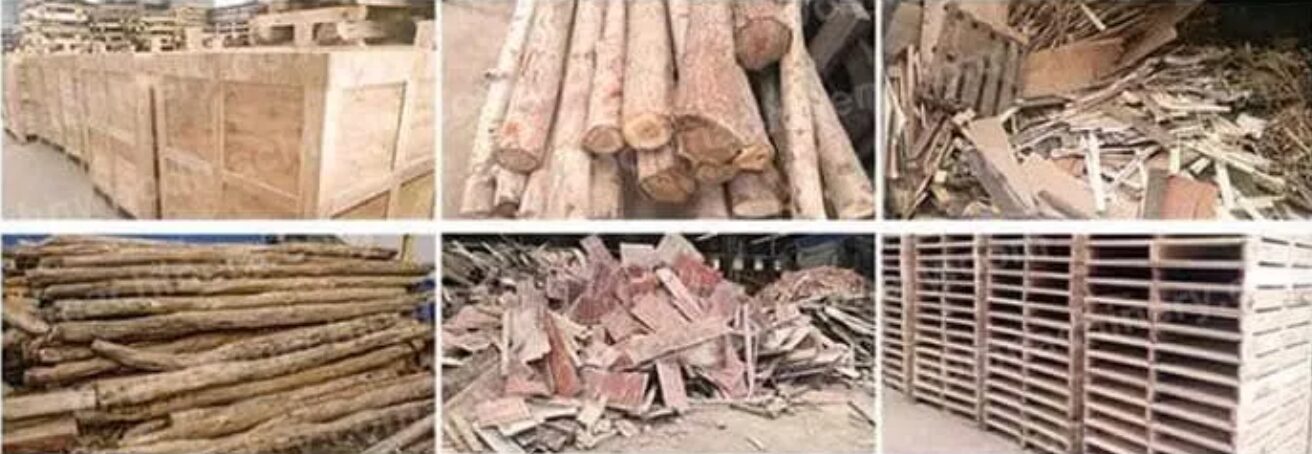
Wood grinders are better suited to feedstock with variable geometry. Long branches, wide slabs, root balls, cutoffs, and bulky pallet material do not flow uniformly. A properly designed grinder uses a feed conveyor or hydraulic infeed to control the material load and maintain rotor efficiency. This is especially valuable where operators cannot economically sort every incoming load by hand.
Hammer mills require more disciplined feed preparation. Their performance improves when material is already chipped, screened, and free of oversized pieces. Metal contamination must also be controlled. Magnets, metal detectors, and pre-screening equipment are not optional details in a high-capacity line. They protect the rotor, hammers, screens, and downstream machinery while reducing unplanned stoppages.
Moisture content also matters. Green wood and bark can be processed by grinders, but wet, fibrous material may reduce the efficiency of fine hammer milling. If the goal is pellet fuel, the material commonly moves through a sequence of chipping or grinding, drying, fine milling, and pelletizing. The drying stage is what makes consistent fine grinding and stable pellet production possible.
Output Size and Product Quality
A wood grinder can produce chips, mulch-grade material, hog fuel, or a medium-sized biomass fraction. Final size is controlled by rotor design, screen opening, feed rate, and wood species. The output may be acceptable for boiler fuel, composting, landscape products, RDF preparation, or as feed for a secondary mill. It is not always consistent enough for direct pellet production.
A hammer mill is selected when particle uniformity is a production requirement rather than a preference. By changing screen perforation size, operators can control the finished material more closely. Smaller screens create finer output but increase energy demand and reduce throughput. Larger screens raise capacity but may leave particles too coarse for the next process.
For pellet plants, the target is typically a fine and uniform fiber that can be conditioned and compressed effectively. Oversized particles can create poor pellet density, uneven moisture distribution, and die blockages. For boiler fuel, a broader particle distribution may be acceptable, making a grinder-only solution more economical. This is why target product specifications should be established before a machine is quoted.
Capacity Is a System Calculation
Machine capacity should never be evaluated only by the largest number on a brochure. A grinder may be rated for a high hourly output under specific feedstock conditions, but actual production depends on wood species, moisture, contamination, infeed consistency, screen size, and operator practice. The same principle applies to hammer mills, where a small screen and high-moisture material can reduce tonnage substantially.
A well-engineered line matches each stage. The chipper or grinder must feed the dryer at a stable rate. The dryer must supply material at the right moisture level to the hammer mill. The hammer mill must produce enough fine material to keep pellet mills, briquette presses, or fuel packaging equipment running without starvation.
Buffer storage, conveyors, magnetic separation, and screening are part of that capacity calculation. A plant that installs an oversized grinder but undersized conveyors will still lose production. Likewise, a high-capacity hammer mill cannot compensate for inconsistent primary processing. The best equipment choice is usually the one that balances the entire line rather than maximizing one machine’s standalone output.
Wear Parts, Energy Use, and Maintenance Planning
Both machines are industrial assets with consumable wear components, but the maintenance pattern differs. Wood grinders commonly use cutting tools, teeth, anvils, screens, and rotor components that must be inspected according to material abrasiveness and contamination. Processing clean sawmill residue is very different from processing nailed pallets or construction wood.
Hammer mills rely heavily on the condition of hammers, screens, bearings, and rotor balance. Worn hammers reduce impact efficiency and can increase power consumption. Damaged screens affect particle size consistency. Regular hammer rotation or replacement, screen inspection, and bearing monitoring are necessary to keep the mill operating within expected performance ranges.
Energy cost deserves close attention. Fine grinding requires significant power because the machine is creating much more surface area from the same mass of wood. It is usually more economical to reduce material in stages than to force large pieces through a fine-grinding machine. A primary grinder or chipper removes bulk efficiently, while the hammer mill performs the final refinement only where it adds value.
When a Two-Stage System Makes Sense
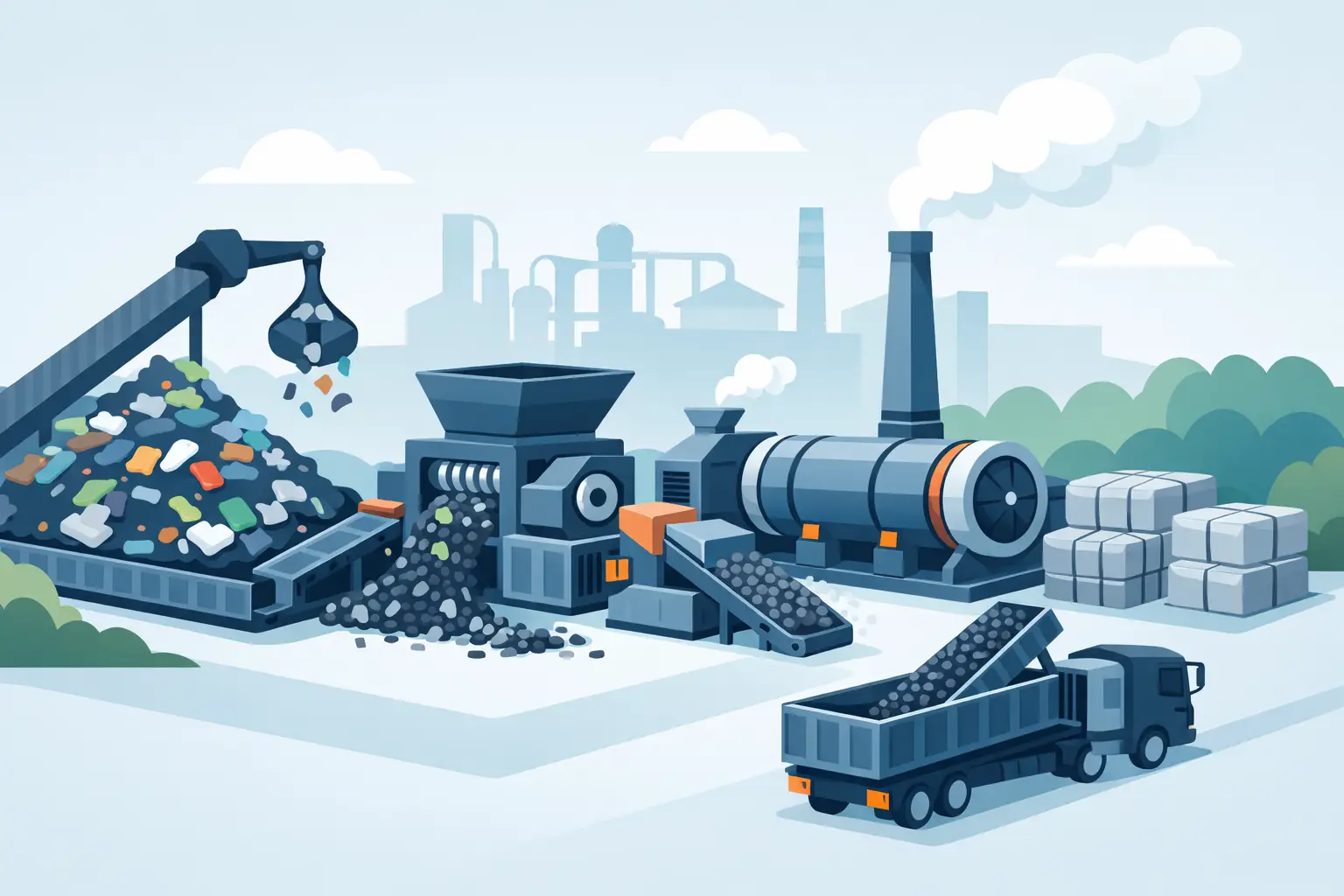
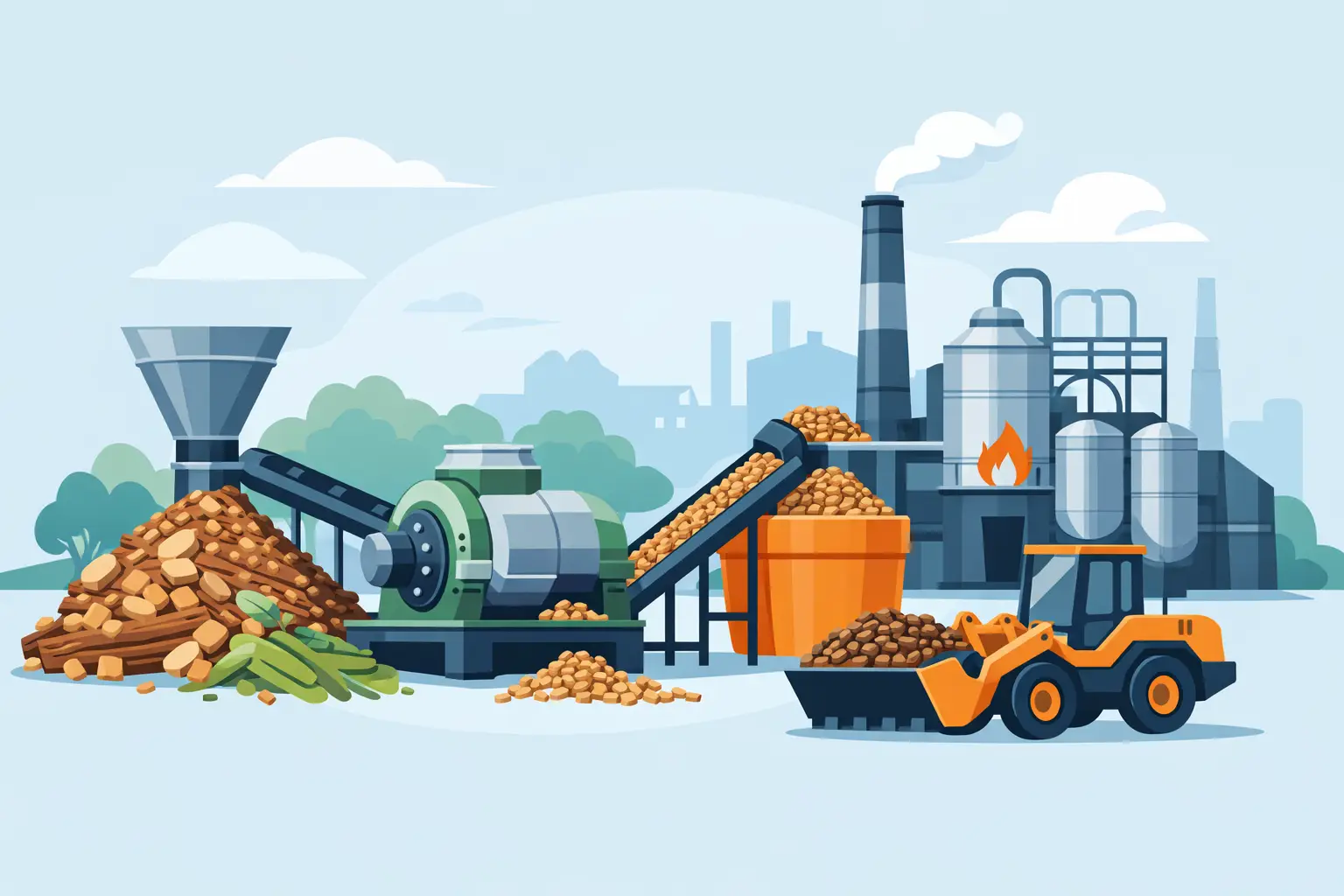
For many commercial biomass and recycling projects, the strongest answer is not wood grinder or hammer mill. It is both machines in sequence. A disc chipper, drum chipper, or horizontal wood grinder prepares oversized material. Screening removes unsuitable fractions. A dryer reduces moisture when required. The hammer mill then produces a controlled fine product for pelletizing, briquetting, or high-specification fuel applications.
This approach raises initial investment, but it can improve uptime, product consistency, and wear-part life. It also gives the plant greater flexibility when feedstock changes by season or supplier. A line that can accept bark, branches, sawmill residue, and wood offcuts has more purchasing options than a line designed for one narrowly defined raw material.
Zhengzhou Jinpeng Machinery Equipment Co., Ltd. can configure primary reduction, fine grinding, drying, screening, conveying, and separation equipment around the material flow of a specific project. For export buyers, the right configuration should be based on feedstock samples, required output size, hourly capacity, moisture range, and the intended end product.
Specify the Processing Result Before Requesting a Quote
A useful equipment inquiry defines the wood type, maximum feed dimensions, contamination risk, moisture content, desired output size, operating hours, and downstream process. It should also state whether the plant needs boiler fuel, mulch, wood chips, pellet feed, briquette feed, RDF, or another marketable product. Those details determine rotor configuration, screen selection, motor power, conveyor arrangement, and separation requirements.
The most productive decision is not to ask which machine is generally better. Ask which reduction stage will turn your actual feedstock into a saleable, consistent product at the lowest practical operating cost. That question leads to a processing line built for sustained output rather than a machine chosen on nameplate capacity alone.