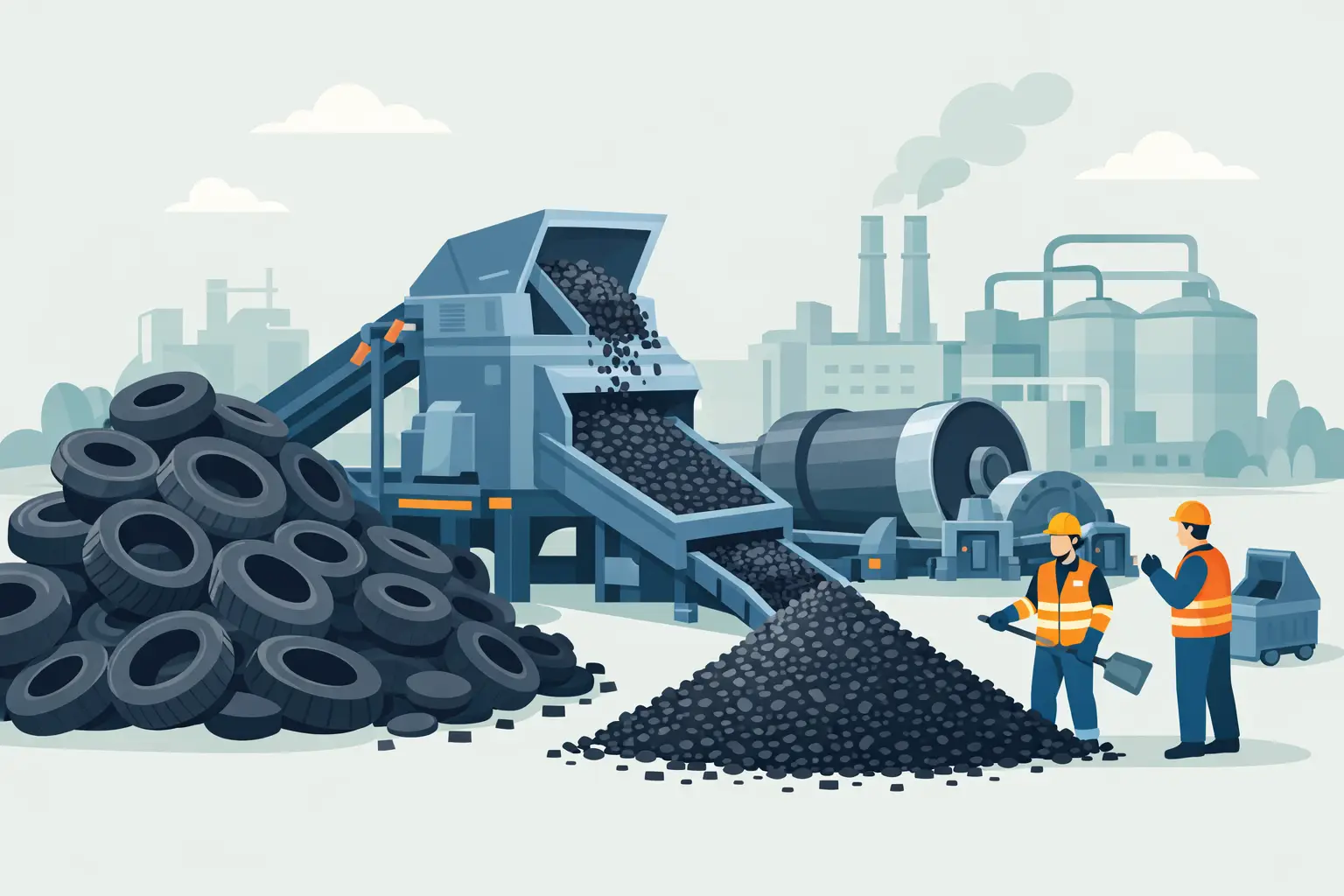
A biomass plant can lose production long before the boiler, pellet mill, or briquette press becomes the bottleneck. Oversized wood, wet green waste, abrasive contaminants, and inconsistent particle size create unstable material flow at the front end. The most consequential biomass processing trends are therefore centered on preparation: turning highly variable incoming material into a controlled, specification-ready feedstock.
For plant owners and project engineers, this shift changes how processing lines are evaluated. A chipper, shredder, grinder, screen, and dryer can no longer be selected as isolated machines. They must operate as a matched system that protects downstream equipment, reduces labor dependence, and maintains output quality under real operating conditions.
Biomass Processing Trends Driving New Plant Requirements
The biomass sector is moving toward lower-quality, more diverse feedstock sources. Clean mill residues remain valuable, but many projects now process forestry residues, whole logs, bark, construction wood, orchard prunings, green waste, pallets, and mixed woody materials. These materials differ substantially in moisture, bulk density, contamination level, and fiber structure.
That variability is pushing plants to invest more heavily in front-end size reduction and material separation. The objective is not simply to make material smaller. It is to create a repeatable particle distribution that can be conveyed, dried, stored, pelletized, gasified, or used as boiler fuel without frequent interruptions.
A system designed only around average feedstock conditions will often struggle when material changes with the season or supplier. A better approach is to define the full feedstock range first, including maximum piece size, moisture range, impurity content, target throughput, and final particle specification. Equipment selection can then account for peak conditions rather than laboratory conditions.
Multi-Stage Size Reduction Is Replacing Single-Machine Solutions
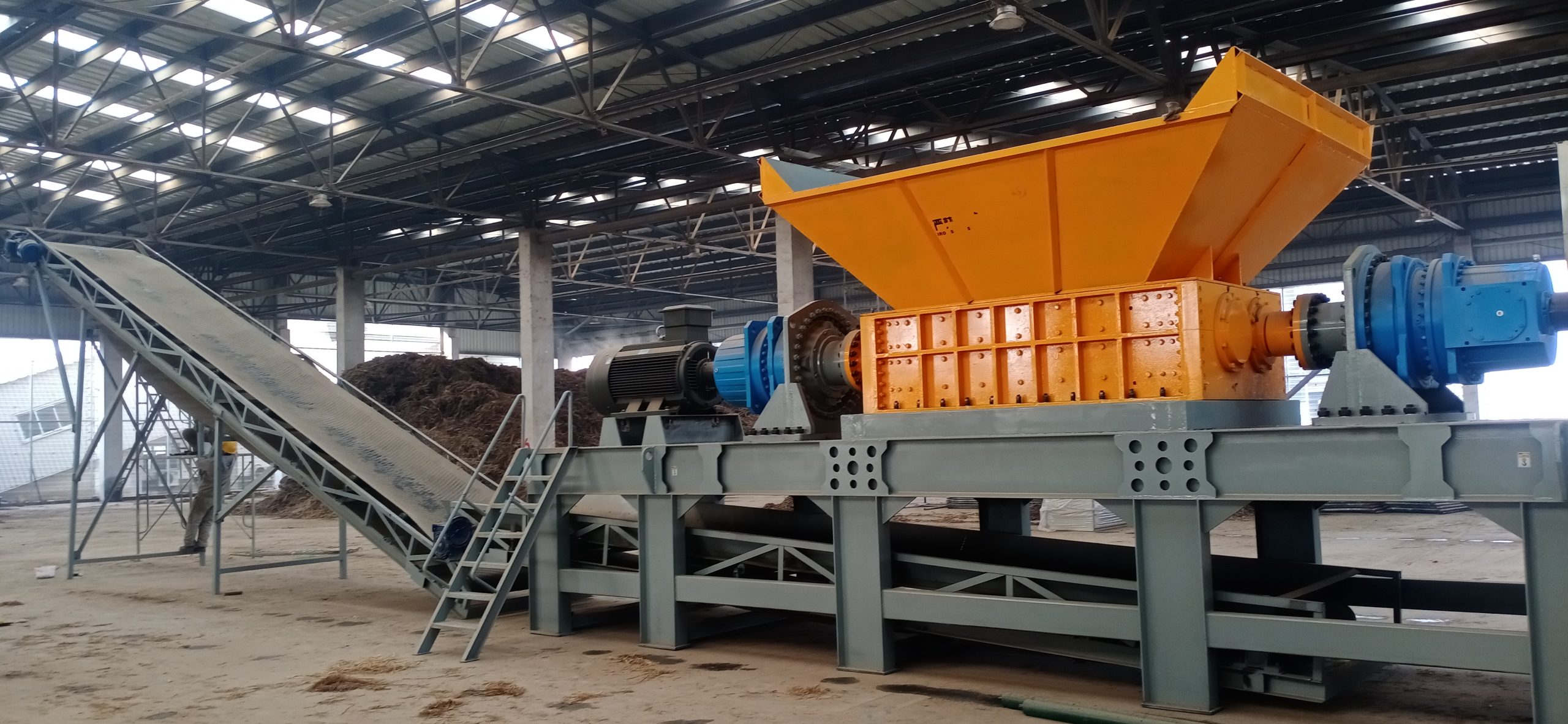
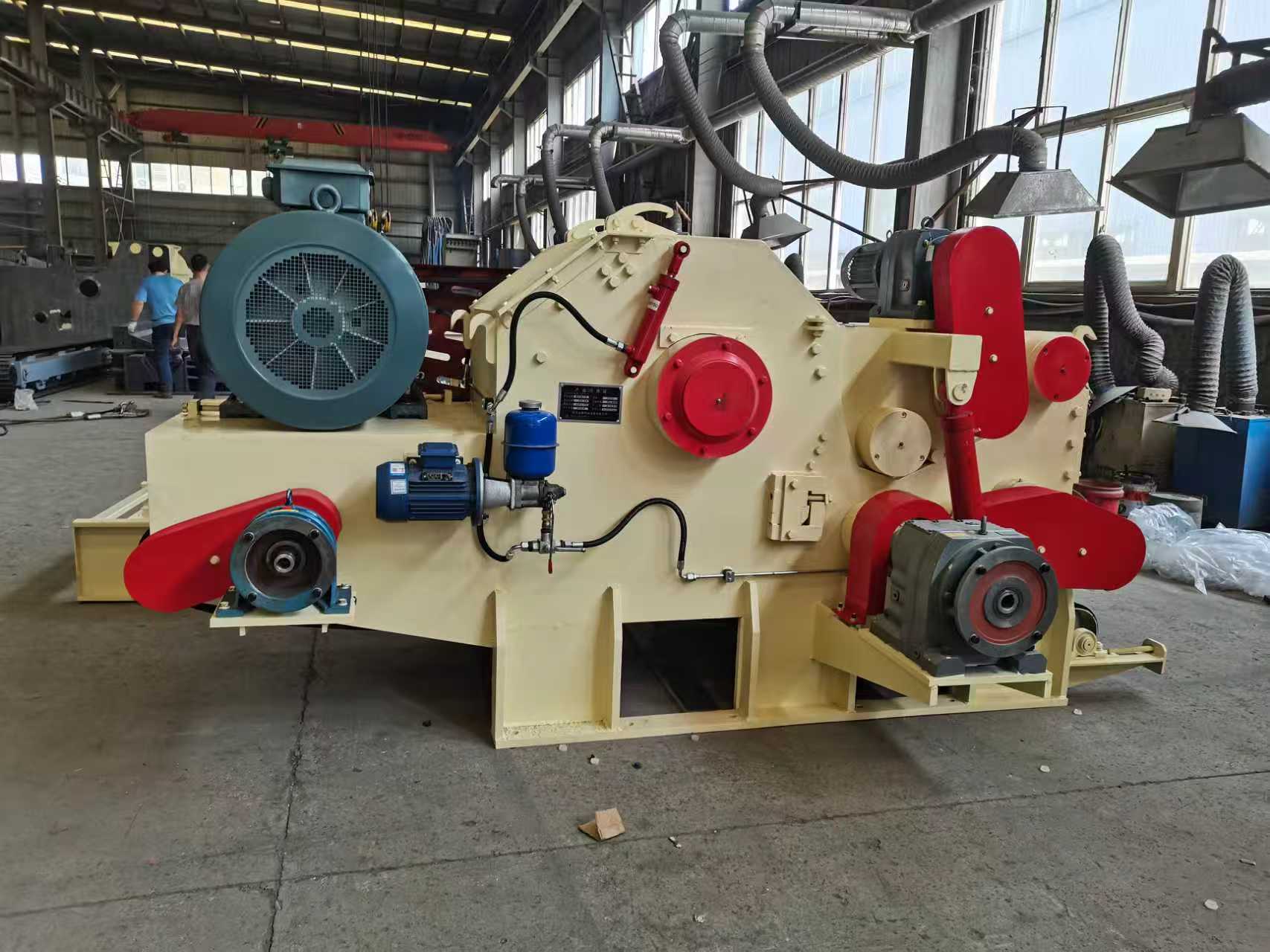
Large, irregular material is increasingly processed through staged reduction. A disc wood chipper or drum chipper is often used for logs, branches, and slab wood where high-volume chip production is required. For bulky green waste, root balls, pallets, and mixed wood, a single-shaft or dual-shaft shredder may provide a more controlled first reduction stage.
A horizontal grinder or fine wood grinder mill can then produce the smaller, more uniform fraction needed for pellet fuel, biomass briquettes, or certain combustion systems. This configuration gives operators more control than attempting to force all incoming material through one machine.
The trade-off is additional capital cost, floor space, and maintenance planning. However, a staged line can reduce wear on fine-grinding equipment and prevent oversized pieces from reaching sensitive downstream machinery. For high-capacity plants, that protection often has a direct effect on uptime and operating cost.
Particle Size Is Becoming a Production Control Point
Particle size has always mattered, but it is now treated as a central process variable. Fuel users increasingly require tighter specifications because inconsistent fractions affect drying behavior, bulk density, conveying performance, combustion stability, and pellet quality.
Oversized material may bridge in hoppers or cause uneven drying. Excess fines can increase dust load, reduce airflow through material beds, and create handling losses. For this reason, screening is no longer a final inspection step. It is becoming an active control point between size reduction stages.
Trommel screens are well suited to separating coarse and fine fractions in many wood and biomass applications. Flip-flow screening machines can be valuable where wet, sticky, or difficult material tends to blind conventional screen media. Screened oversize can be returned to a grinder, while acceptable material moves forward to drying or final processing.
This recirculation strategy improves yield and provides a more stable output. Its value depends on proper balance. If screen capacity is too low, it becomes the line bottleneck. If the grinding stage is undersized, recirculating oversize builds rapidly. A complete line calculation should consider not only nominal machine capacity but also recirculation load, moisture, and expected feedstock variation.
Moisture Management Is Moving Upstream
High moisture remains one of the most expensive barriers in biomass fuel production. Wet feedstock increases transportation cost, lowers usable heating value, complicates storage, and raises the energy demand of pelletizing or thermal conversion. Yet drying cannot compensate for poor material preparation.
Rotary dryers perform more consistently when feed material has a controlled size range and a reliable flow rate. Large chunks dry slowly, while fines can be carried away by air movement if the system is not correctly designed. Uniformly prepared material improves heat transfer and allows dryer operation to be managed more efficiently.
The practical trend is to treat drying as part of the entire preparation line. Chipping, shredding, grinding, screening, feeding, drying, and discharge conveying should be designed together. Operators should also evaluate whether the energy source for drying is available and economical. In some facilities, waste heat or low-value biomass fractions support the dryer. In others, reducing incoming moisture through feedstock sourcing and covered storage may offer a better return.
Contaminant Removal Protects the Entire Processing Line
As recycled wood and green waste enter more biomass applications, contamination control becomes more important. Nails, wire, stones, soil, plastics, and rubber fragments can damage knives, screens, conveyors, and downstream fuel systems. They can also reduce the market value of finished biomass fuel.
The appropriate separation method depends on the feedstock. Clean forestry residues require a different arrangement than demolition wood or municipal green waste. In many cases, a practical line combines manual or mechanical pre-sorting with magnetic separation, screening, and durable shredding equipment designed for difficult material.
Plant managers should avoid assuming that a heavy-duty shredder eliminates the need for separation. A shredder can reduce material effectively, but it cannot make contaminants disappear. Removing damaging material before fine grinding is usually less expensive than replacing worn components and managing repeated shutdowns.
Automation Is Focusing on Stability, Not Just Labor Savings
Automation is becoming more common in biomass preparation, especially at medium- and large-scale facilities. The strongest business case is often process stability rather than headcount reduction alone. Variable-speed feed systems, load monitoring, automated conveyor coordination, and alarm logic help keep equipment within its intended operating range.
For example, a feed conveyor can slow when grinder load rises, preventing overload events. Screen discharge data can show when the oversize fraction is increasing, which may indicate worn cutting tools or a change in incoming material. Dryer temperature and moisture readings can help operators avoid both under-drying and unnecessary energy use.
Automation does not remove the need for experienced operators. It gives them earlier warning of changing conditions and supports faster adjustments. Plants that record operating data can also make better decisions about maintenance intervals, feedstock purchasing, and line upgrades.
Flexibility Has Become a Core Equipment Requirement
Many biomass projects begin with one primary feedstock and later expand to accept additional materials. A plant built for clean wood chips may eventually need to process bark, sawmill offcuts, urban wood, or agricultural residues. This is why equipment flexibility is now a major procurement consideration.
Flexibility can come from interchangeable screens, adjustable cutter configurations, variable-speed drives, modular conveying, and bypass arrangements that allow one fraction to follow a different route. It can also come from choosing machinery with sufficient structural strength and torque reserve for difficult feedstock.
There is a limit to universal design. A machine optimized for clean, dry wood may not be the best choice for wet, contaminated green waste. The goal is not to buy the most complex machine available. It is to build a line around the materials the plant expects to receive and the products it intends to sell.
What Buyers Should Prioritize in a Biomass Processing Line
When comparing biomass equipment, rated capacity is only the starting point. Buyers should ask how that capacity was measured, what feedstock was used, and what final size specification was achieved. Throughput for dry softwood chips is not directly comparable with throughput for wet, mixed green waste.
The most useful technical discussion covers feed opening dimensions, rotor design, knife or hammer configuration, motor power, discharge size, screen area, moisture range, wear-part access, and integration with conveyors and controls. Service access matters as much as performance on paper. Equipment that is difficult to inspect, clean, or replace wear parts on can create expensive downtime over its operating life.
Jinpeng Machinery supports this system-based approach with industrial chippers, shredders, grinders, dryers, and screening equipment configured for biomass fuel preparation and complex recycling applications. For export projects, the design phase should also account for electrical standards, shipment dimensions, installation conditions, spare parts, and local service capability.
The most productive next step is to test a representative feedstock sample and define the required output before finalizing equipment. That process reveals whether the real constraint is size reduction, moisture, contamination, screening capacity, or material handling – and it leads to a biomass line built for sustained production rather than a short-term capacity figure.