Wet sawdust is where many biomass projects lose margin. Material that looks manageable at the hopper can become a bottleneck in storage, screening, pelletizing, briquetting, or combustion if moisture is too high or too inconsistent. A rotary dryer for sawdust is not just a drying machine in that context. It is a control point that determines downstream stability, bulk density, energy value, and finished product quality.
For plant owners and project engineers, the main question is rarely whether drying is necessary. The real question is what type of dryer, what capacity range, and what system configuration will deliver stable output without creating excessive fuel consumption, dust issues, or maintenance exposure. Sawdust is a light, variable material. That makes dryer selection more technical than it first appears.
Why a rotary dryer for sawdust is widely used
Sawdust presents a specific handling challenge. It is fine, low-density, and often arrives with moisture levels that vary by wood species, storage conditions, and upstream processing method. Green sawdust from fresh cutting behaves very differently from reclaimed dry material or a mixed biomass stream. Drying equipment has to absorb those variations while still producing a target moisture range suitable for the next process.
A rotary dryer for sawdust remains a preferred industrial solution because it is well suited to continuous, high-throughput production. The rotating drum keeps material moving through a heated air stream, exposing more particle surface area and supporting stable evaporation at scale. In practical terms, that means better moisture reduction for pellet plants, biomass fuel lines, wood powder production, and other operations where steady feed conditions matter.
Compared with smaller or more batch-oriented drying methods, rotary dryers are easier to integrate into complete production lines. They can be configured with feeding systems, hot air furnaces, cyclones, pulse dust collection, induced draft fans, discharge conveyors, and automated controls. For B2B buyers building a real plant rather than testing a concept, that integration matters as much as the drum itself.
What performance matters most in sawdust drying
Capacity is the first number most buyers ask about, but capacity alone does not define dryer performance. A system rated for high tonnage on paper may underperform if incoming moisture spikes, if airflow is not balanced, or if the discharge specification is too tight for the machine design.
The more useful way to evaluate a sawdust dryer is to look at moisture reduction range, evaporation efficiency, thermal stability, and output consistency together. If your incoming sawdust is 45% to 55% moisture and your pellet mill needs material around 10% to 15%, the dryer must handle both the average load and the seasonal extremes. Otherwise, operators will spend too much time adjusting the line, and production quality will fluctuate.
Residence time inside the drum also matters. If material passes too quickly, drying can be incomplete. If it remains too long under excessive heat, fines can increase, color can darken, and fire risk rises. The right design balances drum diameter, drum length, lifting plate arrangement, drum speed, airflow volume, and furnace temperature.
For industrial buyers, fuel flexibility is another key factor. Some systems use biomass waste as the heat source, while others run on coal, gas, diesel, or customized furnace configurations. The best choice depends on local energy costs, emissions requirements, and whether the facility already generates usable combustible residues.
Rotary dryer for sawdust sizing depends on more than tons per hour
Sawdust drying projects often go off target because the equipment is selected from a simple capacity table without enough process data. In reality, proper sizing starts with the material itself. Particle size distribution, bulk density, initial moisture, target moisture, contamination level, and feed temperature all affect the final machine selection.
A plant processing clean pine sawdust for wood pellets may require a different drum configuration than a plant drying mixed hardwood residue for fuel briquettes. Fine and uniform feed is generally easier to dry consistently. Coarser or mixed material may need more residence time or upstream size reduction to avoid uneven discharge moisture.
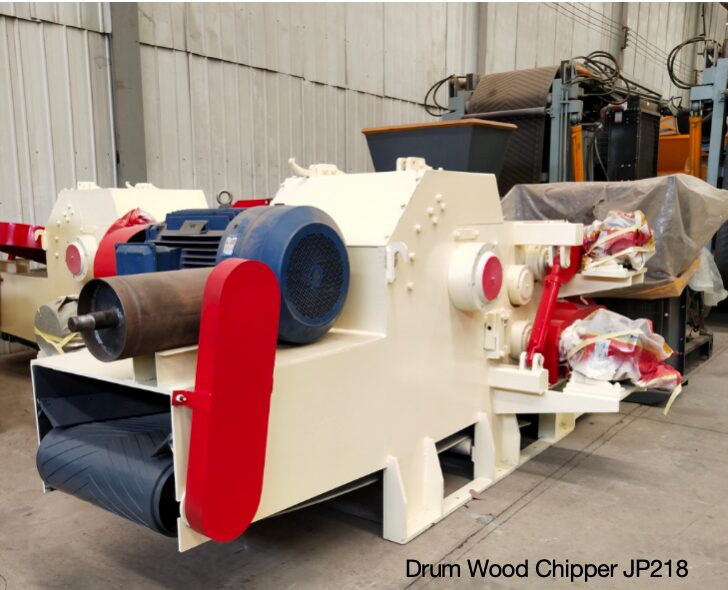
This is where line design becomes important. If sawdust enters the dryer with oversized chips, bark strips, or stringy contaminants, the problem is not only drying efficiency. It can also affect air distribution, material curtain formation inside the drum, and discharge uniformity. In many cases, the strongest drying results come from a coordinated system that includes chipping, grinding, screening, and controlled feeding before the dryer.
An experienced manufacturer will typically ask for several data points before recommending a model. Expected hourly throughput, moisture before and after drying, heat source preference, available installation space, local environmental requirements, and downstream application all shape the final design. For export projects, power standard, electrical components, and delivery format also need to be confirmed early.
System design decisions that affect operating cost
In sawdust drying, operating cost is driven less by the shell of the machine and more by the full thermal and airflow system. Buyers focused only on drum price often end up with higher long-term expense because the supporting components were underspecified.
Hot air generation has to be matched to evaporation load. If the furnace output is unstable, the dryer discharge moisture will not hold steady. If the induced draft fan is incorrectly selected, airflow can become insufficient or excessive, reducing thermal efficiency and increasing dust carryover. Dust removal equipment is equally important because sawdust fines are inevitable in real operation, especially at higher line speeds.
Insulation and sealing are often overlooked, yet they directly affect fuel consumption. Heat loss from poor insulation or air leakage from weak sealing points can raise energy usage significantly over time. For plants operating continuously, these details matter to annual cost far more than many buyers expect during procurement.
Automation level is another trade-off. A more basic system may reduce initial capital cost, but labor demand and process fluctuation can be higher. Automated temperature monitoring, variable-frequency drives, moisture-oriented control logic, and alarm systems can improve stability and protect equipment. For medium- to large-scale operations, that usually supports stronger overall economics.
Where rotary drying fits in a complete biomass line
A sawdust dryer should not be treated as an isolated machine. It performs best when matched with the preparation and finishing sections around it. In wood pellet production, for example, the dryer sits between size reduction and pelletizing. If grinding is inconsistent or feeding is unstable, the dryer absorbs that variability. If dried material is not properly cooled or stored after discharge, moisture regain can erase the benefit of the drying stage.
That is why many industrial buyers prefer to work with a supplier that can also provide chippers, grinders, screens, conveyors, and related process equipment. A complete-line view reduces mismatch between machines and simplifies commissioning. Zhengzhou Jinpeng Machinery Equipment Co., Ltd. serves this type of project environment, where drying capacity, feed preparation, screening efficiency, and final product requirements must work as one system rather than as independent purchases.
The same logic applies in recycling and waste-to-fuel applications. If sawdust is blended with other biomass fractions or used as part of an RDF or SRF preparation process, moisture control still affects combustion value, handling efficiency, and storage behavior. The dryer becomes part of fuel standardization, not just water removal.
Common mistakes buyers should avoid
One common mistake is specifying only average moisture instead of the full moisture range. Dryers must survive worst-case feed conditions, not just normal days. Another is ignoring fire and explosion risk in fine, dry biomass handling. Proper temperature control, dust collection, and system layout are essential.
Buyers also sometimes overestimate the value of maximum temperature. Faster is not always better in sawdust drying. Excess heat can increase fines loss, create product degradation, and put unnecessary stress on components. Stable process control usually outperforms aggressive thermal loading.
A final mistake is buying a dryer without considering service access and wear parts. Rotary systems are industrial machines. Flights, seals, bearings, refractory sections, and dust handling components all require maintenance planning. Downtime is reduced when the design is straightforward, replacement parts are available, and technical support is aligned with the operating environment.
What to ask before requesting a quote
A serious quote process should start with plant-level objectives. Are you drying sawdust for pellet fuel, briquette production, direct combustion, bedding material, or another industrial use? What is the required final moisture window? Is the line seasonal or continuous? What fuel source is available for hot air generation? How much floor space and installation height do you have?
It also helps to define whether you need a standalone machine or a complete drying section with feeding, furnace, cyclone, fan, dust collection, and electrical control. In many projects, a lower-priced standalone drum creates more integration work and more site risk than a matched package system.
The right rotary dryer is the one that keeps your line moving under real production conditions, not ideal ones. If the machine is sized correctly, integrated properly, and supported by practical engineering, sawdust stops being a moisture problem and becomes a predictable feedstock with commercial value.