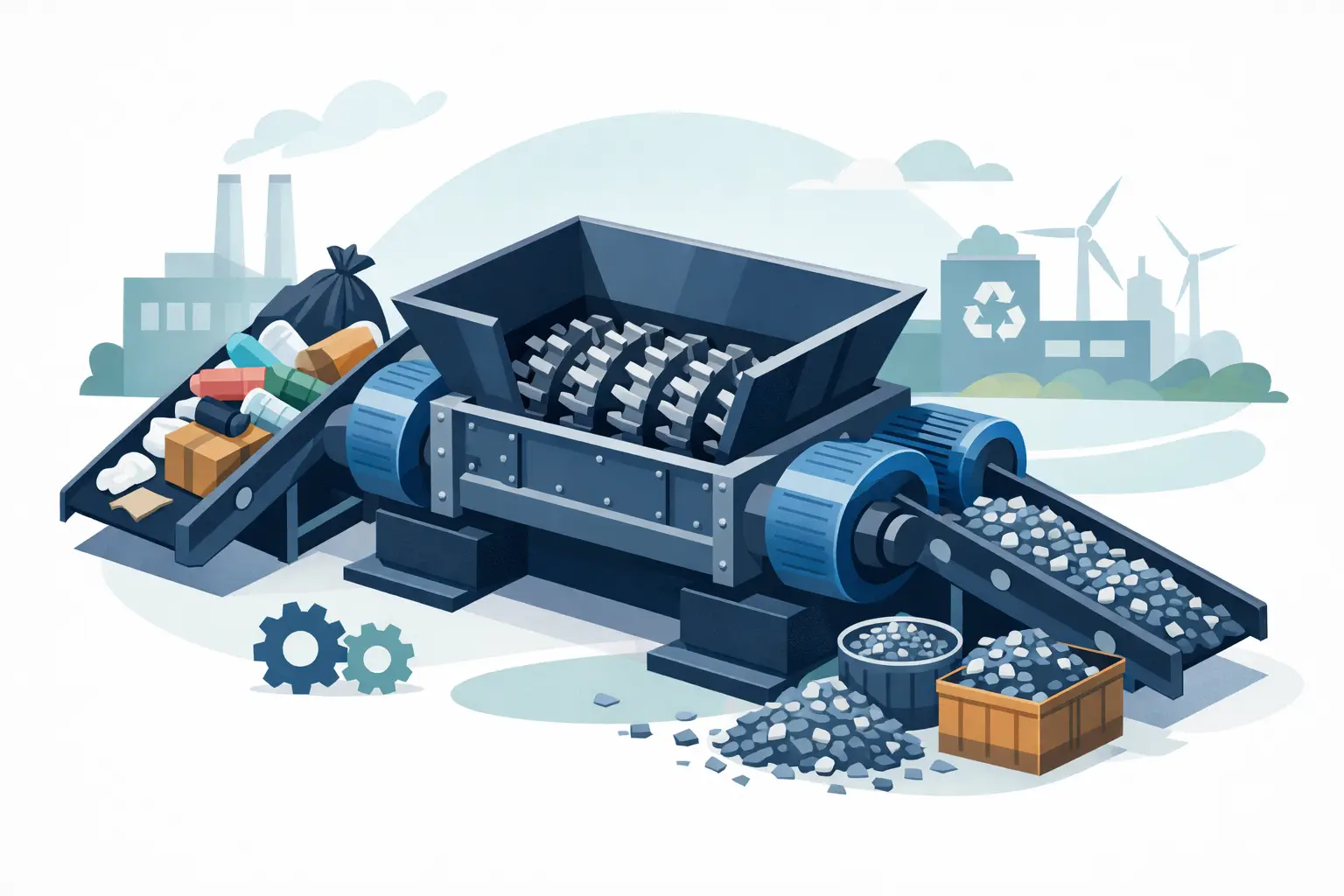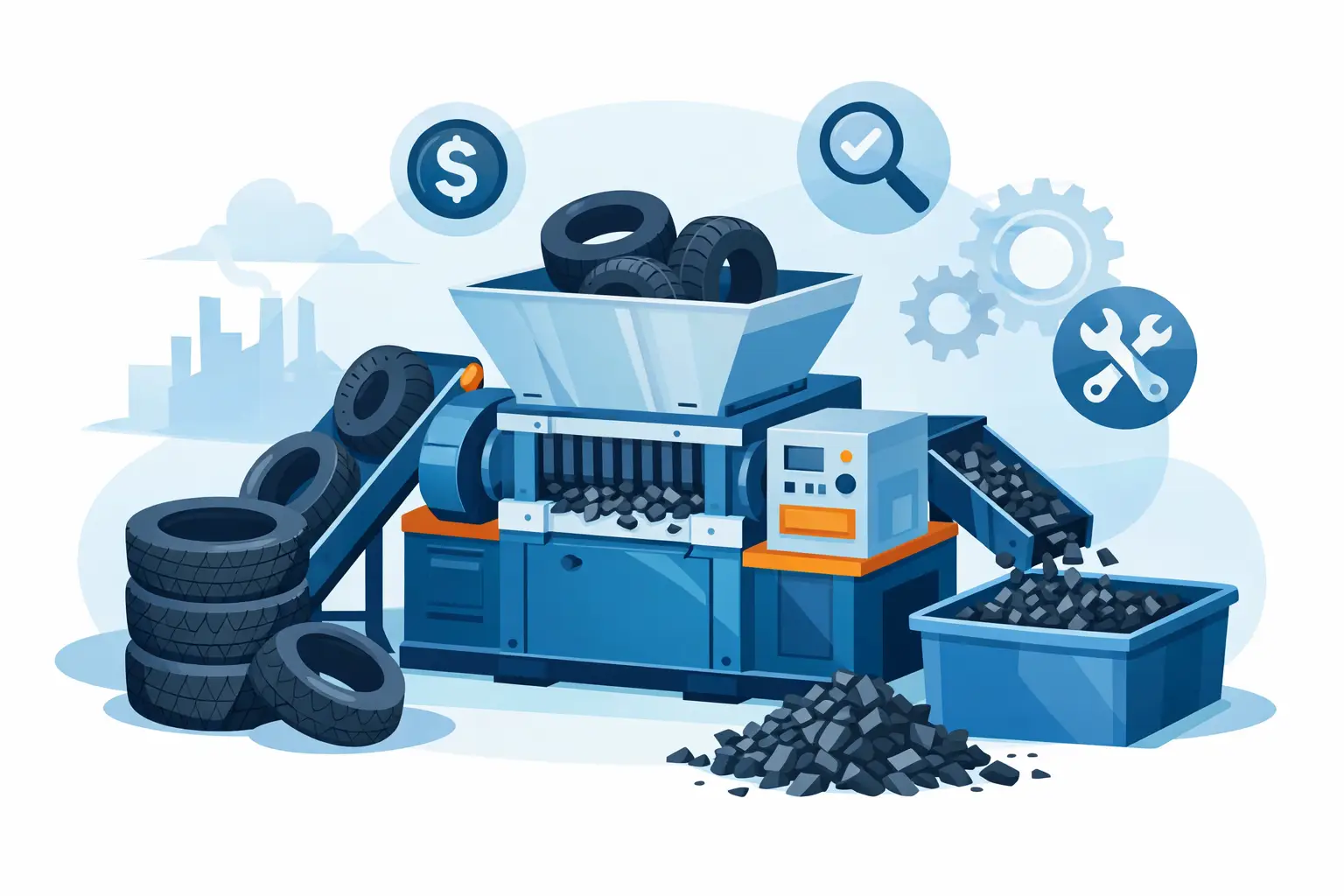
A biomass processing line loses money long before material reaches the boiler, pellet mill, or briquetting press if oversized feedstock repeatedly jams conveyors, wears downstream equipment, or requires manual rehandling. A correctly specified biomass shredder machine converts bulky, irregular material into a controlled intermediate product that the rest of the plant can process reliably.
For plant owners and project engineers, the machine is not simply a cutter. It is a capacity-control point. Its design affects fuel consistency, electrical demand, labor requirements, maintenance intervals, and the usable output from wood waste, green waste, agricultural residues, and mixed biomass streams.
What a Biomass Shredder Machine Must Handle
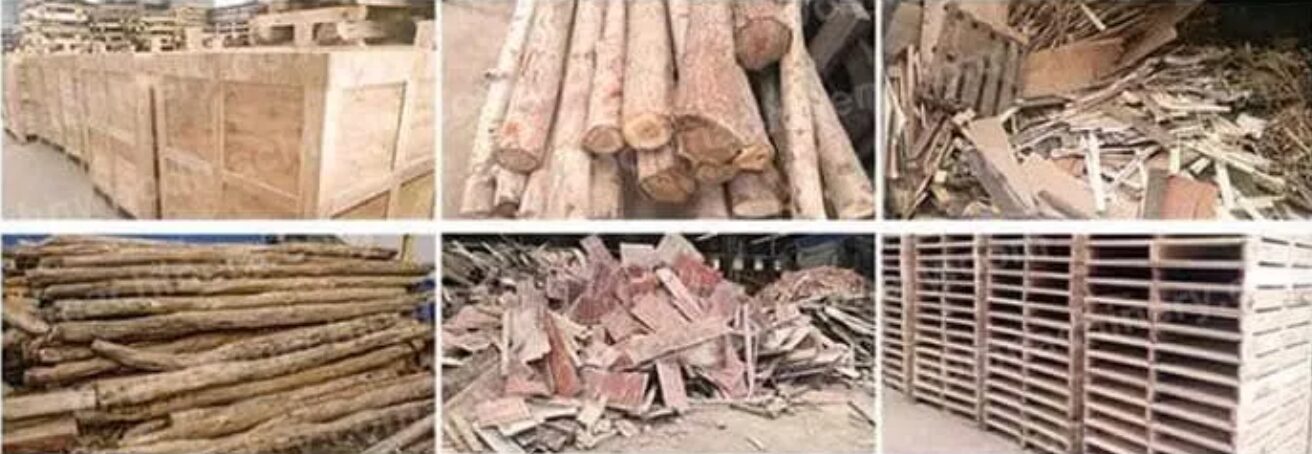
Biomass is rarely uniform. A wood recycling facility may receive pallets, slabs, bark, offcuts, branches, roots, and occasional metal contamination. A green-waste operation may process wet brush, leaves, small trunks, and fibrous garden residues. Agricultural feedstock can contain straw, corn stalks, husks, vines, and soil-carrying material with changing moisture content.
This variability is why machine selection must begin with feedstock rather than a desired final capacity figure. Material dimensions, bulk density, moisture, contamination level, and required discharge size all influence the appropriate rotor, cutter arrangement, screen configuration, drive power, and feeding method.
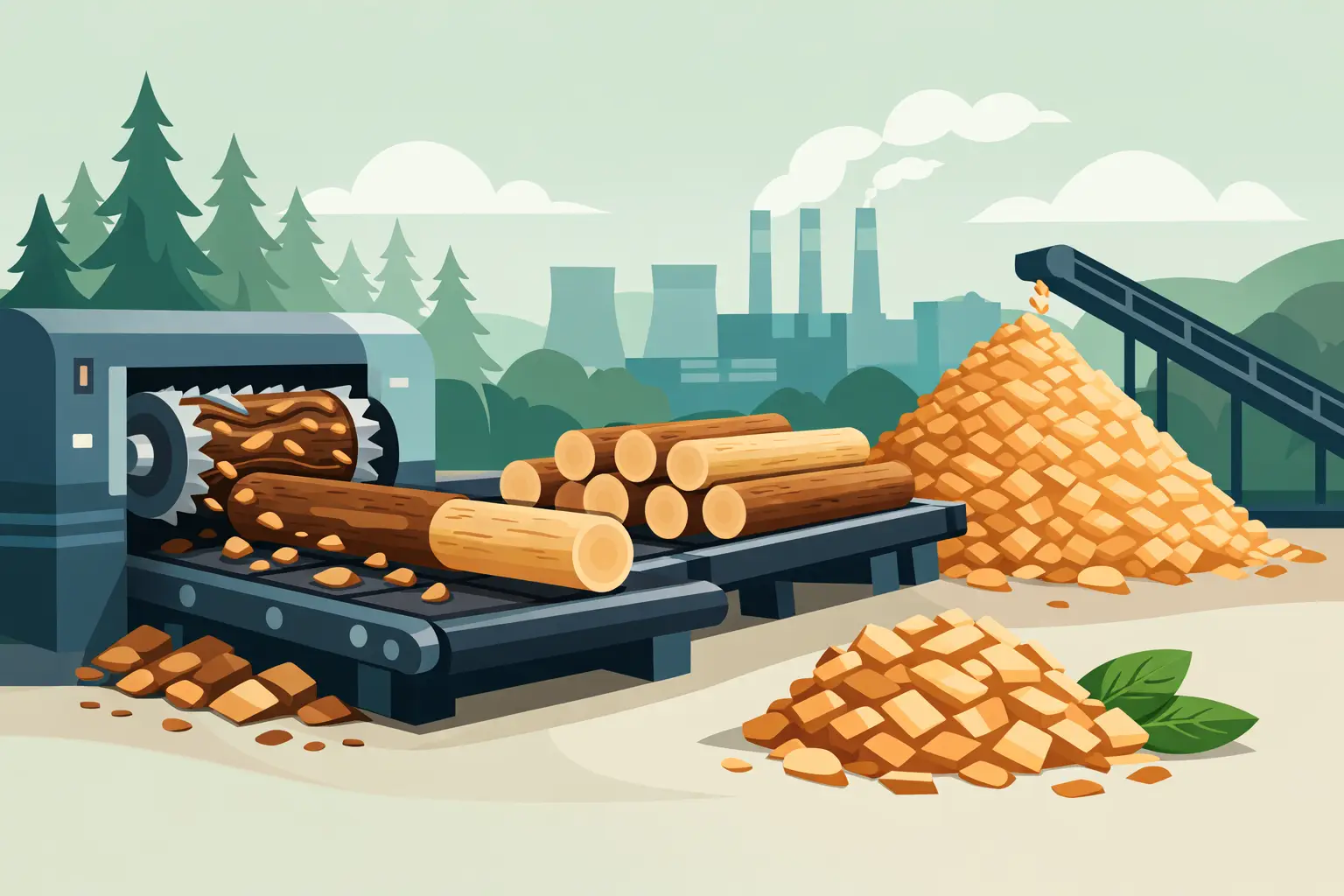
A shredder is typically used for primary size reduction when incoming material is bulky, tangled, or inconsistent. It reduces material to a manageable size before secondary grinding, chipping, screening, drying, pelletizing, briquetting, or combustion. For clean roundwood, a disc chipper or drum chipper may produce a more uniform chip directly. For mixed wood waste or difficult green waste, shredding is often the better first-stage process.
Common feedstocks in industrial biomass lines
Industrial buyers commonly specify shredding systems for wood pallets and construction wood, forestry residues, orchard prunings, sawmill waste, bark, bamboo, bagasse, straw, corn stalks, and municipal green waste. Each material behaves differently under load.
Dry pallet wood can be hard and may contain nails, hinges, or fasteners. Fresh branches are elastic and fibrous. Bark can carry moisture and dirt. Agricultural residues can bridge in hoppers or wrap around rotating components if cutter geometry is poorly matched. A supplier should evaluate representative feedstock samples or detailed material data before finalizing the equipment configuration.
Selecting the Right Shredder Configuration
The main question is not whether a machine can cut biomass. Most industrial shredders can. The question is whether it can maintain required throughput while producing a size range that protects downstream equipment and fits the plant’s final product specification.
Single-shaft shredders for controlled output
A single-shaft shredder uses a rotor with knives working against a fixed counter knife. Hydraulic pushing systems feed material into the rotor according to load. This configuration is often selected where more controlled output sizing is needed, especially for wood waste, pallets, production scraps, and prepared biomass feed.
A screen beneath or around the cutting zone governs the discharge size. Smaller screen openings increase size control but can reduce hourly output and increase power consumption. Larger openings improve throughput but may send oversize pieces to downstream equipment. The right balance depends on whether the next machine is a chipper, hammer mill, fine grinder, dryer, or fuel-handling system.
Dual-shaft shredders for bulky and difficult feedstock
Dual-shaft shredders use two counter-rotating shafts with intermeshing cutters. Their low-speed, high-torque operating principle is well suited to bulky, tangled, dirty, or contaminated feedstock. They are frequently used as primary shredders for green waste, mixed wood waste, roots, packaging waste, and RDF/SRF preparation.
Their discharge size is generally less uniform than that of a screened single-shaft unit. For this reason, a dual-shaft machine is often installed ahead of a secondary shredder, grinder, or screening stage. The trade-off is clear: it provides strong initial reduction and contamination tolerance, while a secondary process delivers tighter particle-size control.
Horizontal grinders and fine grinding equipment
When biomass must meet a narrow specification for pellets, briquettes, particleboard, or certain combustion systems, primary shredding alone is not enough. Horizontal grinders and fine wood grinder mills reduce prepared material further after metal removal and screening.
Fine grinding increases surface area, which can improve drying performance and support densification. It also creates more fines and requires careful dust collection, conveying design, and moisture management. Plants should avoid selecting a fine grinder as a substitute for primary shredding when incoming material is oversized or contaminated. That approach usually accelerates wear and causes unstable production.
Capacity Is More Than Tons Per Hour
Quoted capacity is useful only when it is connected to a defined material condition. Ten tons per hour of dry, clean wood chips is not equivalent to ten tons per hour of wet, stringy green waste or nail-containing pallets. Procurement teams should request capacity assumptions in writing, including feedstock type, moisture range, input size, output size, and operating hours.
For an industrial biomass project, evaluate capacity across the full system: infeed conveyor, magnetic separation, shredder, discharge conveyor, screening equipment, secondary grinder, storage, and dust control. A high-capacity shredder cannot compensate for an undersized conveyor or a screen that becomes the production bottleneck.
Motor power should also be assessed with the expected loading pattern. Biomass streams often produce irregular peak loads. A properly engineered drive system, hydraulic feed control, overload protection, and automatic reverse function help the machine recover from difficult material without repeated manual intervention. These features reduce stoppages and help protect shafts, cutters, gearboxes, and motors.
Building a Reliable Biomass Preparation Line
A biomass shredder performs best as part of an engineered processing line. The most effective arrangement depends on feedstock and end use, but a typical system begins with receiving and controlled feeding. Oversized contaminants should be removed as early as possible. Ferrous metal separation is particularly valuable when processing demolition wood, pallets, and municipal wood waste.
After primary shredding, material may pass through a trommel screen or flip-flow screen to separate acceptable fractions from oversize material. Oversize can be returned for additional reduction, while undersize fines may be directed to a different use or blending stream. This recirculation approach improves product consistency without forcing every particle through aggressive grinding.
If moisture is too high for pelletizing or stable combustion, a rotary dryer can be placed after the appropriate size-reduction stage. Drying oversized material is inefficient, while drying overly fine material can create excess dust and handling losses. The shredder, screen, and dryer must therefore be specified as connected process equipment rather than independent purchases.
For RDF/SRF production, the line may include additional separation for metals, inert material, and non-combustibles. For wood chip production, the priority may be chip geometry and bark control. For biomass fuel preparation, the priority may be consistent particle size, controlled moisture, and dependable material flow to the boiler or densification unit.
Wear Parts, Maintenance, and Operating Cost
Purchase price is only one part of the investment decision. Knife life, screen wear, bearing protection, access for service, hydraulic component quality, and spare-parts availability directly influence long-term operating cost. A machine that appears less expensive at purchase can become costly if it needs frequent unplanned shutdowns or difficult cutter replacement.
Ask how cutter knives are manufactured, whether they can be rotated or reconditioned, and how quickly standard wear parts can be supplied. For abrasive biomass containing soil, sand, or contaminated bark, wear resistance becomes a central selection factor. For clean production scraps, output accuracy and knife geometry may matter more than contamination tolerance.
Maintenance planning should include routine inspection of cutter clearance, rotor condition, screens, hydraulic oil, drive components, and safety interlocks. Operators also need clear procedures for handling jams, material bridging, and non-processable contaminants. Good equipment design reduces risk, but disciplined operating practices remain necessary in high-throughput biomass plants.
Custom Engineering for Real Feedstock Conditions
Standard machines are a starting point, not always a complete answer. Industrial projects often require customized hopper dimensions, conveyor layouts, discharge heights, cutter configurations, motor selections, electrical standards, and control integration. Export projects may also need equipment arranged for container loading, local voltage requirements, and site-specific installation conditions.
Zhengzhou Jinpeng Machinery Equipment Co., Ltd. supplies standalone shredders and integrated biomass preparation systems designed around feedstock characteristics, target capacity, and downstream process requirements. For buyers evaluating a line, the most productive first step is to provide material photos, dimensions, moisture information, contamination details, desired output size, and planned operating hours.
The right biomass shredding solution should make the next process easier, not merely make the material smaller. When the equipment is matched to the actual feedstock and the full production line is balanced around it, operators gain steadier throughput, more consistent fuel preparation, and a process that is easier to manage shift after shift.