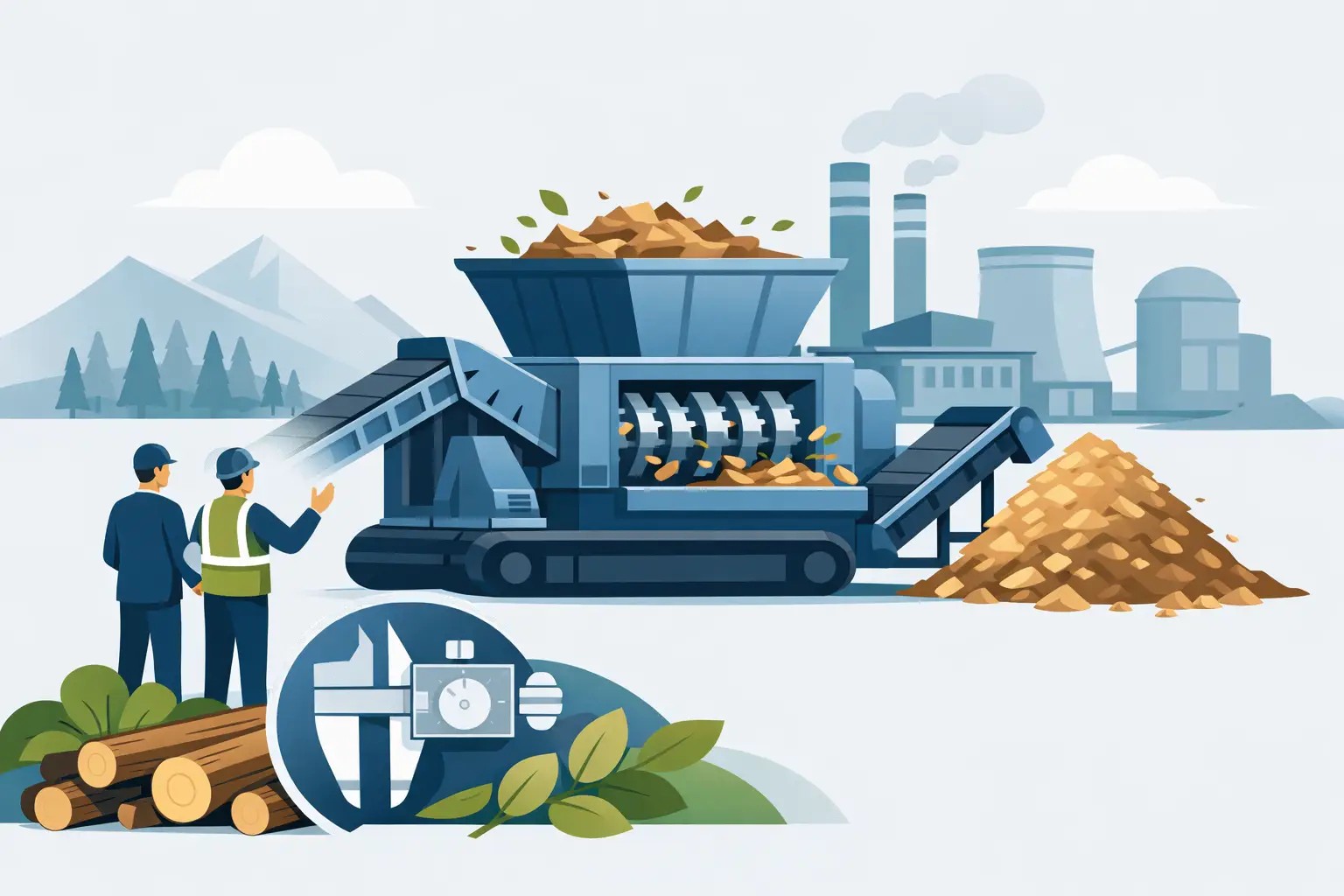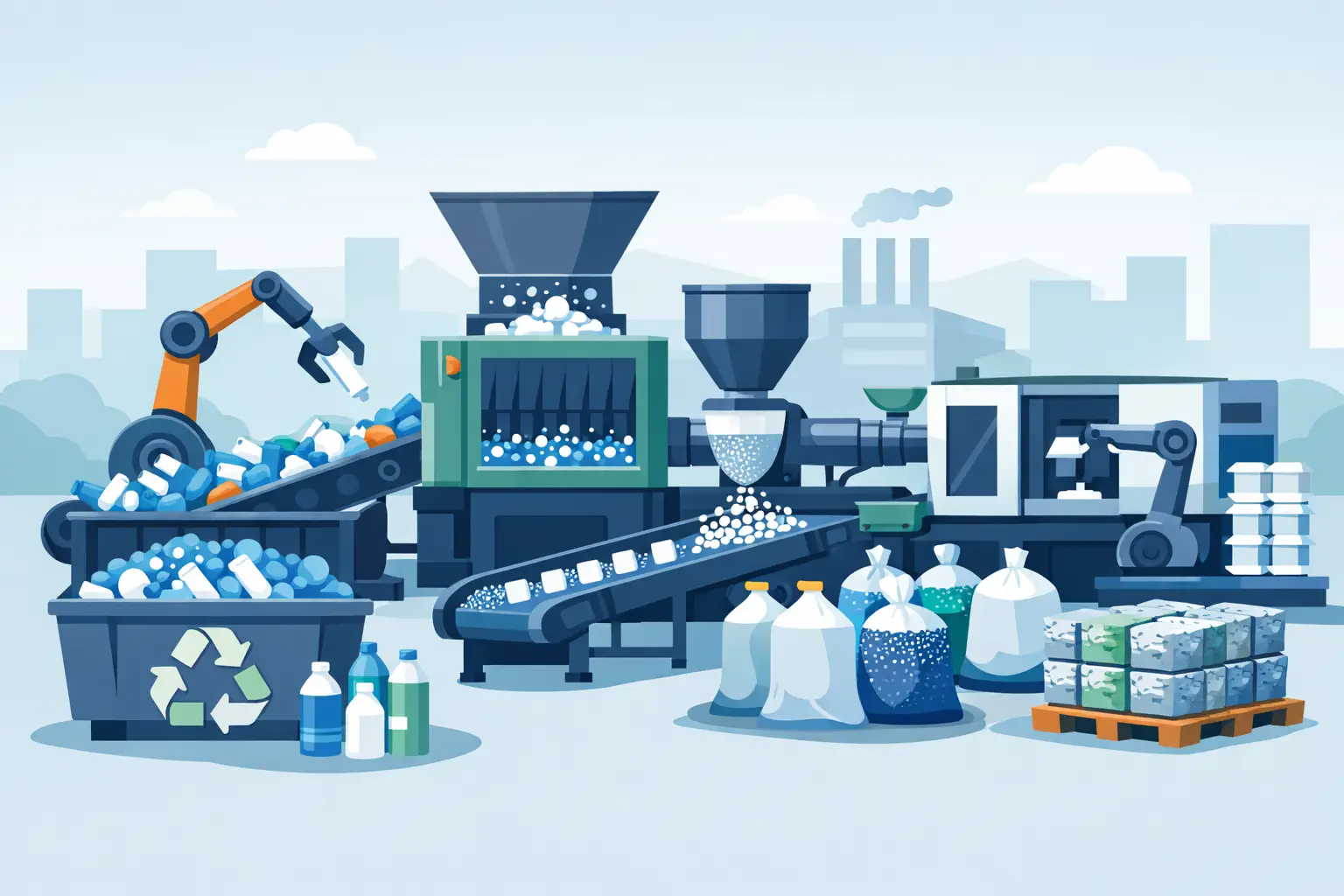
A 6-foot piece of demolition timber, a tangled bale of municipal waste, or a whole truck tire cannot go directly into a pellet mill, dryer, RDF line, or rubber recycling system. First, the material needs the right size and shape.
This is where material size reduction comes in.
In simple terms, size reduction turns large, irregular feedstock into smaller pieces that the next machine can handle. However, it is not just about making material smaller. The right process also affects conveyor loading, screening, drying, fuel quality, machine wear, and plant uptime.
For this reason, choosing the right machine is important. A poorly matched shredder or grinder may create too many fines, large pieces, high power use, and frequent blockages. In contrast, a well-designed system creates a stable material flow and helps the whole plant run smoothly.
Why Material Size Reduction Matters
Every downstream machine has a suitable feed-size range.
For example, a rotary dryer needs fairly even particles to remove moisture evenly. A pellet mill needs small and well-controlled material for stable pellet production. Similarly, an RDF or SRF line needs the right particle size and low contamination to produce usable fuel.
Tire recycling follows a different process. Whole tires first need heavy-duty shredding. Then, the system removes steel and fiber before further rubber processing.
Therefore, there is no single size reduction method for every material.
Wood, green waste, construction waste, and tires all behave differently. Wood may need clean and uniform chips. Green waste can contain branches, roots, soil, and high moisture. Construction waste may contain wood, plastic, fabric, and light metal. Meanwhile, tires contain rubber, steel wire, and textile fiber.
The final product also affects the machine choice. Wood chips for biomass fuel may need a different size from chips for pulp or board production.
Capacity matters as well. A machine may produce the required size during a small test, but the result can change at full production. Therefore, equipment selection should consider:
- Feed capacity
- Maximum material size
- Moisture content
- Material density
- Contamination
- Required output size
- Daily operating hours
How to Choose the Right Size Reduction Method
Most industrial plants use several size reduction stages.
First, the primary machine breaks or opens large material. Then, secondary equipment reduces the material to a more controlled size. Finally, screening removes oversize and fine material.
This staged process gives operators better control. It also reduces unnecessary wear on each machine.
Trying to complete every step with one machine may sound simple. However, it often increases power use, wear, and maintenance costs.
Chipping for Logs, Branches, and Wood Waste
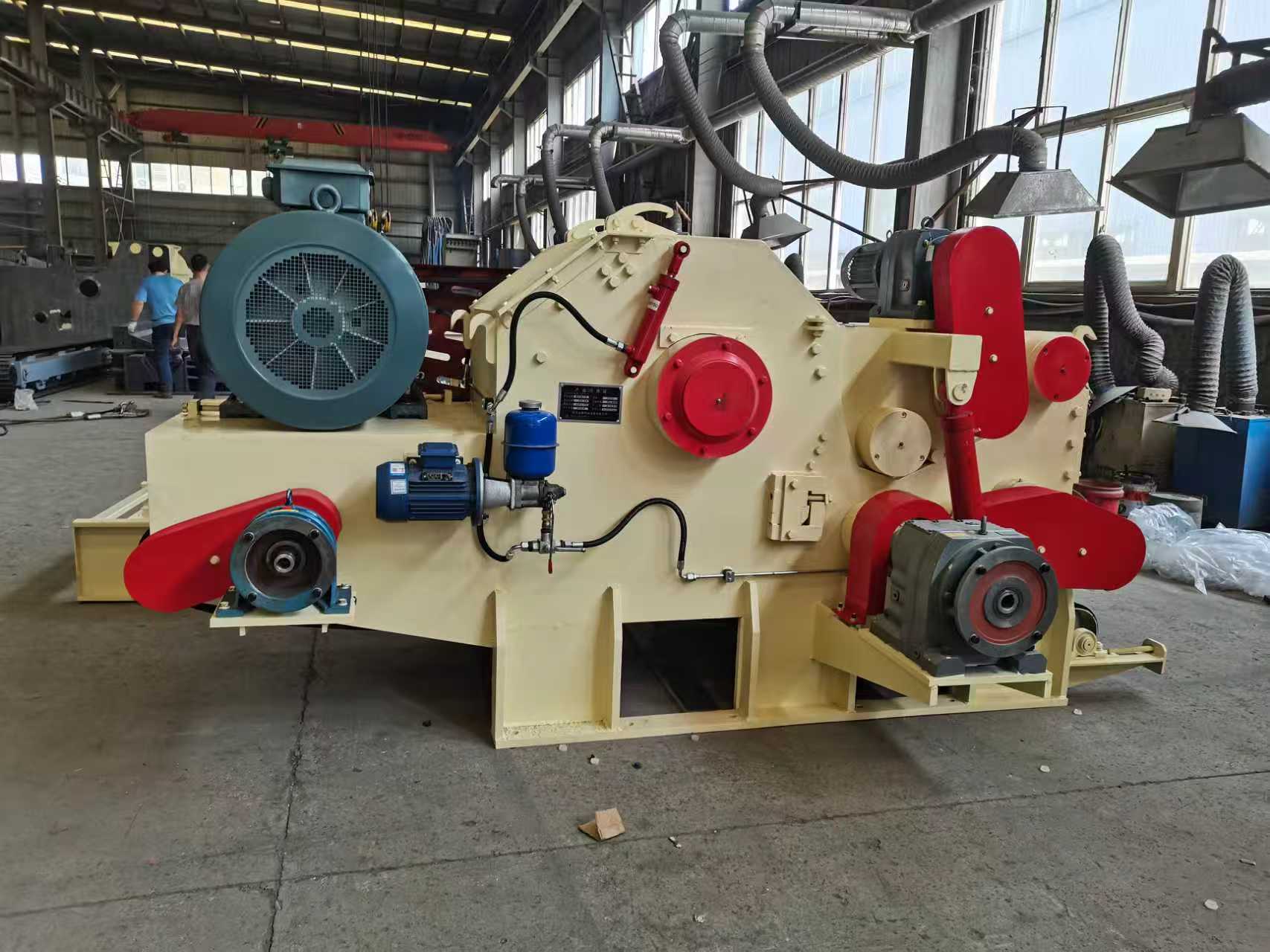
Disc wood chippers and drum wood chippers turn logs, branches, slabs, and wood offcuts into wood chips.
These machines are widely used for:
- Biomass fuel
- Wood chip production
- Panel board production
- Sawmill waste
- Green waste processing
A disc chipper works well when the feedstock is relatively clean and the plant needs consistent chip quality.
On the other hand, a drum chipper is suitable for high-volume processing of logs, branches, and mixed wood waste.
In some applications, a wood debarker should come before the chipper. Removing bark can improve the value and quality of the final chips.
Chip size depends on several factors. These include knife design, knife condition, feed speed, screen size, and the condition of the wood.
For example, dry sawmill residue behaves differently from wet green wood. Frozen wood and dirty recovered timber also need different handling.
Therefore, good feed preparation is important. Operators should remove metal before chipping to protect the knives. At the same time, steady feeding helps produce more uniform chips.
Shredding for Bulky and Mixed Waste
When the material is large, tough, or mixed, a single-shaft or dual-shaft shredder is often the first choice.
These machines focus on strong size reduction and volume reduction. They can handle many types of feedstock, including:
- Industrial waste
- Plastic waste
- Wood waste
- Green waste
- Municipal solid waste
- End-of-life tires
A dual-shaft shredder uses two cutting shafts that rotate against each other. The strong torque helps it process tires, pallets, mixed waste, and other bulky materials.
A single-shaft shredder normally uses a hydraulic pusher and a rotating cutter. A screen under the rotor controls the output size.
Each machine has its own strengths.
A primary shredder can handle more variable feedstock and large pieces. However, the output may not be as uniform as material from a secondary grinder.
Therefore, RDF and SRF plants often use several steps. The process may include primary shredding, screening, metal separation, and secondary shredding.
This setup helps the plant reach the required fuel size and quality.
Grinding for Smaller and More Uniform Material
After primary shredding or chipping, some applications need a smaller and more uniform product.
In this case, a horizontal grinder or fine grinder can provide the next level of size reduction.
These machines are useful for:
- Biomass fuel
- Wood mulch
- Wood flour
- Compost feedstock
- RDF preparation
Grinding performance depends on rotor speed, cutter or hammer design, screen size, and feed rate.
A smaller screen normally creates finer material. However, it can also increase recirculation, power use, and wear.
Therefore, operators should not choose the smallest screen simply because it produces a finer product. The screen should match the actual requirements of the next process.
For tire recycling, the process usually has several stages.
First, a tire shredder reduces whole tires into rough chips. Next, the system removes steel and textile fiber. Then, granulators and rubber pulverizers can produce smaller rubber particles or fine rubber powder.
This step-by-step process helps protect the equipment and improves rubber recovery quality.
Output Size Is Not the Only Factor
A specification such as 2 inches or 20 mm does not fully describe the final material.
Industrial buyers should also consider:
- Particle shape
- Size distribution
- Fine material content
- Bulk density
- Moisture behavior
- Contamination level
For example, long and thin pieces can cause bridging in a hopper even when their width meets the required size.
Too many fines can also create problems. They may increase dust, raise fire risks, or reduce the value of biomass chips.
At the same time, oversize pieces can block dryers, conveyors, pellet mills, and pneumatic systems.
For RDF production, uneven material can also make fuel handling and combustion more difficult.
Why Screening Matters
For this reason, screening is an important part of size control.
A trommel screen can separate different material sizes in many biomass and recycling applications.
However, wet or sticky materials can be difficult to screen with a standard screen. In these cases, a flip-flow screen can improve separation because it handles flexible and difficult materials more effectively.
The screening process normally creates several streams:
- Correct-size material
- Oversize material
- Fine material
The correct-size material moves to the next process. Meanwhile, the oversize material can return to the shredder or grinder for another pass.
This closed-loop process helps maintain a more stable final product.
How to Design a Complete Size Reduction Line
A standalone machine can solve one specific problem. However, a complete processing line can provide better and more stable results.
Each machine should match its position in the process.
For example, a typical wood biomass line may include:
Feeding → Debarking → Chipping → Screening → Grinding → Drying → Storage
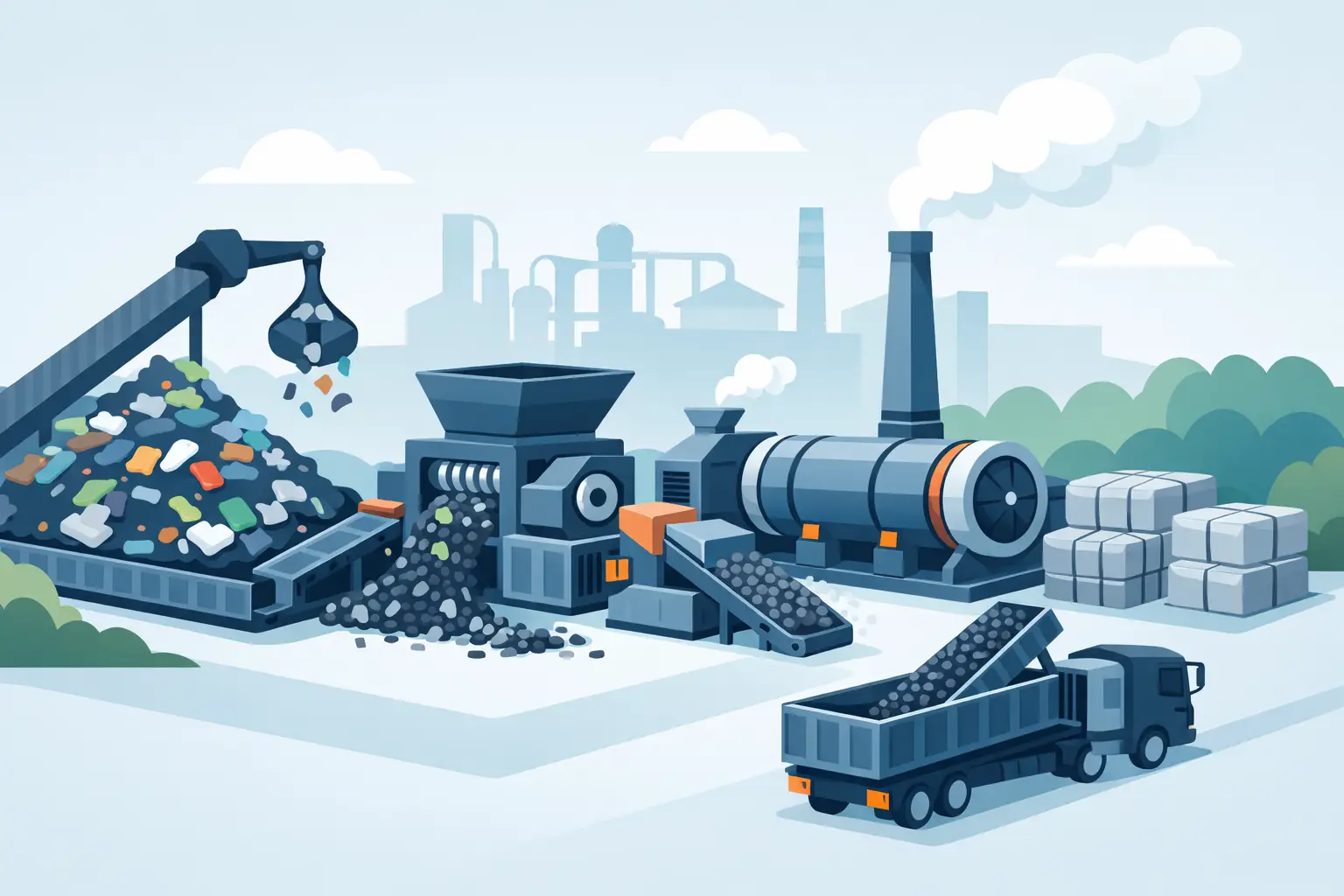
A waste-to-fuel line may use:
Feeding → Primary Shredding → Magnetic Separation → Screening → Secondary Shredding → Conveying
The exact layout depends on the material and final product.
Most importantly, the plant should be designed around the most difficult feed condition, not the cleanest sample.
If the incoming material sometimes contains very large pieces, the receiving hopper and primary shredder must handle them.
If moisture changes during the year, the dryer and screening system should also allow for these changes.
Furthermore, if the material contains metal, stones, or sand, the plant needs suitable protection and wear-resistant components.
How Automation Improves Plant Performance
Automation can make a major difference in large processing plants.
For example, variable-frequency drives can control feed speed and reduce overloads. Hydraulic pushing systems can keep the rotor under a more stable load.
In addition, interlocked controls can stop upstream machines when a downstream conveyor or screen becomes full.
As a result, the system can reduce blockages and unnecessary downtime.
A centralized control system also allows operators to monitor:
- Motor load
- Conveyor speed
- Material flow
- Machine alarms
- Production status
Therefore, automation does more than reduce labor. It also helps operators find problems earlier and keep the production line running.
What to Consider Before Requesting a Quote
Before contacting a machine supplier, buyers should prepare clear information about the material.
At minimum, provide:
- Material type
- Maximum feed size
- Average feed size
- Moisture content
- Bulk density
- Contamination level
- Required capacity
- Target output size
- Final application
It is also useful to explain what happens after size reduction.
For example, a boiler fuel project may accept a wider chip size than a pellet production line.
A tire-derived fuel project may focus more on high capacity and steel removal. In contrast, a rubber powder project needs cleaner and finer material.
Similarly, a green waste recycler may need equipment that handles soil and moisture, while a clean wood processor may place more importance on chip quality and low fines.
The more accurate the material information, the easier it is to select the right machine.
Zhengzhou Jinpeng Machinery Size Reduction Solutions
Zhengzhou Jinpeng Machinery Equipment Co., Ltd. provides size reduction equipment and complete processing solutions for wood, biomass, solid waste, and tire recycling.
The company can supply standalone machines as well as complete processing lines.
However, equipment selection should always start with the actual material.
The engineering team should first understand the feedstock, required capacity, target output, plant layout, and final application. Then, the machines can work together as one system.
Conclusion
Material size reduction is more than simply making large materials smaller.
Instead, it is the first step in creating a stable feedstock for the next process.
First, choose the right primary machine for the material. Then, use secondary equipment when tighter size control is necessary. After that, use screening to remove oversize and fines.
At the same time, consider moisture, contamination, capacity, and the final product.
Most importantly, each machine should do the job it is best suited for. When the feedstock, output size, and plant flow are clear from the beginning, the right size reduction system can reduce wear, improve production, and prevent bottlenecks.
In the end, the best system is not simply the machine with the highest power or capacity. It is the system that delivers the required material size and quality at the required capacity, with stable operation and reasonable operating cost.