A bulky truck tire, a bundle of mixed plastic scrap, and clean injection-molding runners may all be called recyclable material, but they demand very different size-reduction equipment. The industrial shredder versus granulator decision affects not only final particle size, but also labor requirements, line capacity, wear cost, material recovery value, and downtime risk. For industrial plants, selecting the wrong machine can create a bottleneck before the material reaches the next stage.
A shredder and a granulator both reduce material size, but they do not perform the same job. Shredders are built to accept large, irregular, tough, or contaminated feedstock and break it down under high torque. Granulators are designed to produce more controlled, smaller particles from material that is already manageable in size. In many recycling and biomass systems, the best answer is not one machine or the other. It is a staged line using both.
Industrial Shredder Versus Granulator: The Core Difference
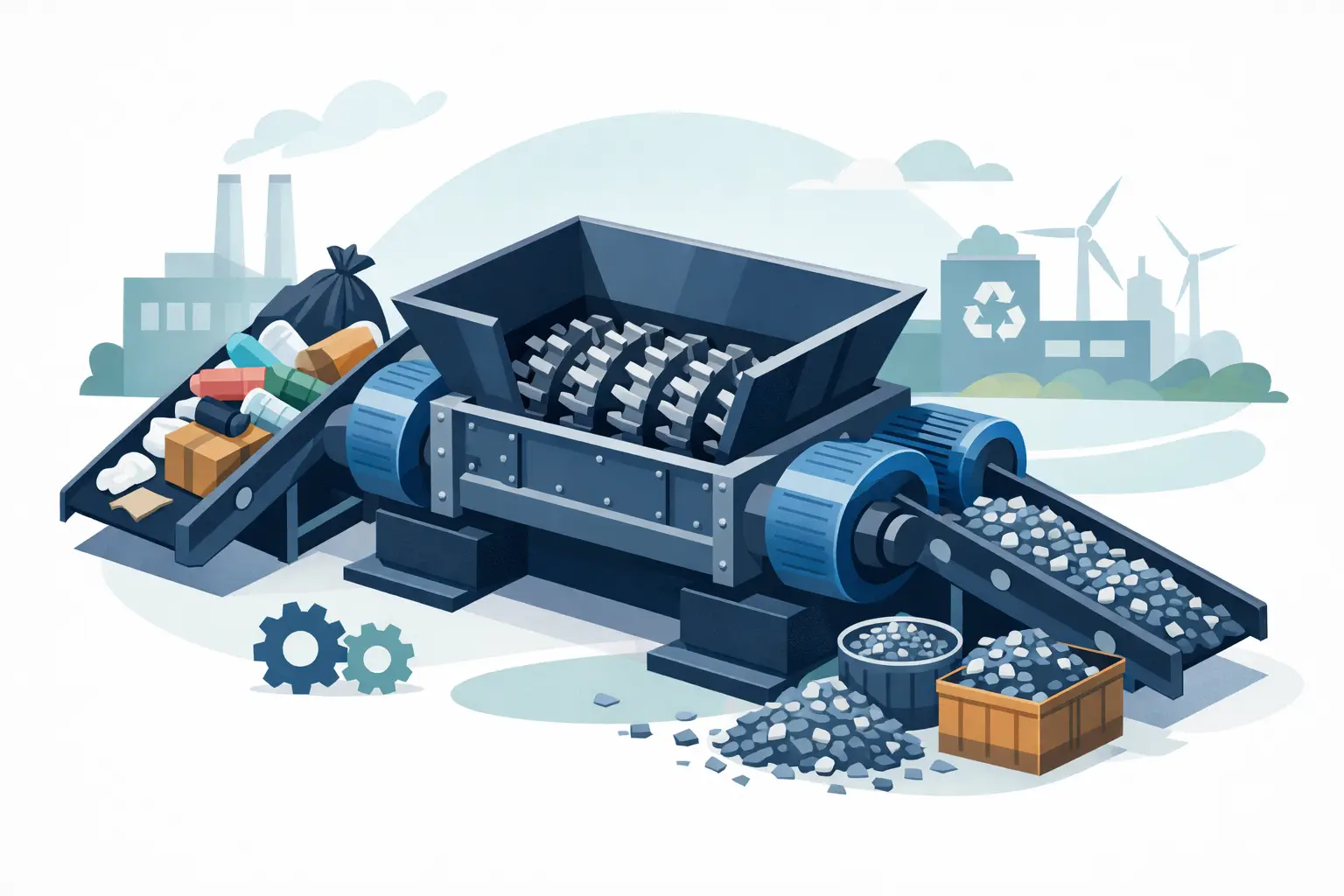
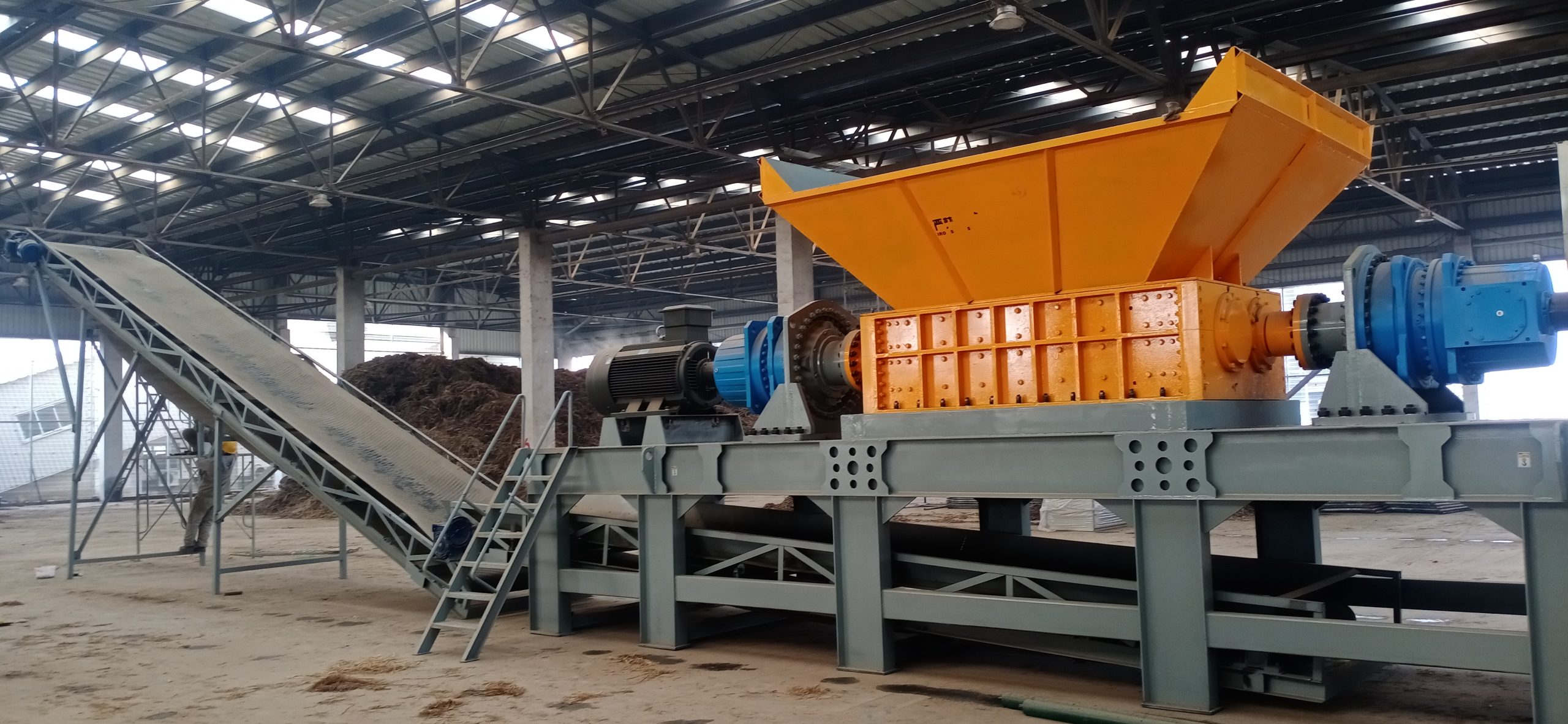
An industrial shredder uses slow-speed cutting shafts, knives, and high torque to tear, shear, or cut material into strips, chips, or coarse pieces. Single-shaft models commonly use a hydraulic ram to push feedstock into a rotor, while dual-shaft machines pull and shear material between two counter-rotating cutting shafts. Their strength is feed tolerance. They can process material that would be too large, too dense, or too inconsistent for a granulator to accept directly.
A granulator generally operates at a higher rotor speed. Its open cutting chamber uses rotating knives and stationary bed knives to cut material repeatedly until it passes through a screen. The screen controls output size, making granulators well suited to applications that require relatively uniform regrind or a specified particle range.
Put simply, shredders prioritize intake capability and primary reduction. Granulators prioritize particle control and secondary reduction. That distinction should guide the equipment specification before capacity, motor power, or price is compared.
When an Industrial Shredder Is the Better Choice
A shredder is usually the correct starting point when the feedstock is bulky, variable, high-strength, or difficult to feed manually. Typical examples include whole tires, tire bales, municipal solid waste, industrial waste, plastic drums, IBC containers, pallets, wood waste, green waste, cable, aluminum profiles, and mixed commercial scrap.
The large feed opening and high-torque cutting action allow the machine to reduce whole items without extensive pre-cutting. This can remove a major labor step from the process. A tire shredder, for example, can convert whole or pre-shredded tires into tire chips for downstream steel separation, fiber removal, or rubber granulation. A single-shaft shredder can reduce plastic lumps, purge, film bundles, and bulky containers before washing or pelletizing.
Shredders also tolerate contamination better than precision cutting equipment. Material may contain dirt, labels, moisture, staples, or mixed fractions, although excessive metal and unplanned tramp material still require protection. For RDF and SRF production, shredders are commonly placed at the front of the line because incoming waste is heterogeneous and must first be opened, reduced, and made conveyable.
The trade-off is output consistency. Shredder discharge size depends on cutter configuration, screen size where applicable, rotor speed, feed behavior, and material condition. The product may be suitable for combustion preparation, transport, sorting, or further processing, but it is rarely as uniform as granulated regrind.
Shredder selection factors
For a primary shredder, plant engineers should evaluate hopper dimensions, cutting chamber width, shaft or rotor design, knife material, screen configuration, drive arrangement, and hydraulic ram force. Throughput figures must be reviewed against the actual material, not only a catalog rating. A machine processing dry wood pallets will behave very differently from one processing wet green waste, high-density plastic, or wire-reinforced tires.
For continuous industrial operation, knife access, wear-part replacement time, bearing protection, overload control, and conveying integration deserve the same attention as motor power. A lower-cost machine that requires frequent stoppages can become the higher-cost choice over a full production year.
When a Granulator Is the Better Choice
A granulator is the stronger option when material is reasonably clean, consistently fed, and already small enough to enter the cutting chamber safely. It is widely used for plastic sprues, runners, defective molded parts, films, pipes, sheets, small containers, and pre-shredded rubber. It can also serve as a finishing machine after a primary shredder in tire and plastic recycling lines.
The central advantage is controlled output. By selecting the proper screen opening and knife geometry, operators can produce a consistent granulate for reprocessing, washing, density separation, extrusion, or sale as recovered raw material. This matters when downstream equipment has limited tolerance for oversized pieces. A plastics wash line, for example, benefits from uniform flakes because washing, friction separation, drying, and extrusion become more predictable.
Granulators often deliver a cleaner cut than shredders, but they ask more from the feedstock. Oversized parts can cause bridging or chamber damage. Heavy metal contamination can severely damage knives and screens. Thick, dense pieces may require a larger rotor, stronger drive, or pre-shredding step rather than direct granulation.
Heat is another practical consideration. High-speed cutting can generate heat, particularly with film, soft plastics, rubber, or materials processed at high rates. Heat may cause soft material to smear, agglomerate, or adhere to the screen. Correct knife clearance, screen selection, airflow, feed rate, and material conditioning help maintain stable production.
Why Many Plants Use Both Machines
For difficult waste streams, a shredder-plus-granulator configuration provides better control than forcing a single machine to do every task. The shredder receives large and irregular feedstock, reduces it to a transportable intermediate size, and protects the granulator from overload. The granulator then produces the final particle size required by the next process.
A tire recycling line is a clear example. Primary shredding turns whole tires into chips. Magnetic separation can remove liberated steel. Secondary shredding or granulation reduces the rubber further before fiber separation and rubber pulverization. Each stage has a defined purpose, and the line can be adjusted according to the target product, whether that is tire-derived fuel, rubber mulch, crumb rubber, or fine rubber powder.
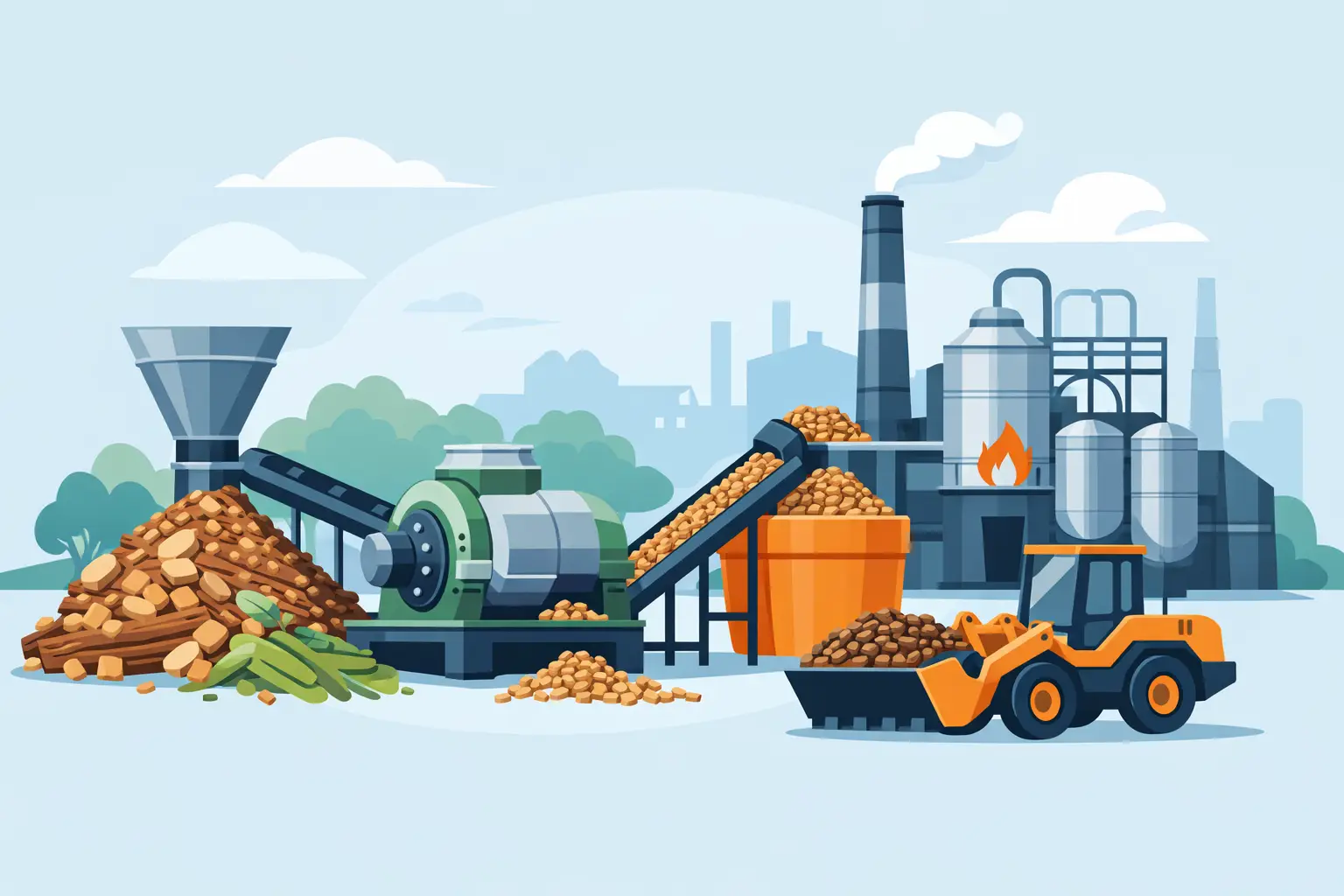
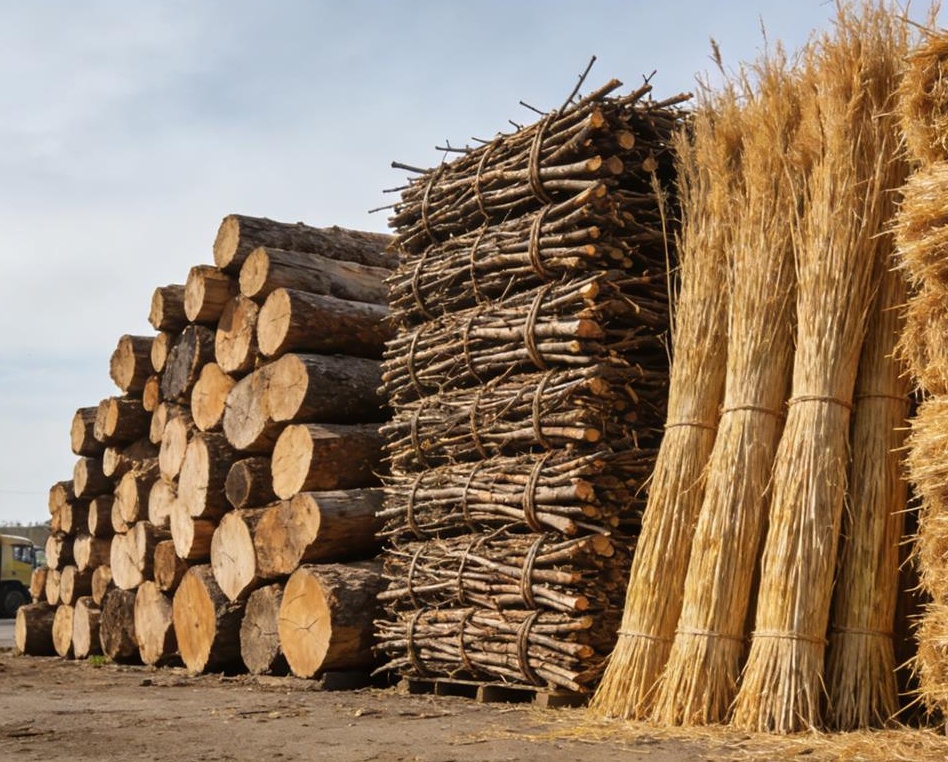
The same logic applies to wood and biomass preparation. A horizontal grinder or wood shredder can handle logs, branches, pallets, and demolition wood. A downstream fine wood grinder mill can then produce a smaller, more consistent fraction for pellets, briquettes, compost, panel production, or biomass fuel. The correct system depends on moisture, contamination, final size specification, and required hourly output.
Compare the Total Processing Line, Not Just Machine Price
The purchase price of a shredder or granulator is only one part of the capital decision. The more useful comparison is cost per ton of usable output. This includes energy consumption, knife wear, screen replacement, staffing, material handling, maintenance hours, rejected material, and lost production during changeovers.
A shredder may have higher initial power demand but eliminate manual cutting and allow direct loading by forklift, loader, or conveyor. A granulator may produce higher-value, uniform material but require better feed preparation and more frequent knife maintenance. Neither result is automatically superior. The operating model determines the value.
Plant layout also matters. Confirm how material enters the machine, how it discharges, and where oversized material returns for recirculation. Include magnetic separation, screening, dust collection, conveyors, storage bunkers, and fire protection where the application requires them. A properly matched processing line prevents one machine from running at full capacity while the next machine waits for material or becomes overloaded.
How to Specify the Right Equipment
Start with representative feedstock, not an ideal sample. Record the material dimensions, density, moisture content, contamination level, metal content, and seasonal variation. Then define the required output size and downstream use. A 50 mm tire chip for fuel preparation is a different specification from 1 to 4 mm rubber granulate for a molded-product application.
Next, establish the required net hourly capacity and operating schedule. A plant targeting 10 tons per hour for two shifts needs more than a machine rated at 10 tons per hour under favorable test conditions. Allow for material variation, maintenance windows, and the capacity of conveyors, sorting stations, and downstream equipment.
Zhengzhou Jinpeng Machinery Equipment Co., Ltd. designs standalone size-reduction equipment and integrated processing lines for wood, biomass, solid waste, and tire recycling applications. For projects with mixed or difficult feedstock, technical consultation should focus on the complete material flow, from receiving and primary reduction through screening, separation, drying, and final product handling.
The right choice becomes clearer when the question changes from which machine is better to what the material must become. Define that final product first, test the real feedstock, and build the reduction stages around the operating result your plant must deliver.