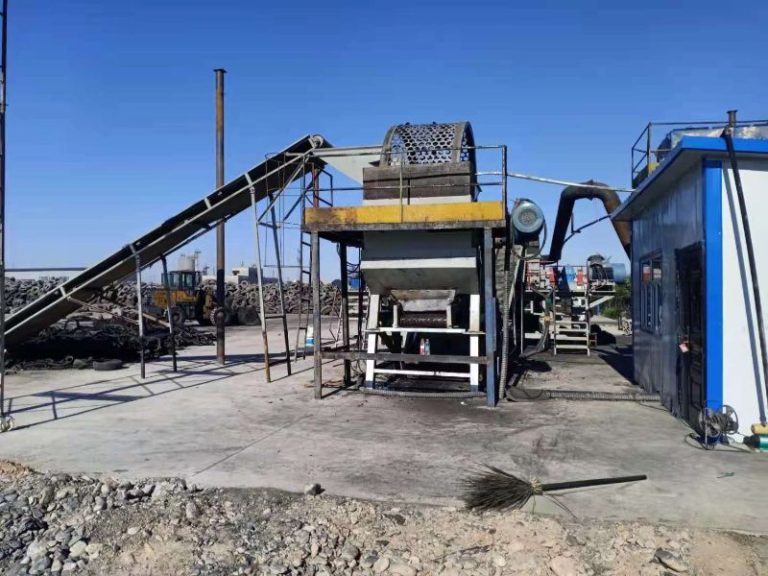
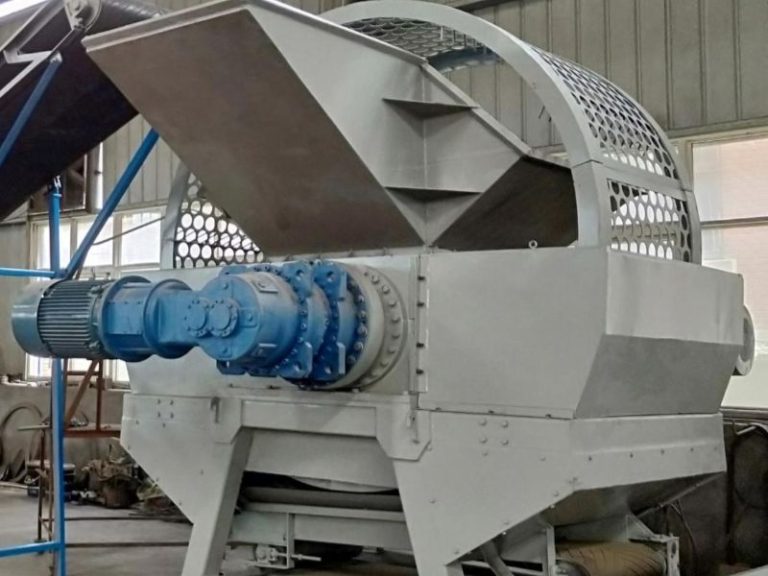
Overview
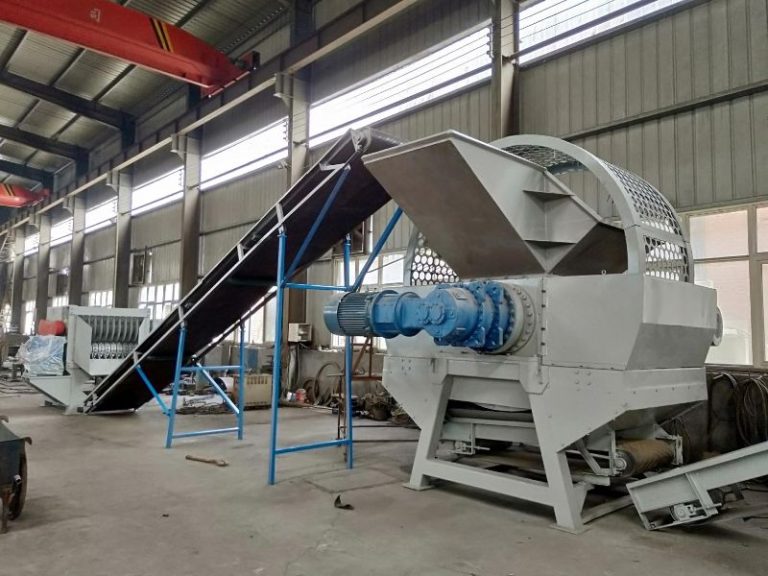
The Tire Shredder is one of coarse crushing equipment, specially designed for tire recycling industry, crushing various types of waste rubber and tires, including truck tires (with steel ring removal), car tires, inner tubes, rubber boots, and other rubber products that meet the feed size requirements. which functions as a high-torque, low-speed “super scissor system.” Jinpeng Tire Shredder can be used as crusher of Waste tire, household appliance shells,Metal coils,plastic film, etc.
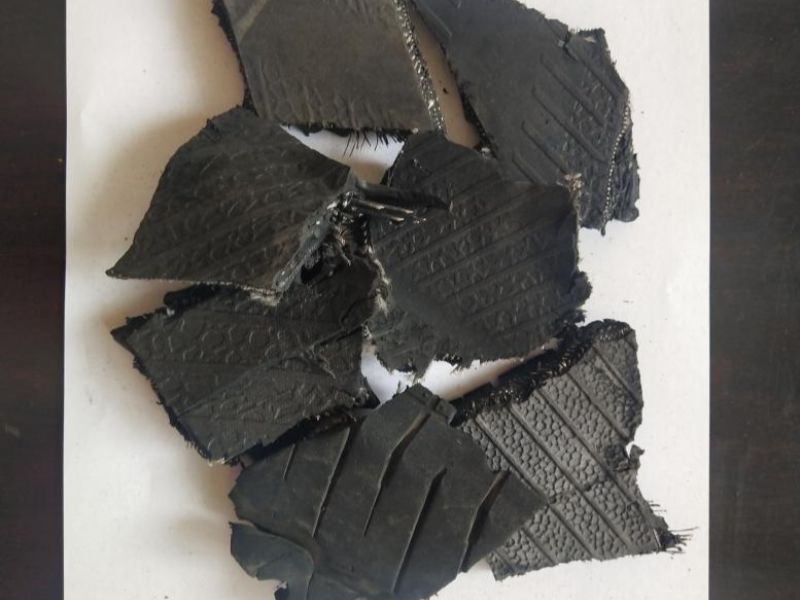
Besides, capable of powerfully stripping tire sidewalls and steel wires, JP800 Tire Shredder, shredding entire tires into rubber blocks less than 50mm. Significantly reduces the impact load on subsequent grinders, making it an indispensable core equipment for recycled rubber and rubber powder production lines.
Applicable Materials
Car tires, truck tires with bead wire removed, inner tubes,rubber boots, rubber hoses, rubber belts, rubber sheets, and other rubber products containing high-strength steel wire mesh that become more elastic when cut.
How Tire Shredder Works
A tire shredder reduces whole scrap tires into small rubber chunks or granules through shearing, tearing, and crushing actions, preparing the material for further recycling processes.
The working process consists of the following key stages:
1. Feeding & Positioning
Whole tires are fed into the hopper via a conveyor belt or manually. An internal hydraulic pusher or positioning roller ensures the tires enter the cutting chamber at a stable, correct angle for safe and efficient operation.
2. Primary Shredding – Twin-Shaft Shearing
The core of the machine is two counter-rotating shafts fitted with helically arranged cutter blades. Here’s how it works:
- Biting & Tearing: The massive tire is forcibly drawn between the two shafts.
- Shearing & Cutting: The rotating cutters on the shafts work against stationary counter-knives mounted on the frame, acting like giant scissors. With low rotational speed but high torque, the blades gradually tear, cut, and break the tire into manageable strips and blocks.
- Intelligent Reverse (Anti-Jamming): When the machine encounters extremely tough material (e.g., a complete bead wire ring), the programmable logic controller (PLC) automatically reverses the shafts to eject or reposition the obstacle, then resumes normal rotation. This prevents stalling or damage.
3. Screening & Recirculation
- Mesh Screen Control: The shredded material falls onto a sizing screen at the bottom of the cutting chamber. Only pieces smaller than the screen’s hole diameter can pass through.
- Automatic Return: Oversized chunks are automatically held back by the screen and re-fed into the cutting zone for repeated shredding until they meet the required size.
Key Features
1.Integrated machine base combined with independent bearing seats, facilitating installation, debugging, and daily maintenance.
2.The core crushing components are the blade discs (claw discs) mounted on two horizontal parallel shafts. Made of high-quality carbon steel and treated with special surface processes, they exhibit high hardness, rigidity, and excellent wear resistance.
the motor drives the primary reduction via a pulley, followed by a secondary reduction through a gear reducer, ultimately driving the two claw shafts to rotate in opposite directions.
Product Parameters
| Parameter | JP800 | JP1000 | JP1200 |
|---|---|---|---|
| Capacity (t/h) | 1 – 1.5 | 2 – 3 | 3 – 5 |
| Power (kW) | 22 * 2 + 3 | 30 * 2 + 3 | 55 * 2 + 3 |
| Cutting Chamber (mm) | 500 * 900 | 500 * 1100 | 900 * 1200 |
| Feed Opening (mm) | 700 * 600 | 900 * 700 | 1000 * 1000 |
| Dimensions (mm) | 3000 * 1800 * 1800 | 3500 * 2000 * 2000 | 4500 * 2800 * 2500 |
| Weight (kg) | 7,500 | 8,500 | 12,000 |
Performance
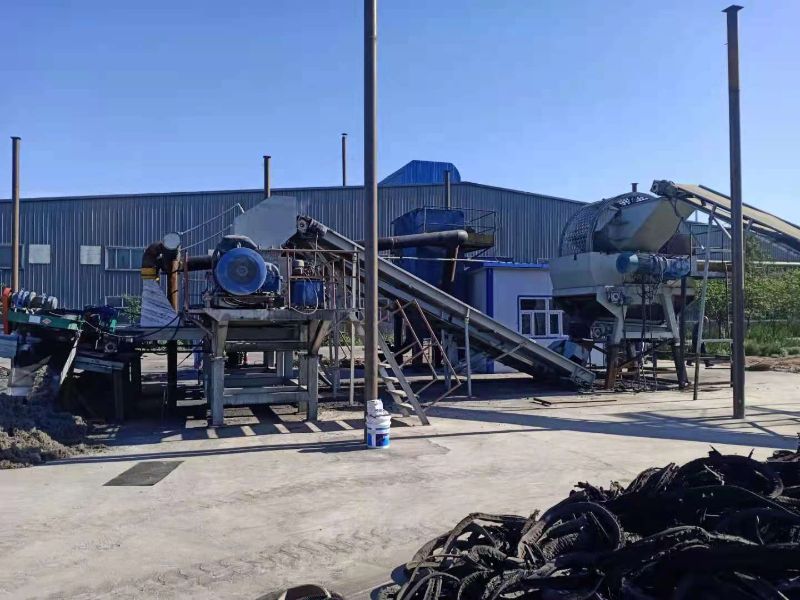
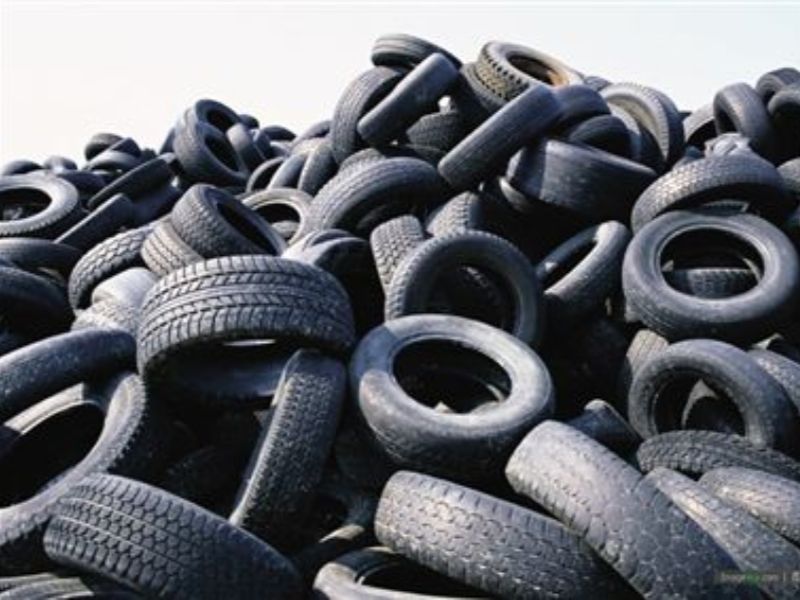
Frequently Asked Questions (FAQ)
1. What types of tires can the JP series shredder handle?
The JP series is designed to process a wide range of tires, including passenger car tires, light truck tires, and even larger OTR (Off-The-Road) tires, depending on the specific model’s feed opening and torque capacity.
2. What is the final output size of the shredded tire chips?
Standard tire shredders typically produce chips ranging from 50mm to 100mm. If you require smaller rubber crumbs or powder, the JP series can be integrated into a complete recycling line with secondary granulators and magnetic separators.
3. What material is used for the shredding blades?
We use high-strength alloy steel (such as Cr12MoV or D2) for the blades. They undergo a specialized heat treatment process to ensure maximum wear resistance and durability when cutting through tough steel-belted tires.
4. Can the machine handle tires with steel wires inside?
Yes, our tire shredders are built with high-torque, low-speed shafts specifically designed to shear through the heavy steel wires found in radial tires without damaging the machine.
5. How do I maintain the blades, and can they be sharpened?
The blades are designed for long-term use. Depending on your throughput, they will eventually need to be sharpened or replaced. We provide a detailed maintenance manual on how to adjust blade clearance and the sharpening process.
6. What does the power configuration “55*2+3” mean?
This indicates a dual-motor drive system. For the JP1200, it uses two 55kW main motors to power the two cutting shafts independently for maximum torque, plus a 3kW auxiliary motor for the hydraulic pusher or cooling system.
7. Is the machine equipped with an overload protection system?
Absolutely. All JP series shredders include a PLC control system with an automatic “Reverse & Restart” function. If the chamber is overloaded or a non-shreddable object is detected, the shafts will automatically reverse to clear the jam.
8. Can the capacity (t/h) vary depending on the tire type?
Yes, the capacity is an estimate. Processing whole truck tires may be slower than car tires. Capacity also depends on the desired output size; smaller output requirements generally result in a lower hourly throughput.
9. Is the feed opening customizable?
While we have standard dimensions (e.g., 1000*1000mm for JP1200), we can customize the hopper and feed opening to match your specific feeding equipment, such as a conveyor belt or a grapple crane.
10. What is the lead time and warranty for the JP series?
The typical lead time is 30–45 days. We offer a 12-month warranty on the main structure and electrical components (excluding wear parts like blades). We also provide lifetime technical support and spare parts availability.